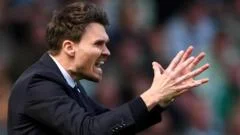
The recent decision by Tottenham to part ways with Thomas Frank marks a significant shift in the club's management strategy, arriving in the wake of a disappointing loss to Newcastle. After that game, Chief Executive Vinai Venkatesham and Sporting Director Johan Lange wasted no time in recommending Frank's dismissal. It’s clear that the current state of the team left even Frank's staunchest supporters conceding that change was necessary.
What’s intriguing is the rapidity of this decision. With Venkatesham making the recommendation early Wednesday morning, it’s evident that the pressure from a frustrated fanbase had become insurmountable. The ownership, led by the Lewis family, has been under fire for perceived inaction regarding the growing discontent about Frank's performance. Yet, according to sources close to the Lewis family, they were indeed aware of the backlash and were deliberating on this very issue.
Given past appointing dynamics, the lack of intervention from ownership hints at a trust in Venkatesham's leadership. He was handed the club reins last summer, meaning the final call to dismiss Frank was made under his purview. Consequently, when the recommendation came, it was swiftly approved by the ownership board, showcasing a united front despite earlier hesitations.
Officially informing Frank of his departure became merely a formality after the board's approval. His arrival at Spurs was once celebrated as a smart choice following a successful tenure at Brentford, where he had led them from the Championship to the Premier League. However, the short-lived period of just eight months in the Tottenham hot seat raises questions about his fit for a club of Spurs’ stature.
Frank’s time at Spurs was marred by several challenges, including issues with player discipline, an apparent divide within the executive team, and ongoing concerns about his tactical decisions. This rapid termination, in stark contrast to the belief that he could foster a positive culture reminiscent of his success at Brentford, leaves us reflecting on whether the expectation of immediate success was overly ambitious.
Ultimately, if you’re involved in football management, the implications here are clear: the balance between listening to fan sentiment and maintaining a consistent managerial strategy is more fragile than ever. The Spurs saga illustrates the complex dynamics of modern football management, where decisions can turn on a dime in response to public opinion.
The Future of Tottenham: Searching for Stability Amidst Uncertainty
Tottenham Hotspur finds itself at a critical juncture. With the departure of former manager Frank, they are now tasked with a decision that could shape the club's trajectory for years to come. Silence around Fabio Paratici’s lack of enthusiasm for Frank’s managerial prowess raises eyebrows. The uncertainty looms large, especially in an environment where managerial changes have been the norm rather than the exception. After years of instability, Spurs must now recalibrate and consider a longer-term vision.
Historically, sticking with a manager amid fan discontent can yield rewards. Just look at Arsenal and Mikel Arteta's journey; patience has turned early skeptics into advocates, reflecting the benefits of continuity. If you're involved in the football scene, this serves as a crucial lesson in the value of stability. In Frank's case, Tottenham's leadership recognizes that he faced significant challenges, not least of which were the injuries that plagued key players. With Harry Kane and Son Heung-min now departed, the squad is in desperate need of renovation.
The recent losses have exposed deeper issues—most notably, a lack of leadership on the pitch. This has prompted Spurs to pursue seasoned talents such as Conor Gallagher and even attempted to sign Andy Robertson in a bid to fortify their structure. Yet, the recent home loss to West Ham appears to have irreparably damaged Frank's standing. That game wasn’t just another defeat; it was attended by key figures from the ownership, illustrating the growing unrest among the top brass.
What about the immediate future? Tottenham is caught in a bind. Should they appoint an interim manager, or make a bold choice for a permanent chief now? There's a pragmatic argument for taking a breath and waiting for the managerial market to open up as summer approaches. With potential candidates like Mauricio Pochettino yearning for a return and other notable names like Thomas Tuchel and Julian Nagelsmann on the market, Spurs might benefit from a pause.
However, the urgency cannot be dismissed. The looming shadow of relegation puts pressure on the leadership to act swiftly. Interim options like John Heitinga—a player who comes with a sound understanding of the club’s dynamics—are being discussed. Yet, can he really stop the bleeding? Or could a more combustible figure like Roberto De Zerbi deliver the needed jolt?
Beyond the digressions of the pitch, off-field controversies seep into the narrative. The ownership's stability is under scrutiny, amid rumors of a potential sale. Despite assurances from the club that they're not on the market, persistent whispers suggest that the Lewis family might entertain offers. This atmosphere of uncertainty does not bode well for any managerial search.
In summary, Tottenham stands at a crossroads. The challenge will be whether they can navigate the stormy seas of managerial choice, player dynamics, and ownership questions all at once. The clock is ticking, and for Spurs, finding the right captain for the ship may be more significant than it appears. The decision made in the coming days will not only define the remainder of this season but could also have lasting implications for the future of the club.