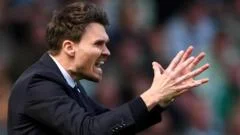
Rochdale's dramatic victory at Wembley, where they fought back from a two-goal deficit to prevail against Boreham Wood on penalties, has reignited discussions surrounding the promotion and relegation framework in English football. The match, which unfolded in front of a charged crowd, saw Rochdale secure their place in the English Football League (EFL) again, just three years after their relegation from League Two. This particular game was not just a win for Rochdale; it symbolized a resurgence for clubs fighting through the lower tiers of the football system, providing a narrative that resonates deeply within the community of lower-league supporters.
Calls for Change
Phil Alexander, the chief executive of the National League, has called for the EFL to embrace a three-up, three-down promotion and relegation system. He believes this shift is necessary given the increasing competitiveness and professionalism in the National League. “We think three up could be done; we think three up should be done,” Alexander emphasized, urging the EFL to take a progressive stance. His assertion comes at a time when the quality gap between the National League and League Two appears to be narrowing, as evidenced by Bromley’s recent success — they clinched the League Two title just two years post-promotion.
The context here is critical. The National League has been witnessing teams investing significantly in infrastructure and player development, making it a hotbed for talent and competition. Yet, the current promotion model, which traditionally favors the top teams, might be stifling the potential for a broader influx of clubs into the EFL. The increasing professionalism and financial investment are blurring the lines that once separated these tiers. There’s a growing sentiment that sticking with the antiquated two-up, two-down system no longer reflects this reality, producing imbalances that challenge the very notion of fair competition.
Obstacles Ahead
However, the path to this proposed change is fraught with obstacles. Although EFL chief executive Trevor Birch and chief operating officer Nick Craig were present at the promotion final, any decision to alter the structure ultimately lies with the clubs, not the executives. The National League had hoped for a vote on this transformative change at a meeting of EFL clubs earlier this year, but it was relegated to a discussion topic, delaying potential implementation for at least another year. This puts clubs that feel ready to ascend through the ranks in a precarious position, stuck in a limbo where their aspirations may hinge on bureaucratic processes.
There are underlying tensions as well. The EFL's reluctance to embrace change could be attributed to a fear of destabilizing the status quo. Clubs in the EFL, particularly those at the lower end, may not look favorably at the prospect of losing league status to a supposedly weaker National League. This hesitation reflects the inherent conservatism often present in football governance, where tradition and financial security frequently outweigh the need for reform.
(hint: this is the part most people overlook) The voices of club owners and fans often drown out when decisions are being made at the higher levels. The realities of financial dependencies created by television revenues and sponsorship deals make it particularly challenging for the EFL to consider a restructuring that could disrupt the relationship with those lucrative sources of income.
A New Regulator?
This is more significant than it looks. The National League is not merely a feeder league; it has become a competitive environment that warrants greater recognition within the football hierarchy. As Alexander noted, “The regulation has the power to make changes for the betterment of the game," hinting that a newly proposed Football Regulator under David Kogan could provide the impetus needed for reform. The introduction of such regulation could facilitate a level playing field, offering clubs a framework that might empower lower leagues to flourish without being overshadowed by the financial muscle of the Premier League.
Creating a regulator would not only address the promotion and relegation dilemma, but it could also tackle other pressing issues, such as financial fair play, governance, and the distribution of TV revenues. These aspects could help democratize English football, making it a sport where meritocracy could thrive over financial clout.
Implications and Future Outlook
The broader sentiment among National League clubs is that there’s considerable support for the three-up model. If you’re working in this space, it’s crucial to realize how pivotal these discussions are for the future of competitive football in England. Yet skepticism lingers — will the EFL, influenced heavily by Premier League funding, be dissuaded from adopting necessary changes until those higher up the pyramid reach a funding agreement with them? Right now, the outlook remains uncertain.
The future of English football hangs in a precarious balance. If implemented, the three-up model could invigorate the competition, heighten interest from fans, and usher in a new era where every club, irrespective of size, feels it has a genuine chance to aspire towards EFL status. Conversely, the absence of reform might condemn the lower leagues to relative obscurity, unable to break through the financial shackles imposed by a disproportionately rich top tier.
In the face of such potential transformations, the dialogue between clubs, leagues, and regulators becomes all the more critical. The outcome of this discussion will likely set the tone for the English football system for years to come. Whether that tone is one of inclusivity and opportunity or exclusivity and stagnation remains to be seen.