Gliding Barnacles’ defining feature may be what it leaves out: a contest to win. At Praia do Cabedelo in Figueira da Foz, Portugal, surfers ride single-fin boards while crowds gather on the jetty, but no scoreboard dictates the day. The result is a festival where surfing, music, food and conversation share the same footing—and where the people behind the event seem as central as the performances.
Simon Fitz
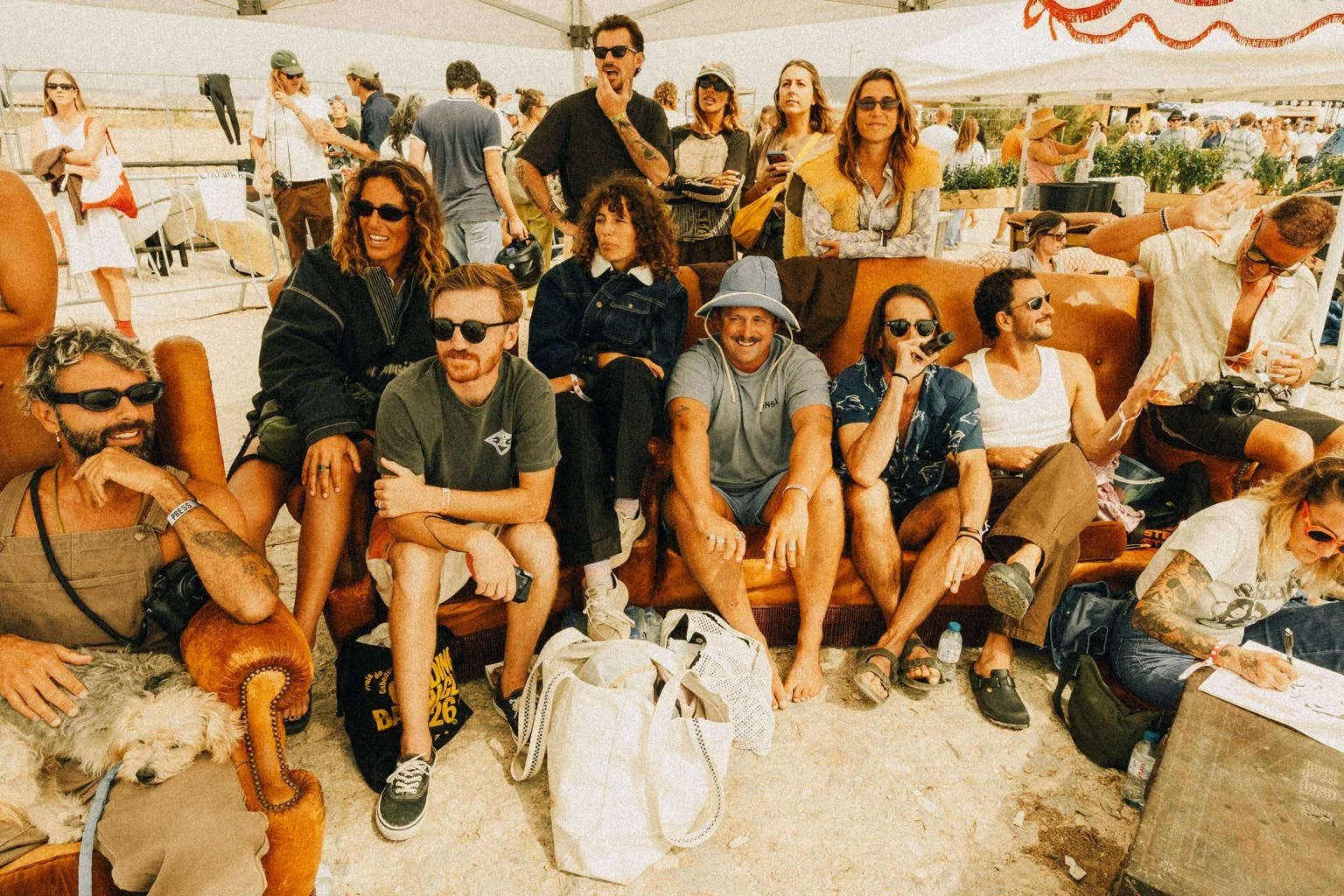
That informality takes serious coordination. Organizers put the core staff and volunteer crew at roughly 250 people. Include invited surfers, board shapers, artists, musicians and media, and the working community grows to about 400. Many have known one another for years; newer arrivals join a network built around making things together and sharing them freely.
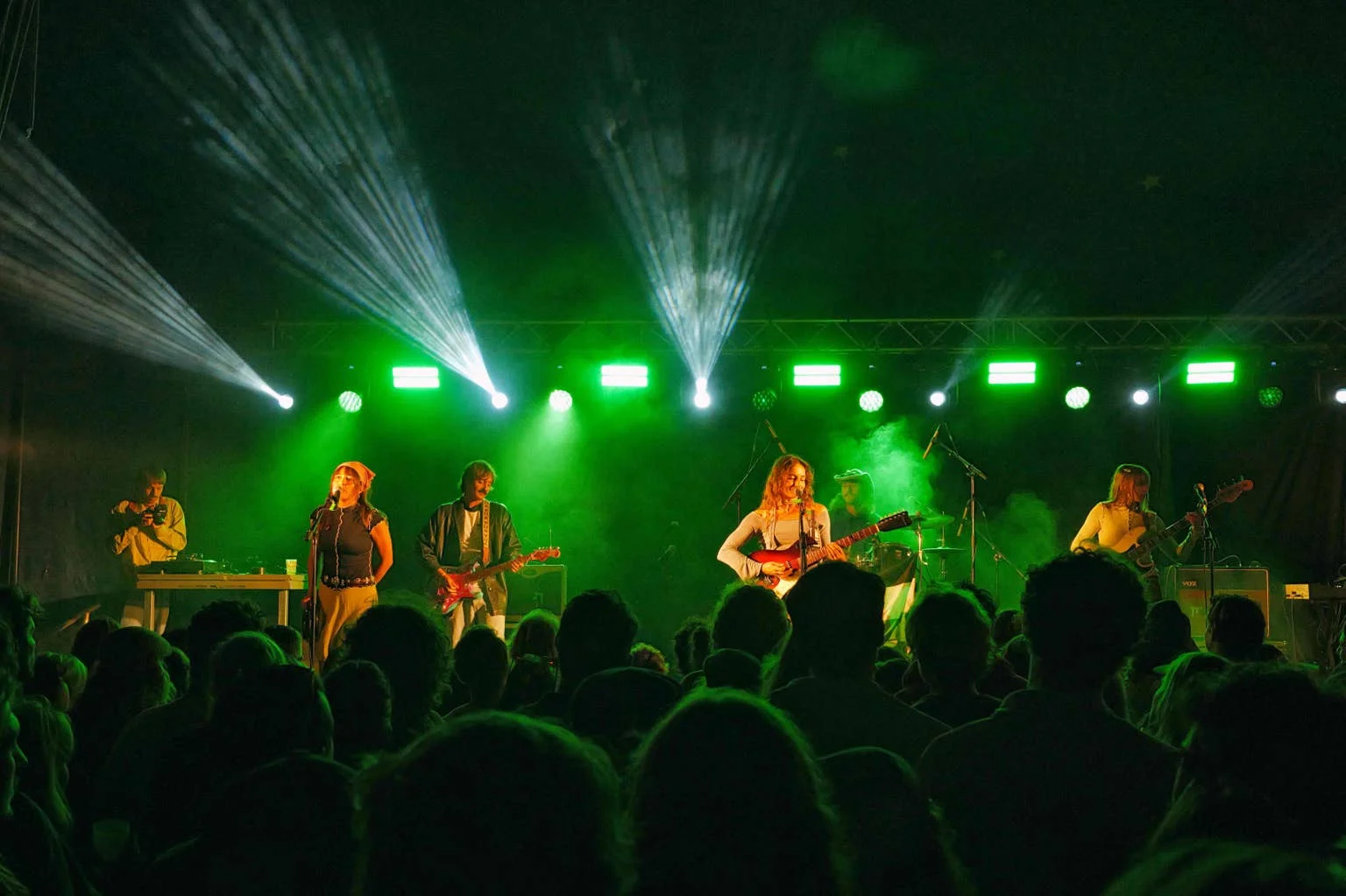
The festival’s four main days include nightly dinners for invitees, volunteers and staff. Each evening offers four carefully prepared dishes from Portuguese chefs, ranging from Michelin-starred names to well-known local cooks. The meals aren’t sold. Music plays across four stages before and after dinner, with acts from around the world carrying on late into the night.
Chris Dodds
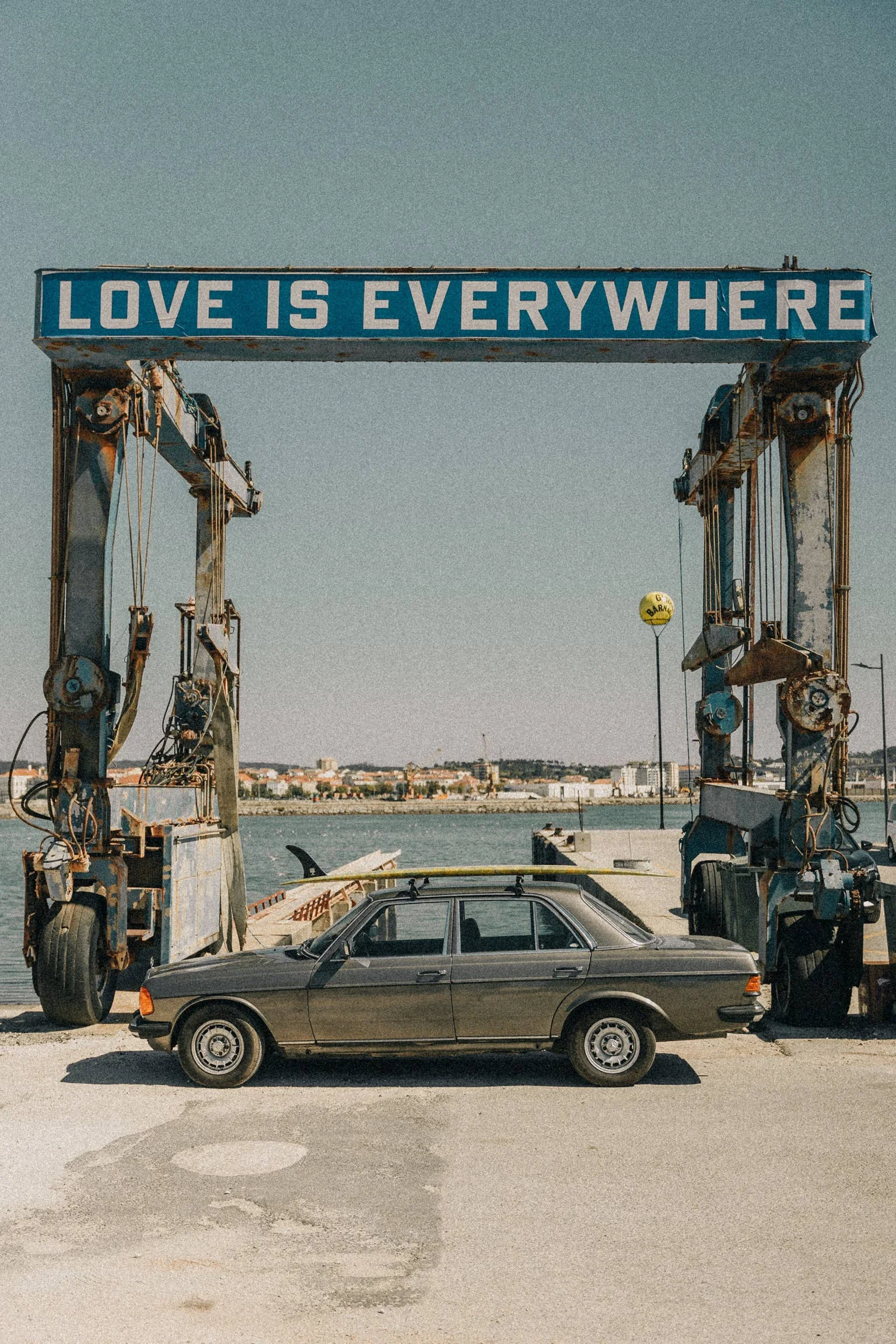
There’s a generous logic to that mix. A chef, musician, surfer or spectator can shift roles depending on the moment. One late-night ride home offered a small illustration: Simon Fitz, a longtime festival photographer, stopped his vintage Mercedes to offer a lift to a sharply dressed man waiting for an Uber. The passenger was Matt Correia of the Allah-Las, who had spent the weekend at the event. In the car, the exchange was between friends; outside it, the passengers were fans of the band and of the person behind the music. The Allah-Las didn’t perform, though the group in the car hoped they might at a future festival.
Surfing without a scoreboard
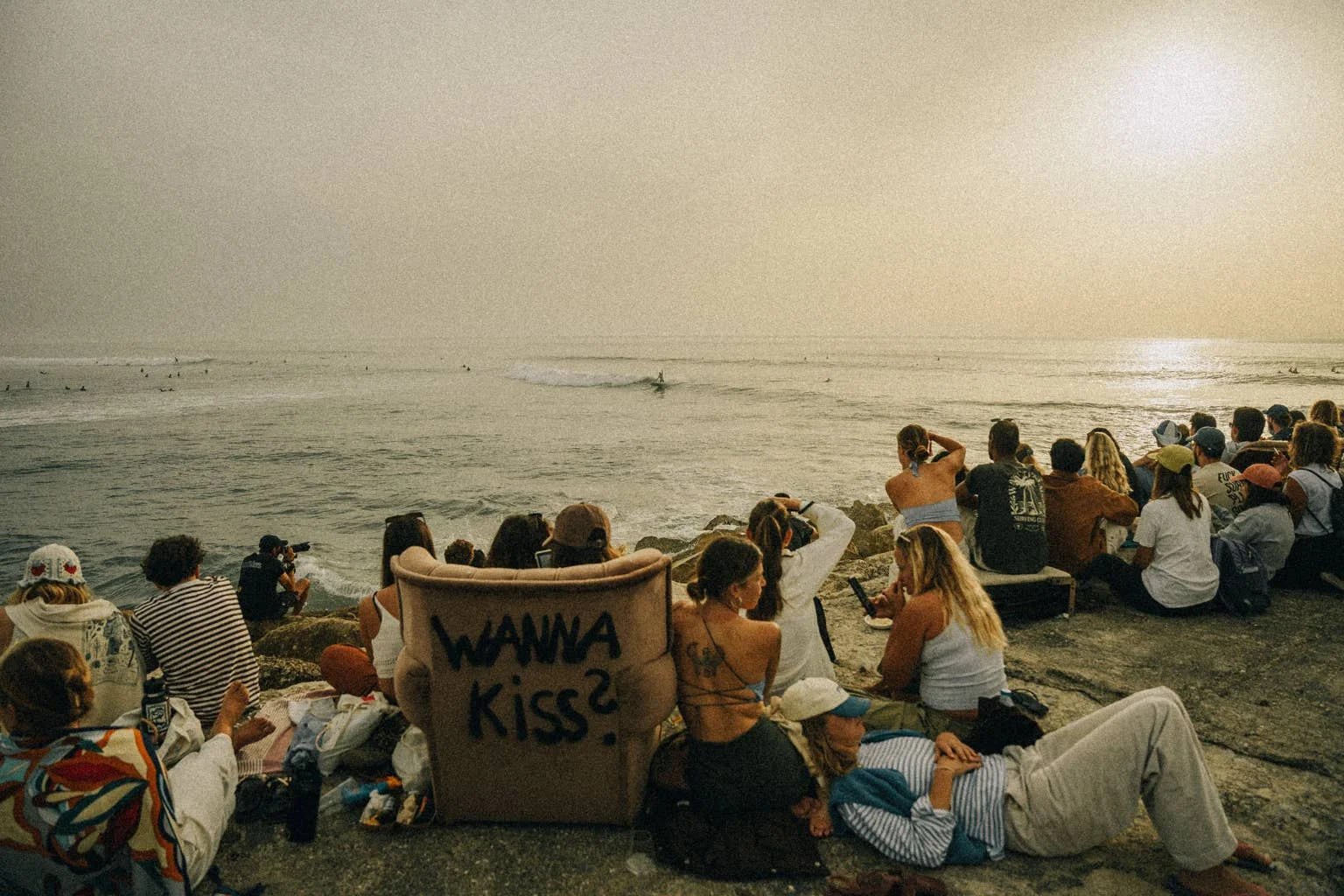
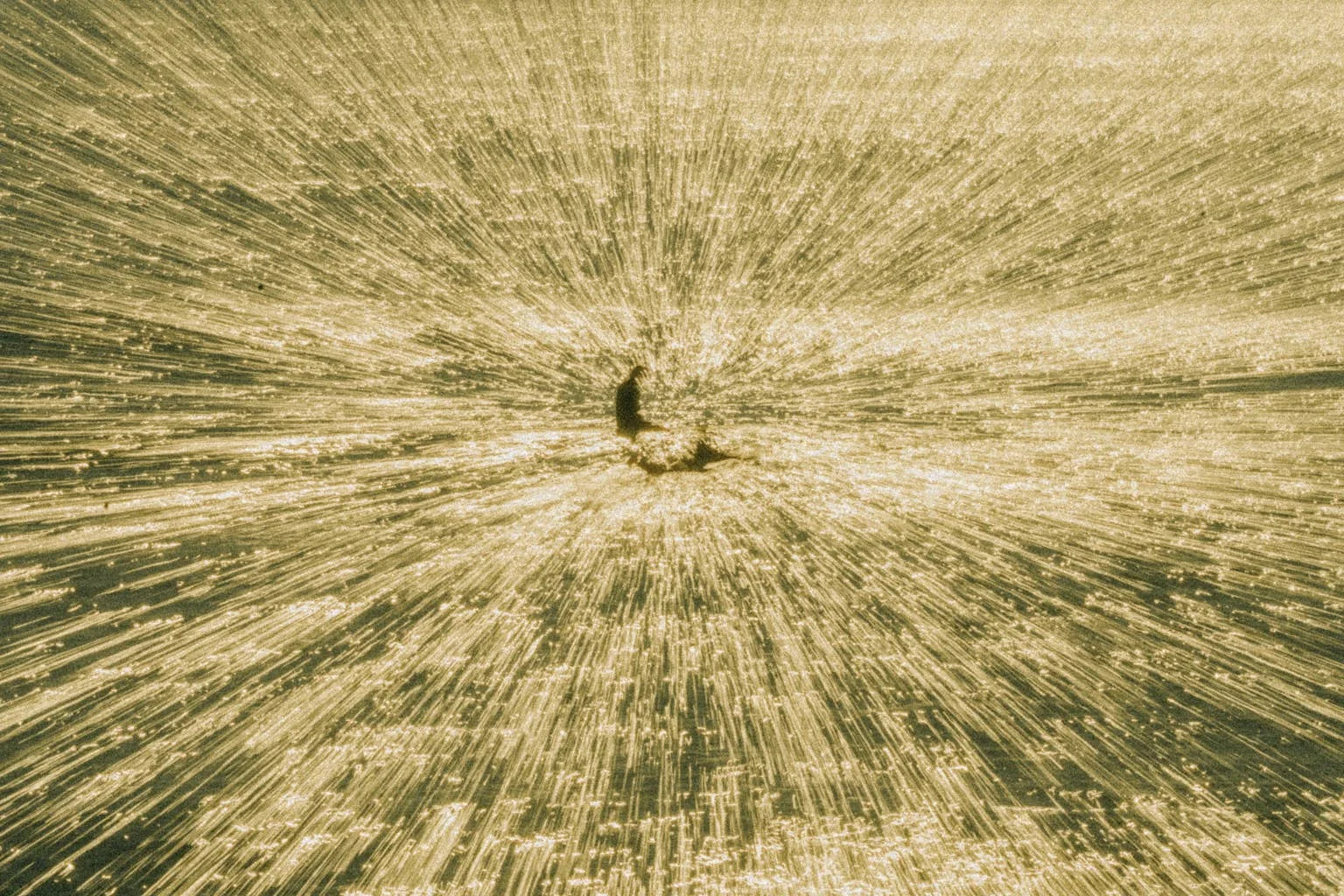
The jetty is the natural gathering point, with a broad view of the waves and room to settle in for the day. Portuguese and English commentary supplies context and jokes; music fills the pauses. People can watch the surf closely, drift into conversation, or do both. With no winner to crown, attention can stay on the variety of styles in the water.
Simon Fitz
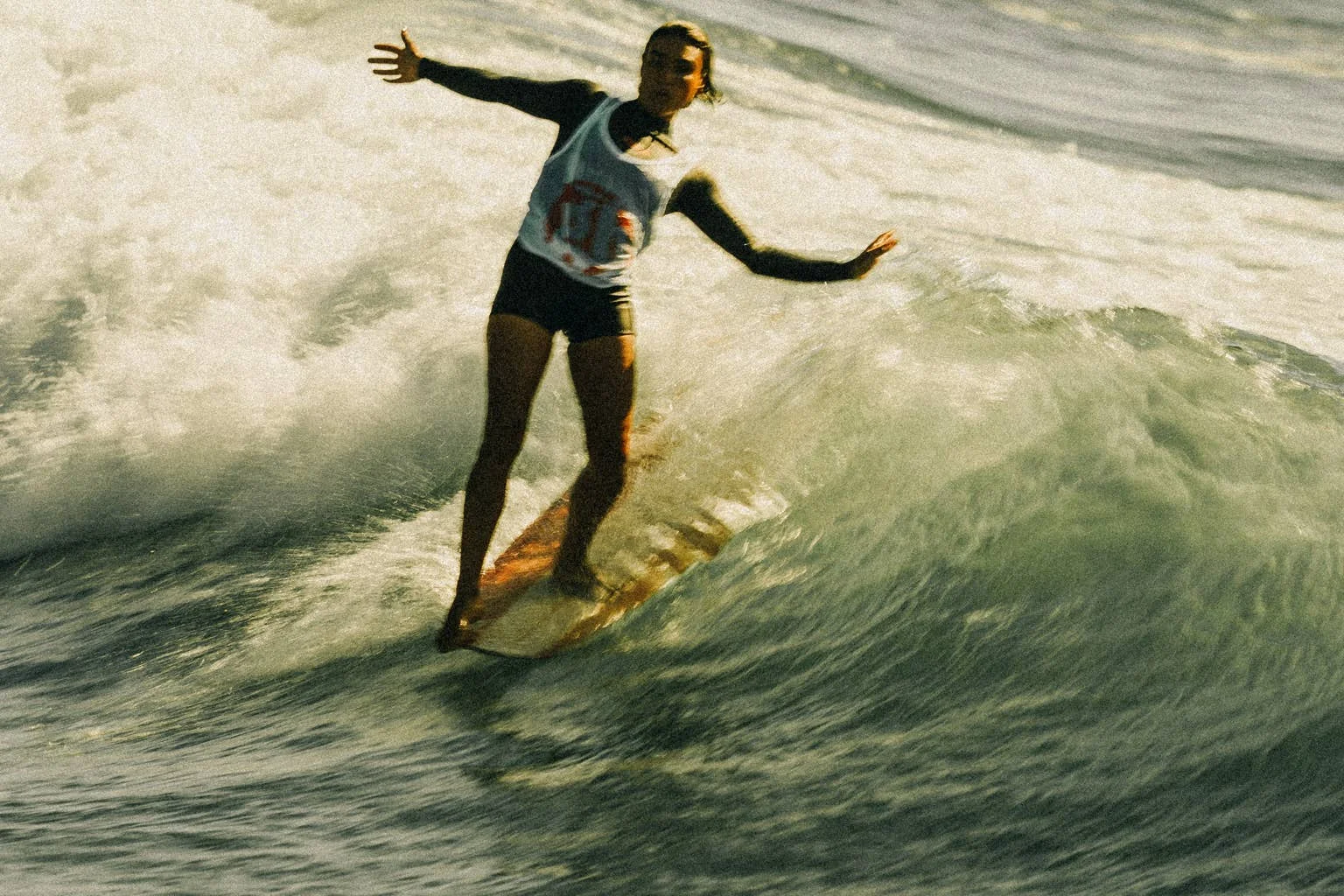
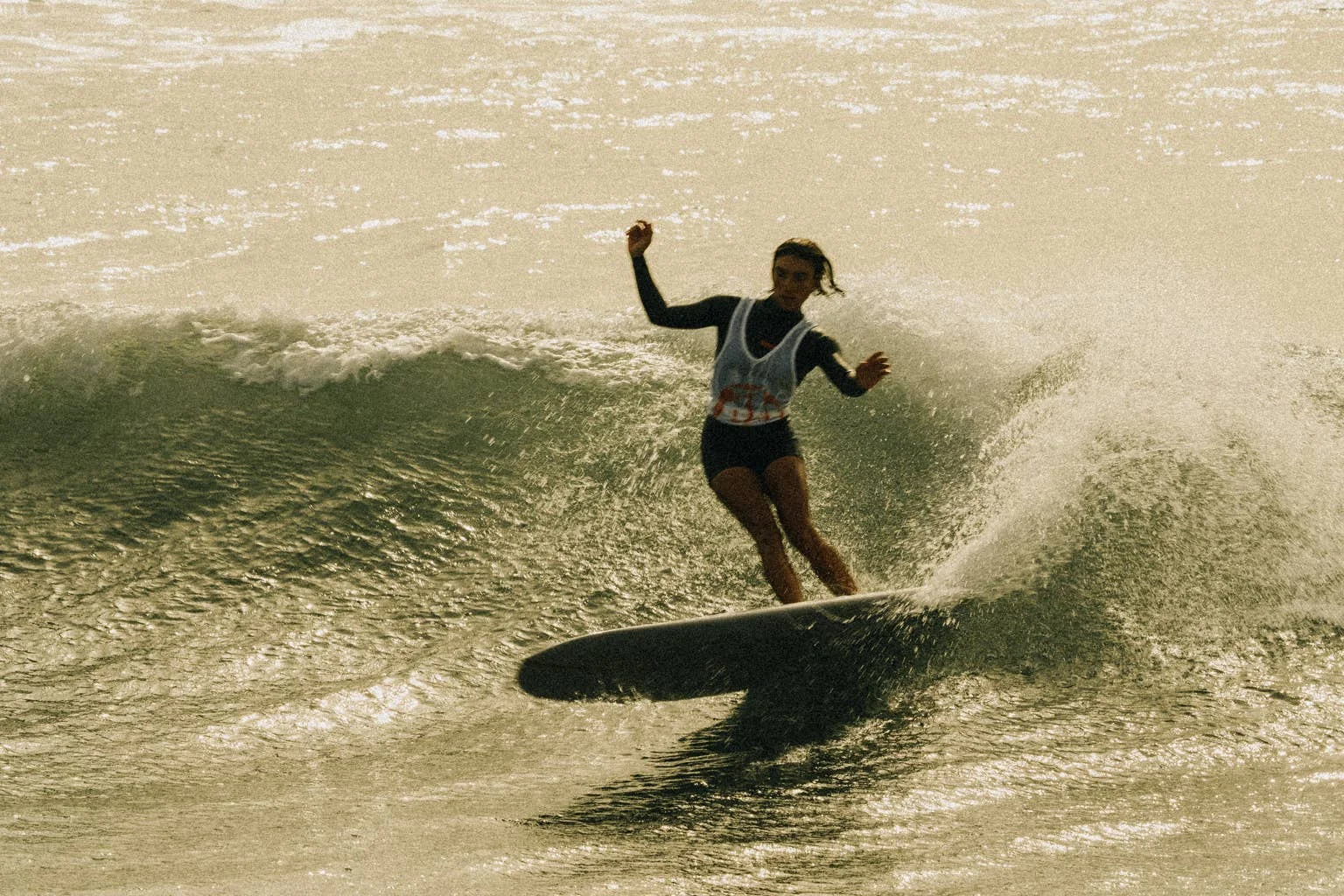
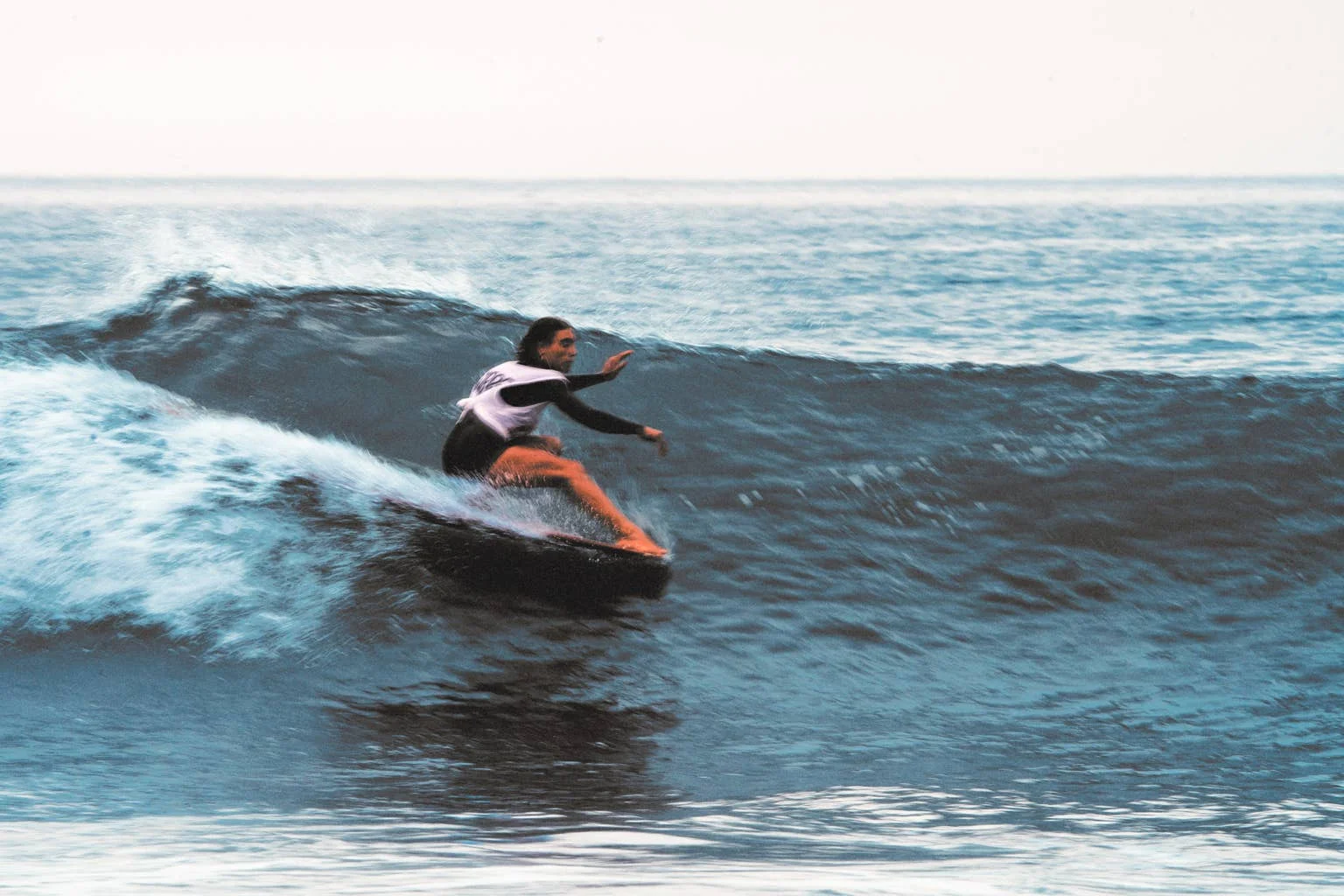
The field brings together surfers from different places with a shared interest in traditional board craft and single-fin surfing. Their equipment may be similar, but their approaches aren’t. Some use power to throw spray or find speed into the next section. Others favor measured footwork, trimming across the wave with a light touch. Ambre Victoire was one of the most memorable surfers in the conditions.
Simon Fitz
Fitz singled out Victoire’s expressive approach. “Everyone is amazing, the talent is ridiculously high. But this year, I think Ambre’s style was the most expressive for the conditions. She really stood out to me.” Her surfing offered a useful measure of the festival’s character: technical ability matters, but personal interpretation is what catches the eye.
Simon Fitz
The jetty turns that individual expression into a shared experience. Hundreds gather in the Portuguese sun, listening to commentary and live music as a steady swell reaches Cabedelo. The audience isn’t asked to follow a bracket or wait for a result. It can simply enjoy the surfing, the scene and the company.
Simon Fitz
A local gathering grows outward
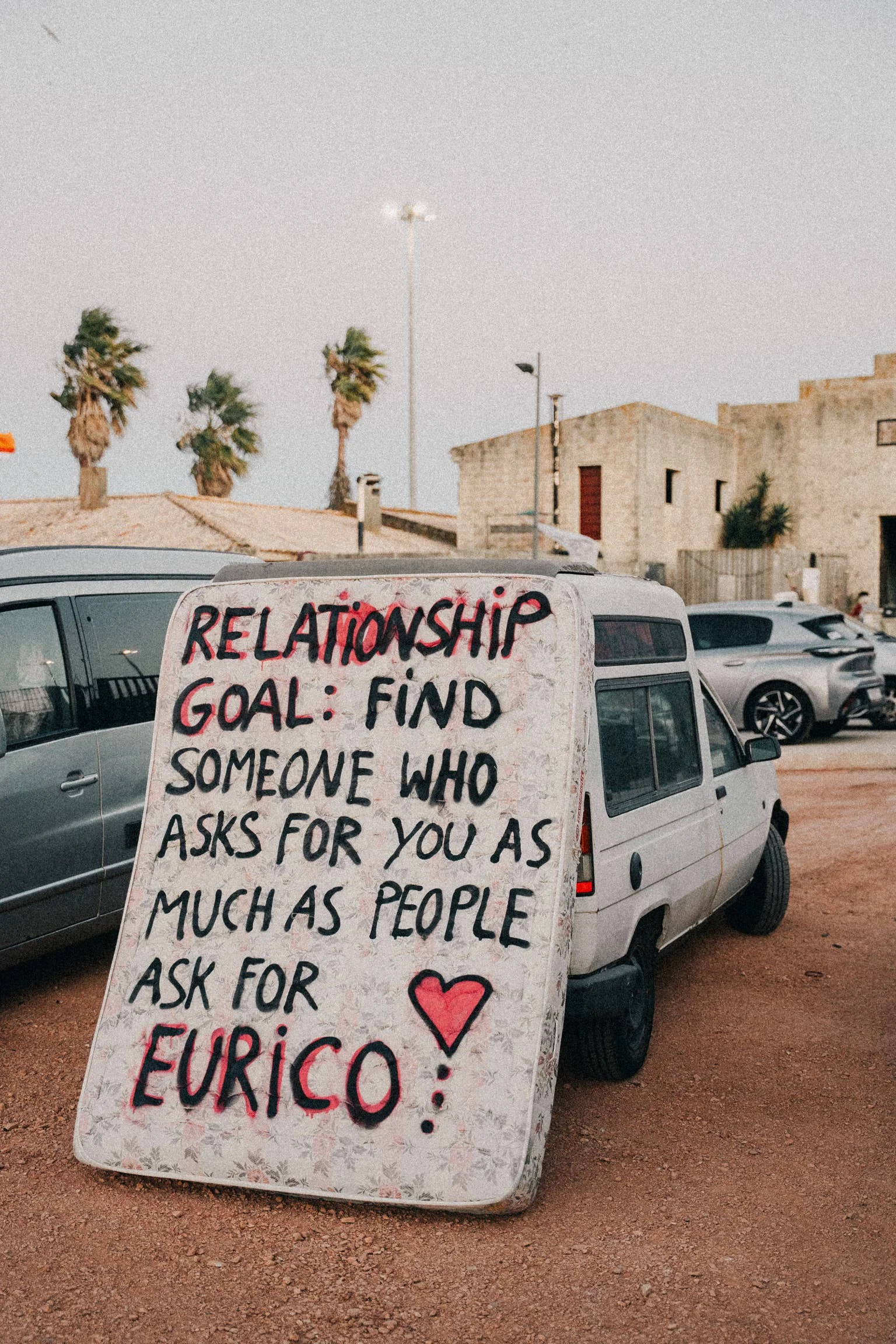
Gliding began on a smaller scale. Local surfer Teresa Folhadela recalls the first gatherings from childhood. A group including Eurico Gonçalves, Kiki, Bocó, Barbas, Márcio Oliveira, Careca and Miguel Figueira organized a community surf and beach day, followed by a feast in Auto-Peninsular, a 1940s-era garage. Their aim was to share the pleasure of surfing, celebrate life and inspire the next generation—a last warm-weather gathering before winter.
Simon Fitz
Today, the festival draws thousands of people from around the world. Many are between 18 and 50 and connected to surfing, music, art or clothing, but the crowd doesn’t fit a neat profile. Older local residents, including people with ties to the original group, are part of the gathering too. On one ferry crossing at 4:30 in the morning, a group of local women in their sixties were still laughing together, their amusement carrying across the wait.
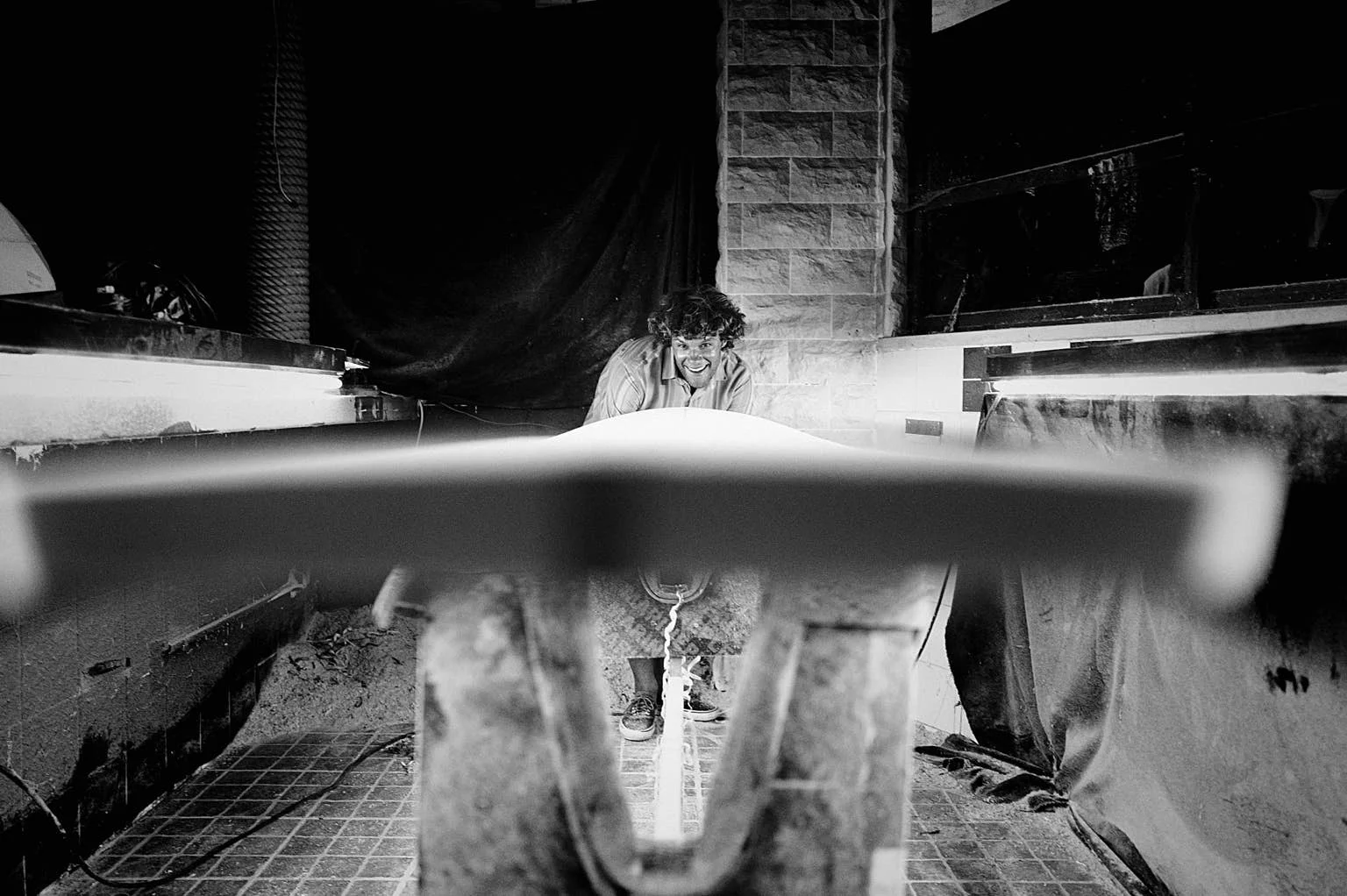
Participation extends beyond the beach. Much of the entertainment is free; a €50 donation provides access to the rest, including five nights of music across three stages, board shaping, a living art gallery and impromptu performances. Shaping bays remain active late into the night. The event’s appeal lies partly in this overlap: people aren’t only watching a program, but encountering the work and company that make it happen.
Chris Dodds
That scale can make the festival feel mysterious: hundreds of people, several stages, food service, surfing and art all unfolding without a rigid hierarchy. But the organizing principle is visible in the details. The crew includes people who return year after year, meals are shared rather than sold, and the audience is free to move between the waves and the rest of the gathering.
Simon Fitz
The people are part of the program
The festival’s final stretch is less polished than a closing ceremony and more like a long goodbye. After a Sunday dinner, an exhausted group climbed into Fitz’s Mercedes at 9 p.m., a notably early finish after a previous night that had ended with a ferry at 4:20 a.m. and a return home at 5:15. The car became a small extension of the gathering, carrying people between the event and the rest of the night.
Simon Fitz
Even the last evening keeps the communal rhythm. As the remaining crew—mostly friends and family—gathered for a final meal, they ate cachupa, a Cabo Verdean stew. The festival may peak on Saturday night, but the people who stay through Sunday get another chance to sit together and let the weekend unwind.
Gliding Barnacles has grown far beyond its original beach session and garage feast, yet its strongest moments still feel local and personal: a surfer finding her own line, a shared dinner, a late ferry ride, or a lift offered to a musician waiting at the curb. Its size brings global talent to Figueira da Foz; its character comes from making room for everyone to contribute. That balance is what gives the next reunion its promise.


