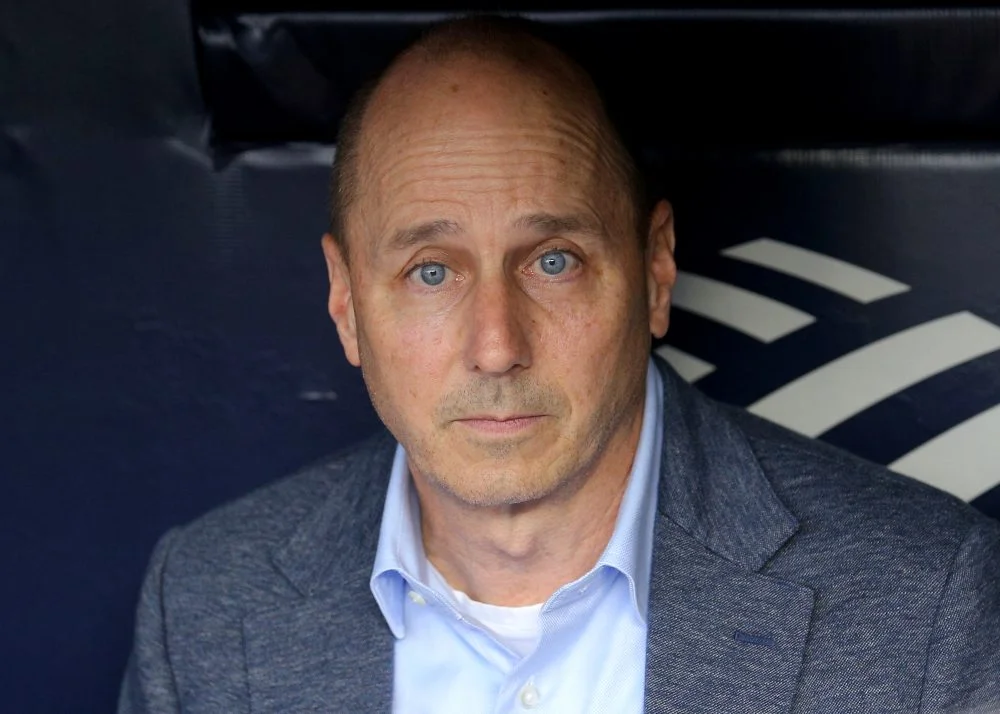
Brian Cashman has been the Yankees' general manager longer than anyone in franchise history, outlasting Hall of Famers Ed Barrow and George Weiss. But longevity isn't the same as ownership of results. In close to 30 years on the job, he's won just one World Series that can be credited to him without qualification: 2009.
That gap is the question here. The Yankees have now gone 17 years without a championship, a drought longer than George Steinbrenner's most manic stretch from 1982 to 1995 and longer than the post-dynasty years from 1965 to 1976, covering the CBS ownership period and the early Steinbrenner era. The streak is closing in on the club's chaotic foundational era, which ran from 1903 to 1922.
The early Yankees were a different kind of mess
Those early teams were owned by a casino operator and a Tammany Hall bagman. Their star first baseman, Hal Chase, was frequently accused of selling out his own club. They played in a park that needed duckboards laid in the outfield so Willie Keeler wouldn't plunge into a ravine chasing fly balls. Even after the more earnest "Two Colonels," Jacob Ruppert and Tillinghast Huston, bought the team in 1915, things stayed messy. They hired the sober Miller Huggins as manager in 1918, bought Babe Ruth in 1920, and pried general manager Barrow away from the Red Sox in 1921. The team didn't really settle until Yankee Stadium opened and Ruppert bought out his partner in 1923.
That was a primitive club in a chaotic environment. Today's Yankees are a mature organization in a league that has long since figured out the basics of team management. They also operate with advantages Ruppert and Barrow couldn't have imagined. Early in the 1930s, when the Yankees began building a farm system, minor leaguers competed mostly for minor-league pennants and the club played the hand it had been dealt. Talent acquisition was also narrower. Players of color were off limits, and nobody was scouting Japan. The Dominican Republic hadn't yet become a major talent source, and Cuban players largely flowed to the Washington Senators. Cashman's scouts, by contrast, can look at every race and nation that plays baseball. The modern Yankees also have revenue streams that would have seemed fantastical in Ruppert's day.
The drawbacks are real, too. Guaranteed long-term contracts mean the modern Yankees can't simply cut an underperforming player the way their ancestors could. Cashman's teams may not always have led the league in payroll, but they've hardly been on an austerity footing.
Why the postseason math is harder now
Winning a championship is also a tougher proposition than it was in Joe DiMaggio's era. Baseball embraced a multi-round, tournament-style postseason beginning in 1969. Here's the thing: DiMaggio's teams almost certainly wouldn't have won four straight titles from 1936 to 1939 under today's format. They would have had to survive best-of-five or best-of-seven series against another contender just to reach the World Series.
Counting the 1998, 1999, and 2000 titles
Calling Cashman's lone championship his "one" may sound harsh. He was the GM of record when the Yankees won in 1998, 1999, and 2000, and he was in charge again in 2009. But GM of record isn't the same as author. His predecessor, Gene Michael, played a bigger role in building those earlier clubs than Cashman did. Cashman didn't gain primacy over the advisors who surrounded George Steinbrenner until his contract came up for renewal after the 2005 season. Every move the Yankees made in his first seven years carried his signature, but he didn't author all of them.
Four phases, one question
That distinction is why Cashman's tenure needs to be split up rather than judged as a single block. His years break into four distinct periods, each with different levels of authority and different inputs into the roster. Read them in sequence, and the question becomes less about whether Cashman has been a good general manager and more about which phase produced the drought, and whether the current core can end it.


