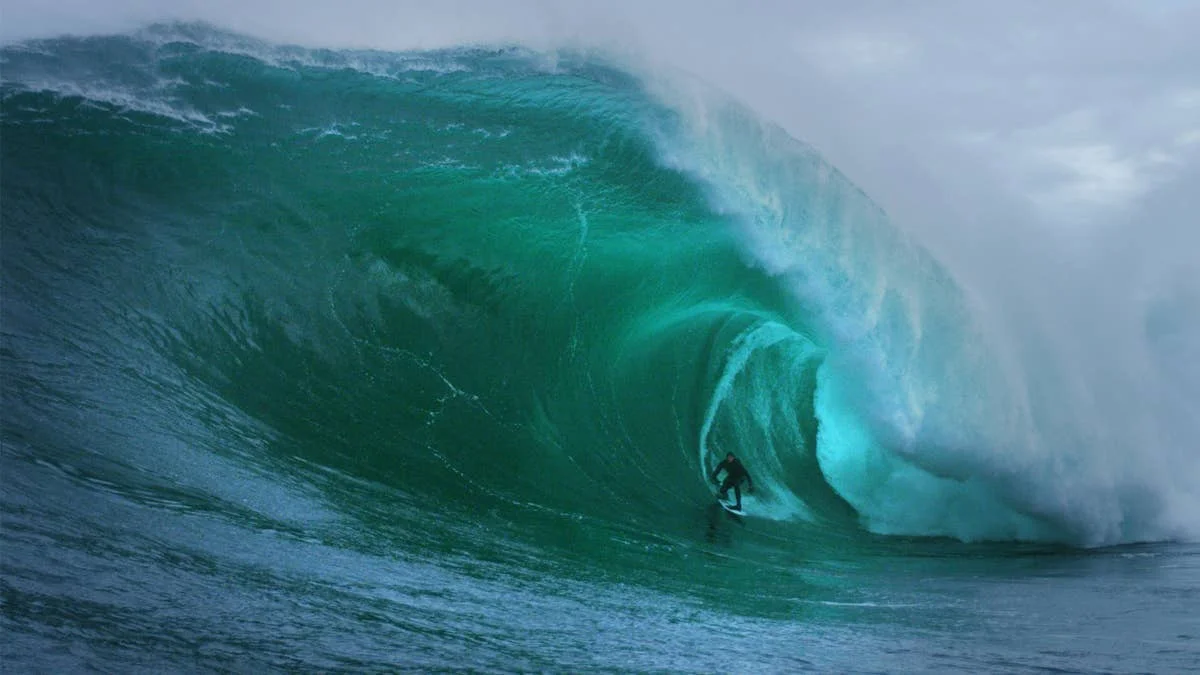
Shipstern Bluff’s step is the feature that makes it extraordinary—and the obstacle that has tested generations of surfers. Talon Clemow’s documentary Stern Fever follows how a remote Tasmanian wave became an international proving ground for slab surfing, and what it took to ride it before the world was watching.
“The essence of the film shows the progression of big wave slab surfing, and how it changed what was possible on a wave like that,” Clemow said. “Because it’s the most perfect wave, but then it’s just got this imperfect step in it. That’s what makes it so challenging and so compelling.”
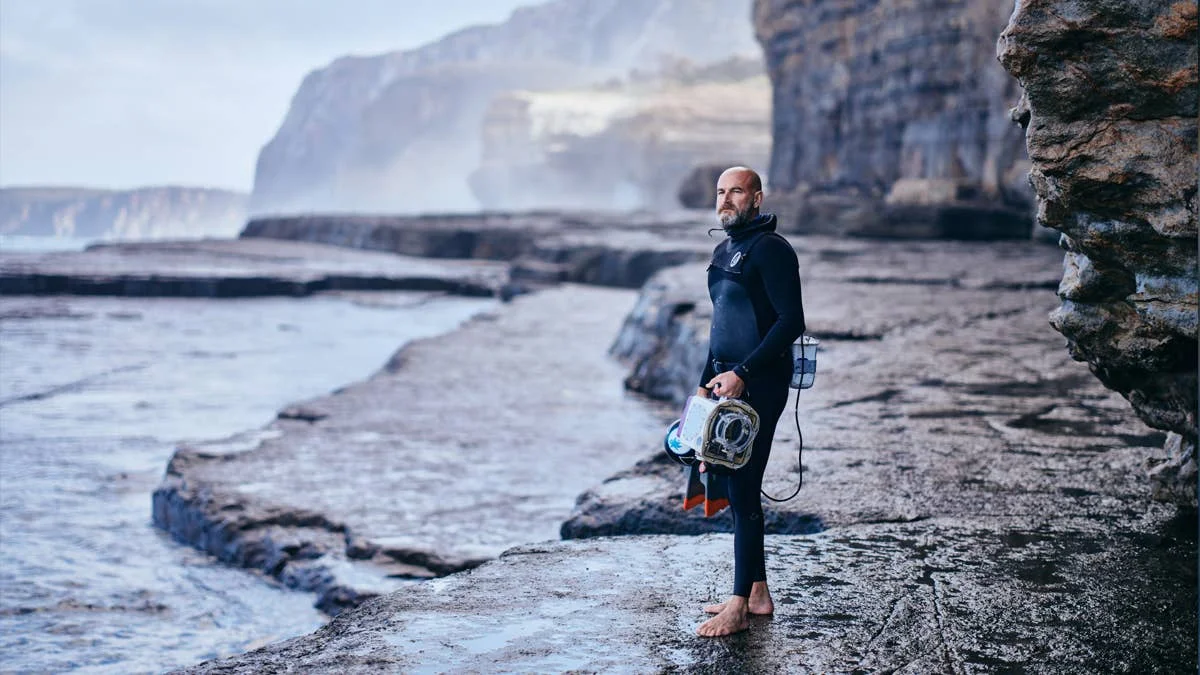
Clemow, the Australian filmmaker behind One Palm Media and the surf documentary Thundercloud, spent years shaping the film’s focus. Narrated by actor Simon Baker, Stern Fever combines archival footage, contemporary interviews and high-resolution surf cinematography to tell the story through the people who found the wave and those still drawn to it.
From remote secret to global surf stage
The film reaches back to the late 1980s and early 1990s, when surfers including Dave Guiney and Andy Campbell began exploring Shipstern Bluff. Guiney, a New Zealand expat, may have been the first to surf it. Campbell became the first to charge the step in the late 1990s, initially taking on the wave alone.
Campbell anchors the film as a thoughtful presence, weighing the risks of introducing Shipstern Bluff to a wider audience. He eventually invited Dave Rastavich, Brendan “Margo” Margieson and filmmaker Justin Gane to experience it. In Clemow’s telling, those early years carry a particular weight: there were few people nearby, little precedent, and no guarantee that anyone could work out how to surf the wave safely.
“We’ve all seen it today in videos, photos and magazines, but the bravado or the courage to take it on and work it out in the early days, with no one around for hundreds of miles, was inspirational,” Clemow said.
Courtesy Stern Fever
Shipstern Bluff entered the broader surf conversation in the early 2000s, when a session featuring Kieren Perrow and Mark Mathews appeared in Tracks and spread widely for the pre-social-media era. Top surfers began making the trip, joining local riders who had built deep experience on the wave. Attention brought a new contest over access, recognition and reputation, involving surfers, photographers and surf media.
The footage captures some of the sessions that helped establish the wave’s standing, including rides by Laurie Towner, Andy Irons and Kelly Slater. Clemow first considered making a film about Shipstern Bluff in 2010, while working as an audiovisual manager for Billabong and filming the break. His material was already circulating internationally, helping cement the wave’s place in surf culture.
A film reshaped around the bigger story
The project’s first version didn’t come together. Clemow later moved to Tasmania in 2015, intending to make a film centered on the local surfers, who are widely regarded by visiting riders as the best on the wave. After nearly a decade, that project also stalled.
“It’s been a long, long journey, with a couple of false starts and then ultimately, I pivoted in the last couple of years,” he said. He shifted the focus to the people and events that carried Shipstern Bluff from a secluded break to a global benchmark for slab surfing.
That choice gives Stern Fever room to connect individual decisions with the wave’s growing public identity. The local surfers remain part of the story, though their experience isn’t the film’s central subject. Clemow’s approach instead tracks the wider arc: discovery, experimentation, exposure and the arrival of an international crowd.
Courtesy Stern Fever
Taking Shipstern Bluff to audiences
After sold-out screenings in Tasmania, the film made its overseas premiere at the Lido Theatre during the Newport Beach Film Festival. It received the festival’s Best Action Sports Feature Award, and California theater screenings were scheduled for late November.
Festival Director of Special Programs Lindsay Feibleman described the film as a tribute to Tasmania’s coast and the spirit of big-wave surfing, saying that the people who ride Shipstern Bluff deserved to have their story told.
The wave’s reputation rests on a rare combination: a remote setting, a formidable step in the seabed and the commitment required to meet it. Stern Fever treats that step as more than a surfing hazard; it’s the physical feature around which a community, a body of knowledge and a quarter-century of surf history formed. Its lasting value may be in showing how a place once known to a few became a benchmark that continues to draw the world’s most committed slab surfers.


