The surfboard’s history is a story of changing priorities. Early boards carried cultural meaning and demanded strength; later designs made surfing lighter, faster and more accessible. Today, shapers are balancing performance with versatility and a growing interest in materials with a smaller environmental footprint.
That arc runs from Polynesian timber boards to the modern thruster, computer-aided shaping and a renewed appetite for mid-lengths. Each major shift began with a practical question: How could a board work better for the waves and surfers of its time?
Boards built for tradition and weight
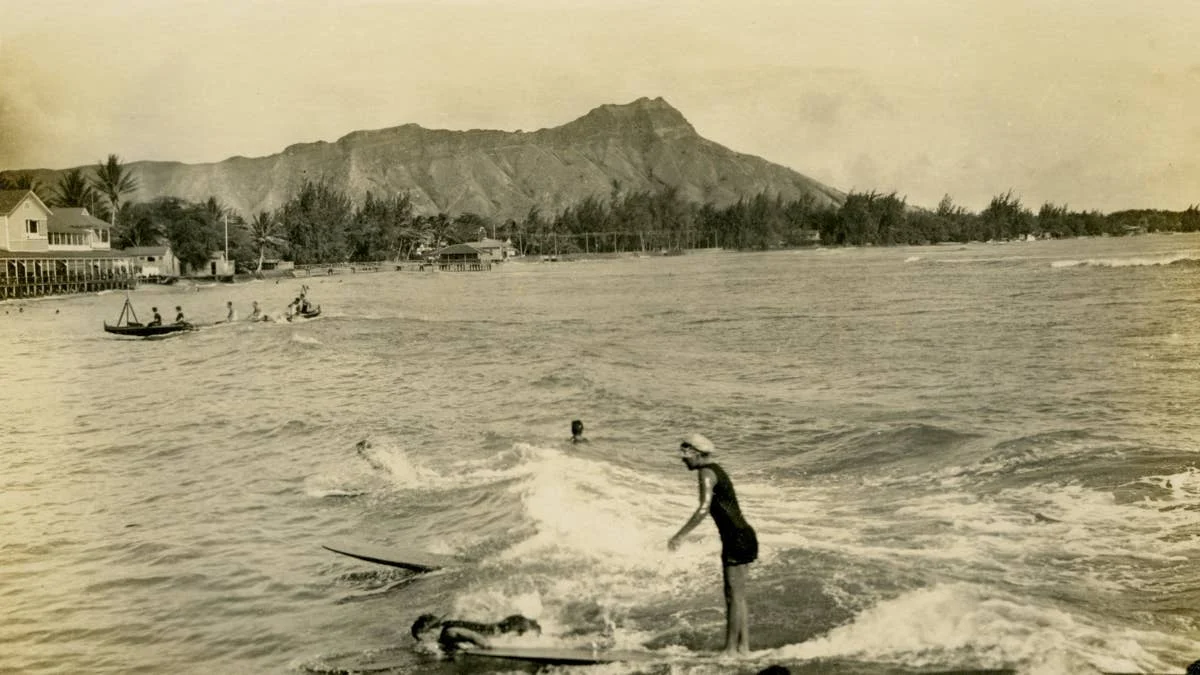
Surfing, known in Hawaiian as he’e nalu, has deep roots in Polynesia. Traditional board designs included the olo, the alaia and the kiko’o. The olo could exceed 16 feet and was associated with Hawaiian royalty. The alaia was shorter, while the kiko’o fell between the two in length. Variations in size and shape gave surfers different ways to approach the water, but all were heavy wooden boards without fins.
There’s no settled date for the first surfboard ride. Some accounts point to very ancient surfing traditions, and the precise beginnings remain uncertain. What’s clearer is that Polynesian board forms and practices provided the foundation for surfing long before the sport spread internationally. Surfing also carried a spiritual dimension, connecting it to a way of life rather than treating it simply as a pastime.
The equipment changed markedly in the early 20th century, as surfers began testing how materials and dimensions affected a board’s behavior. Hawaiian surfer Duke Kahanamoku helped introduce surfing to audiences around the world. His redwood boards were heavy and time-consuming to shape, but they extended what surfers could attempt and helped inspire further experimentation.
Lighter boards open new possibilities
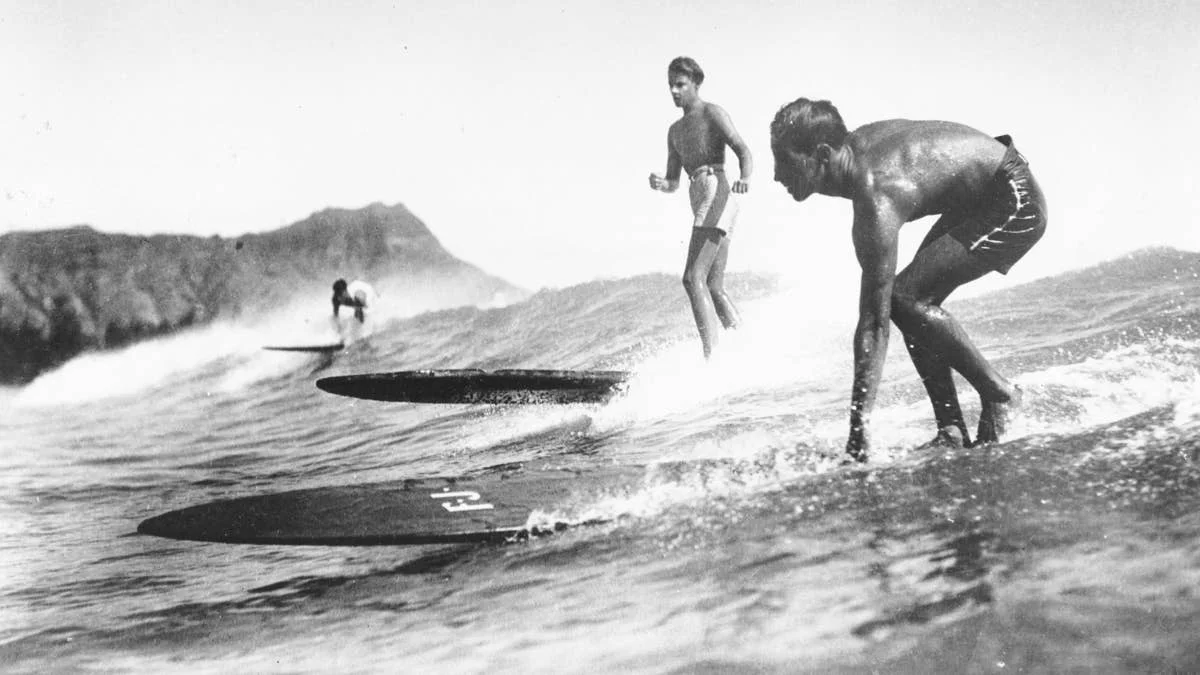
Weight was one of the first engineering problems surfers tackled. Between 1929 and 1931, Tom Blake developed a hollow wooden surfboard, often called a “cigar box.” An internal frame with ribs supported plywood decks, drawing on construction ideas associated with airplane wings. The design cut a heavy board’s weight roughly in half, though the wood could still take on water. Blake addressed that drawback with a drain plug.
In 1935, Blake added a speedboat fin to the underside of his board. That change helped surfers turn more effectively, giving the fin a lasting role in board design. His work showed how a single structural adjustment could affect both handling and practicality.

The next major change arrived in the 1950s, when balsa, fiberglass and polyurethane foam helped reshape the longboard. Foam blanks replaced the hollow wooden construction, while polyester resin added strength and helped seal the board against water. Lighter materials made boards easier to shape and expanded the room for experimentation with fin placement and templates.
The result was more than a new manufacturing method. With boards easier to produce and modify, surfing spread further, especially in California and Australia. The Malibu-style longboard became a defining shape of the era, while the surfboard itself became a more accessible platform for personal style and design choices.
Related: How To Surf a Twin Fin With Josh Kerr
Shorter boards change the ride
By the 1960s, surfers were asking what a shorter board could do. Designs that had often stretched beyond 10 feet began shrinking to seven feet and, in some cases, six. The reduction in length made tighter turns possible and suited more critical, performance-focused waves. It also helped establish the design principles that continue to shape modern boards.
California surfer George Greenough was a key influence. He rode unusually short kneeboards and pushed ideas about speed and maneuverability. Bob McTavish carried that approach into stand-up surfing, adapting Greenough’s thinking to shorter surfboards. The shift was a substantial break from the longboard norms of the previous decade.
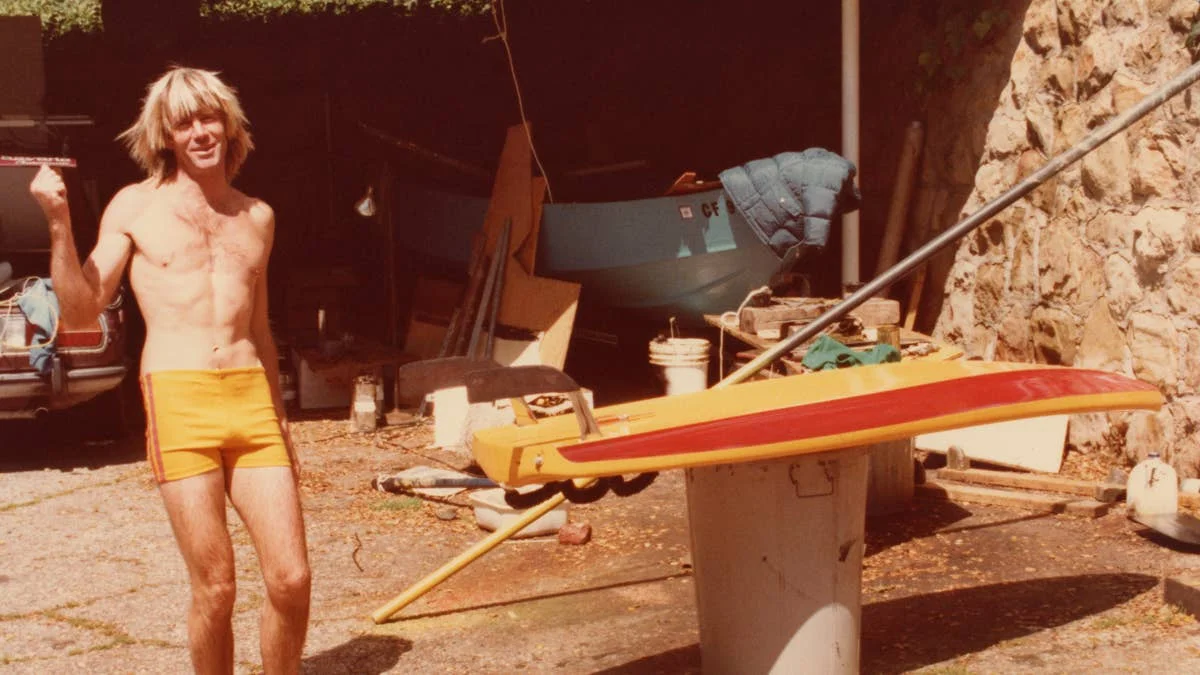
Fin configurations evolved alongside board length. Tom Blake had tried twin fins decades earlier, but the layout gained wider attention in 1976, when Australian surfer Mark Richards developed his own version. Compared with the single fins then in common use, the twin fin offered greater maneuverability, particularly in smaller surf. Richards was responding to a specific limitation: single fins didn’t perform as well in those conditions.
Twin fins weren’t the answer for every wave, especially larger surf, but they showed how a different fin arrangement could change a board’s character. The configuration remains a distinct option for surfers seeking a looser, more maneuverable ride.

The thruster becomes the performance template
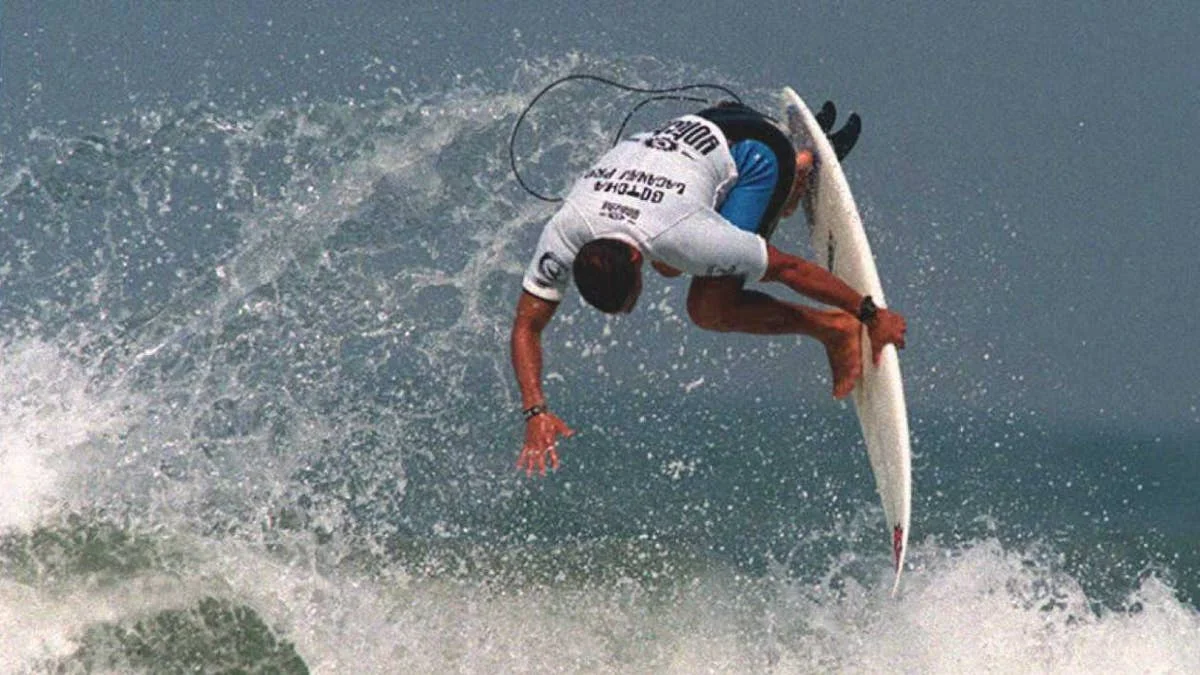
In 1981, Simon Anderson introduced the thruster: two side fins paired with a center fin. The setup combined drive and control in a way that gave surfers more confidence to push their turns. It helped accelerate performance surfing and remains central to high-performance board design.
The thruster’s rise also fed interest in rocker, the curve running along a board’s length. Shapers worked on how that curve could help surfers enter steeper waves earlier. Over the following decade, shorter and thinner boards became common, while shapers tested tail shapes, rail thickness and concaves. The design conversation increasingly focused on how individual features affected performance.

Computer-aided design began to change how boards were produced in the 1990s. Computer-guided cutting brought greater precision and made it easier to produce boards at scale across different markets. The craft still depended on shapers’ choices, but digital tools added a repeatable way to translate designs into finished shapes.
More options for more conditions
At the turn of the millennium, some surfers tired of narrow, high-performance boards that worked best in particular conditions. Fish designs, retro shapes and wider boards returned, often updated with newer materials and construction. Volume also became a more prominent part of the discussion when choosing a board. For many surfers, the practical approach was to own several shapes for different types of surf.
EPS foam and epoxy resin gained ground as alternatives to the polyurethane foam and polyester resin commonly used in earlier designs. Hybrid boards also grew in popularity, combining features of fish and performance shapes without fitting neatly into either category.
In the 2010s, computer-aided shaping became standard across the industry, allowing precise profiles and production at scale. Grovellers—boards designed to help surfers generate speed in weaker waves—found a strong audience. Material experiments continued too: carbon fiber offered new ways to tune flex and durability, while Channel Islands developed Spine-Tek, a precision-engineered stringer running down the board’s center. The brand also added carbon patches to tails to improve board durability.
Material choices and the return of the mid-length
Today’s design work reflects two parallel interests: finding board shapes that suit a range of conditions and reducing the footprint of construction. Bio-resins and blanks made from bio-polyester, including Polyola, are entering the market. The shift is still developing, but sustainability has become part of the conversation among shapers and surfers.
The mid-length has also returned to view, with Channel Islands among the brands associated with its renewed popularity. Paired with a pin tail and twin fins, this longer shape can offer a forgiving ride in powerful waves with plenty of open face. It adds another option between short performance boards and traditional longboards.
Related: How To Surf a Mid-Length Surfboard
The surfboard’s next chapter will depend on how shapers reconcile those priorities: performance, versatility and material impact. The history suggests that progress rarely comes from one design replacing every other one. It comes from giving surfers more useful choices for the waves they actually ride.


