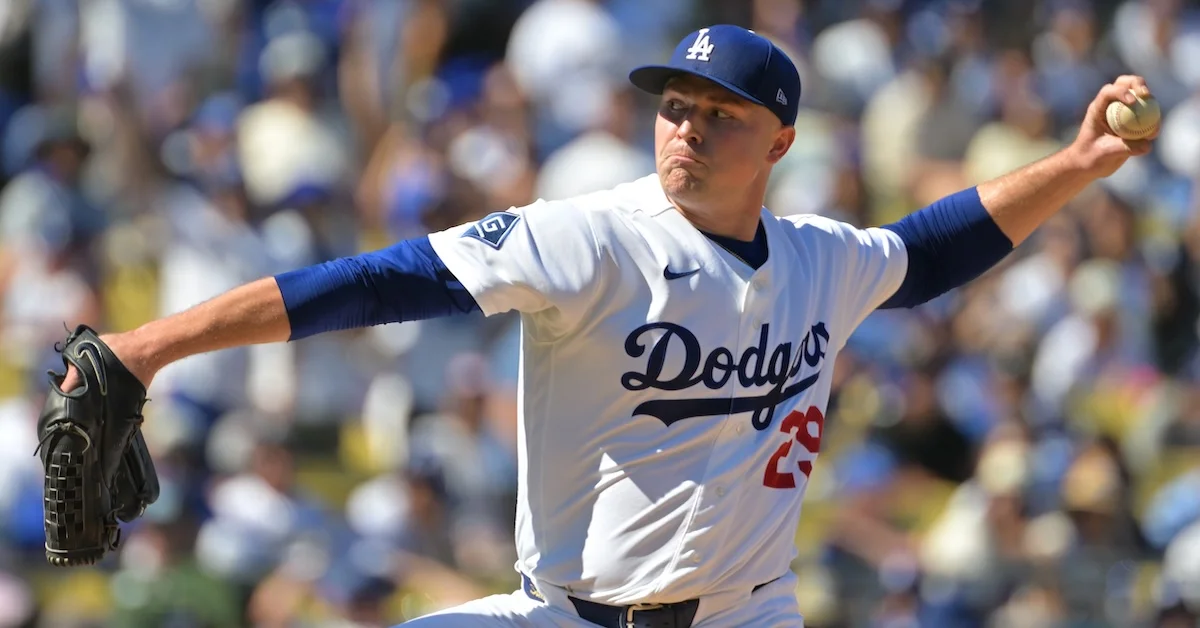
The striking thing about this winter’s free-agent class is how much hinges on one pitcher. Tarik Skubal is the clear headliner; after him, teams will find interesting players, but no comparable ace. FanGraphs’ annual ranking covers the top 50 available players, with contract estimates for everyone and market analysis for the first 25. Player notes from a broad group of FanGraphs writers add career context across the full list.
This is my sixth year leading the project. Dave Cameron, Kiley McDaniel, and Craig Edwards ran it before me, and the ranking reflects contributions from the FanGraphs staff throughout. Davy Andrews (DA), Michael Baumann (MB), Brendan Gawlowski (BG), Jay Jaffe (JJ), David Laurila (DL), Eric Longenhagen (EL), Matt Martell (MM), Kiri Oler (KO), Matthew Roberson (MR), and Dan Szymborski (DS) wrote player breakdowns. Their notes and the market commentary sometimes touch on the same ground; together, they aim to show both what each player brings and what his free agency could look like. Meg Rowley served as a sounding board. Eric Longenhagen and Brendan Gawlowski helped extensively with international players, Jason Martinez and Jon Becker contributed market expertise, Dan Szymborski provided early projections, and Sean Dolinar handled technical assistance.
The order is my preference, not a strict ranking of projected dollars. In a few cases I like a player who is likely to earn less more than one whose expected contract is larger. The figures are guaranteed money only; team options, opt-outs, vesting options, and incentives aren’t counted. Unless specified otherwise, the projections are Steamer’s 2027 forecasts using FanGraphs Depth Chart playing-time estimates. The ages listed refer to the season each player is about to enter, and each player’s crowdsourced projection appears beside mine.
For the full list of this year’s free agents, including updates as players sign and crowdsourced estimates for players whose deals were polled, see the Free Agent Tracker.
A thin class, shaped by extensions and a looming labor fight
This is the shallowest class I’ve ranked in six years, and perhaps the thinnest going back further. Some of that is ordinary variation from one offseason to another. Some is the result of extensions that kept prominent names off the market: Jesús Luzardo, Nico Hoerner, Chris Sale, and Max Muncy extended this spring. Garrett Crochet and Alejandro Kirk would have been available without extensions signed in 2025. A short extension and 2027 team option took Drew Rasmussen out of the picture, while a vesting option kept Yandy Díaz from joining the veteran bats on offer. That’s a substantial amount of talent to lose before the market even opens.
The other force hanging over the offseason is the expected lockout as MLB and the players’ union negotiate a new collective bargaining agreement. A lockout would stop contact between teams and players, freezing negotiations and signings. If talks last long enough, the 2027 season and its revenue could also be at risk. A shortened season isn’t the likeliest outcome, but clubs tend to build budgets around what could go wrong. That caution could matter even before anyone knows how the talks will end.
The last CBA negotiation, in 2021–22, didn’t prevent free agents from getting paid. Deals came before the lockout, then activity surged again after months of silence, just ahead of spring training. But that’s an imperfect guide: this time, both sides have proposals that could substantially reshape baseball’s economic system.
MLB’s proposed hard cap and salary floor would change the market dramatically, and any phased rollout could affect what teams can spend in 2027. The union’s proposal is less sweeping, but a soft floor and changes to television revenue sharing would still alter club budgets. Those are opening positions, and the details will shift in negotiations. For now, the uncertainty itself is the point.
A team may think twice before committing to a long-term deal this winter. Clubs near projected cap limits will have to consider how new rules might constrain them; teams below a possible floor may need to plan for spending enough to comply. The result could be awkward at both ends of the market. Lower-spending clubs may have to take on more commitments in the years ahead, while executives with large budgets, such as the Yankees or Dodgers, may prefer to wait for clarity.
And yet, waiting has a cost when the player is good enough. Tarik Skubal is unlikely to remain available after a lockout begins. He has every reason to secure a deal before the rules of the market change, and a team may decide that his talent justifies a record offer as early as November. That tension—caution about the future against the chance to sign a singular player—could make this a strange winter.
One clear star, then a much less certain field
Skubal stands apart. He returned quickly from an injury scare, made 26 starts, and finished with a 2.72 ERA, while several ERA estimators rated him even better. He’s a front-line ace who would lead nearly any rotation. Teams looking for a strong starter have alternatives; teams looking for a pitcher with Skubal’s standing don’t. That gap is why the question is how far his contract will stretch past the previous pitcher record, rather than whether he’ll set one.
The next tier has appealing names but no sure bets. Trevor Rogers, Michael King, and Freddy Peralta can anchor good rotations without being unquestioned aces. Adrian Morejon has dominated as a reliever and may be able to start. Among hitters, Seiya Suzuki and Randy Arozarena bring power from the corners, though both are over 30. Jazz Chisholm Jr. is younger, with more uncertainty. NPB standout Teruaki Sato is younger still, but questions remain about how his power-first approach will translate to MLB and where he’ll play in the field.
The talent thins quickly at the top, but the rest of the list offers useful options. Twenty of the 50 players are starting pitchers, many of whom could be available on affordable one- or two-year deals. There are experienced closers, multi-inning left-handed relievers, veteran catchers, three center fielders, and utility players with standout skills. Milwaukee’s successful use of Aaron Ashby and DL Hall on the way to a World Series title may make teams more interested in left-handed pitchers who can cover multiple innings.
The bottom portion of the ranking looks familiar: useful players who don’t have the profile or bargaining position to avoid free agency with a lucrative extension. If you need to fill holes around an existing core, there’s plenty to consider. If you’re counting on two new stars to turn a team into a contender, this class is likely to disappoint.
How I approached the rankings
Uncertainty about which KBO and NPB players will come to MLB is part of every offseason; the lockout makes this year harder to read. I’ve included Teruaki Sato, Kaima Taira, and Hiromi Itoh. More players from those leagues could rank in the back half of the top 50, but I don’t expect them to be available. For that group, MLB salaries may not outweigh staying put, especially when a move would mean adapting to a new league amid an unusually uncertain offseason and, in the best case, a shortened spring training.
I’m more bullish than consensus on several left-handed pitchers, especially those who miss bats. The best teams have stocked up on lefties, and the reason is plain: October lineups often include dangerous left-handed hitters, while the league itself is trending more left-handed. I also favor young pitchers. With few reliable aces beyond Skubal, upside matters. I’d rather bet on a younger arm with tools that might develop into playoff-rotation quality than settle for a safer but lower ceiling.
Near the bottom of the list, I gave extra weight to pitchers who finished the season well. The gap between, say, the 46th and 56th players is often a matter of judgment and tiebreakers. Plenty of players narrowly missed; these are simply the 50 I prefer.
On offense, I’m skeptical of the center fielders with notable questions: Daulton Varsho, Trent Grisham, and Luis Robert Jr. I see outfield defense as easier to replace competently from within an organization than distinctive offense. So I put more value on hitters who can contribute at the plate, whether through contact like Luis Arraez or power like Jake Bauers. A front office should weigh those options against what its farm system can supply and save veteran acquisitions for the skills it can’t easily produce internally.
That’s the lens behind the list and its omissions. If a player sits lower than expected, or a particular role is thin or crowded, the broader shape of the market likely explains why. I’ll answer questions about the rankings at 2 p.m. ET today. With that context in place, here’s the top 50.
| Type | Years | AAV | Total |
|---|---|---|---|
| Ben Clemens | 10 | $38.0 M | $380.0 M |
| Median Crowdsource | 8 | $42.0 M | $336.0 M |
| Avg Crowdsource | 7.91 | $42.4 M | $335.8 M |
| IP | BB% | K% | GB% | ERA | FIP | xFIP | WAR | RA9-WAR |
|---|---|---|---|---|---|---|---|---|
| 192.0 | 5.6% | 29.4% | 43.1% | 2.88 | 2.83 | 2.93 | 5.5 | 5.7 |
Ben’s Take
Predicting a contract for a pitcher this good is unusually straightforward: every club that wants a true ace has to consider Skubal specifically. The market for a strong starter has several options; the market for a Skubal-caliber ace has one. That makes the scale of his new deal the central question. He should pass the old record for a full-time pitcher.
Yoshinobu Yamamoto set the previous benchmark with a 12-year, $325 million contract that included player-friendly features such as opt-outs and a no-trade clause. Skubal may prioritize guaranteed cash over those perks, and I expect his deal to establish a new headline figure for pitchers. Ten years is a long time to commit to an arm, but spreading the money across more seasons helps make the annual cost workable. My model prices a three-year deal at $65 million per year, a level that doesn’t fit the way baseball teams budget. I expect Skubal to sign before December. His contract is so far outside the rest of this class that I don’t think it will freeze the market for other players.
Player Notes
Skubal followed his 2024 and 2025 Cy Young Awards with an uneven season by his own standards. Before his walk year, Detroit offered him $19 million in arbitration; he instead won the largest arbitration salary in history, at $32 million. Loose bodies in his left elbow then sent him to surgery. The experimental NanoNeedle Scope 2.0 procedure got him back in about six weeks, but Detroit’s direction was already clear. The Tigers traded him to the Dodgers on August 2 for three players. Skubal kept pitching like an ace; he just couldn’t carry Los Angeles to a third straight championship by himself.
Seiya Suzuki is the best position player in this free agent class, and the thin supply of impact bats gives him unusual negotiating power. That scarcity could push his price beyond what his age and defensive profile might otherwise justify. The projections put him around a 2.7 WAR player in 2027, but his ceiling is higher if his 2026 form holds.
Seiya Suzuki: the market’s top bat
| Type | Years | AAV | Total |
|---|---|---|---|
| Ben Clemens | 4 | $27.0 M | $108.0 M |
| Median Crowdsource | 4 | $24.0 M | $96.0 M |
| Avg Crowdsource | 3.79 | $23.7 M | $89.8 M |
| PA | BB% | K% | AVG | OBP | SLG | wOBA | wRC+ | Off | Def | WAR |
|---|---|---|---|---|---|---|---|---|---|---|
| 644 | 11.5% | 24.7% | .256 | .346 | .447 | .346 | 120 | 13.6 | -9.3 | 2.7 |
Ben’s Take
Suzuki’s 2026 season could hardly have arrived at a better moment: 4.5 WAR, 26 home runs, and recognition as a Gold Glove finalist. He’s also the best hitter available this winter. The projection is straightforward: if he stays healthy and can keep producing above-average defense in a corner outfield spot, he should remain an All-Star caliber player for several years. His bat has been dependable across five major league seasons; even his lowest wRC+ has been 118.
There’s a reason teams still consider long deals for hitters past 30 when the market offers few weaknesses. Suzuki pairs a good eye with contact and power, giving him some cushion if one part of his offense slips. I’d expect the uncertainty around baseball’s next economic agreement to make a contract of five or more years harder to land, but a high annual value is still in play. My estimate is four years and $108 million, with a $27 million average salary.
Player Notes
The market’s lack of alternatives changes the conversation around Suzuki. In earlier winters, a team with money could choose among stars such as Aaron Judge, Trea Turner, and Willson Contreras. This winter, a club seeking a reliable middle-of-the-order hitter has far fewer choices. Suzuki is the clear one.
There are real qualifications. He’s 32, bats right-handed, and plays a corner outfield position; he already started 28 games at designated hitter in his walk year, a role that could expand as he ages. Since coming to the U.S. in 2022, he ranks 55th among qualified position players in WAR and 24th in wRC+. Teams will be paying for his bat, and the final years of a long contract could get uncomfortable.
Still, his career trajectory has been encouraging. Suzuki hit 14 home runs and reached base at a .336 clip as a rookie. Over time in Chicago, he has preserved his bat speed, made more contact on pitches in the zone, and pushed his walk rate above 10%. After four years of weak defensive numbers, he graded well above average in right field in 2026, helping him reach that career-high 4.5 WAR. He’s the class’s best position player, even if the bidding gets ahead of the likely production.
Trevor Rogers brings age and upside
Trevor Rogers is a strikingly young option for a free agent starting pitcher: he’ll enter his age-29 season, and his 2026 performance made him the class’s second-best pitcher by fWAR. The injury history makes him a risk. The present-day version, though, has the stuff and command teams want, and his heavy four-seam fastball usage gives pitching development groups something to work with.
| Type | Years | AAV | Total |
|---|---|---|---|
| Ben Clemens | 4 | $26.0 M | $104.0 M |
| Median Crowdsource | 5 | $24.0 M | $120.0 M |
| Avg Crowdsource | 4.36 | $23.7 M | $103.3 M |
| IP | BB% | K% | GB% | ERA | FIP | xFIP | WAR | RA9-WAR |
|---|---|---|---|---|---|---|---|---|
| 175.0 | 7.0% | 22.4% | 40.7% | 3.82 | 3.83 | 3.91 | 3.2 | 3.1 |
Ben’s Take
I kept Rogers at No. 3 even after other evaluators questioned the ranking. The case is that he’s already good, not merely a project: multiple run-prevention measures agreed with his strong 2026 results. He combines above-average stuff and command, and teams may see room to improve his arsenal further. His age also matters in a market where many available starters are older.
The caveats are substantial. Rogers missed roughly two seasons’ worth of time with injuries, and his 2024 start in Baltimore was so poor that he was demoted after four outings. In my view, those struggles reflected a pitcher out of sync who wasn’t making full use of his tools; he has since corrected the command problems that held him back. His left-handedness adds value, too. Clubs looking for matchup options against teams such as the Yankees, Dodgers, and Brewers may favor a lefty when choosing between comparable starters.
Player Notes
Baltimore acquired Rogers from Miami at the 2024 trade deadline, hoping he could recover his 2021 form quickly enough to help with a playoff run. That immediate boost never came: he made four poor starts and went down to the minors. The longer-term bet paid off. The following winter, Rogers went to Driveline, rebuilt strength lost after a back injury, adjusted his delivery, and changed his sweeper grip.
A dislocated knee delayed his 2025 debut, but Rogers was dominant after returning. His fastball gained more than a tick of velocity, while the stronger physical base helped him locate it with greater precision. The sweeper also became one of his best weapons. Over the past two seasons, he has made 48 starts, posted a 3.20 FIP, and accumulated 7.3 WAR; each total ranked 17th among starters over that span. His 169 2/3 innings in 2026 were a career high. He looks like a stable mid-rotation starter, with a plausible case for a No. 2 role, and should have a shot at a nine-figure contract even in a market rich with left-handed pitching.
Michael King’s value depends on the health bet
Michael King’s track record makes him one of the more attractive starters available, but his 2026 underlying numbers point to some regression risk. His contract estimate lands around four years and $100 million; whether he tests the market or returns to San Diego on a revised deal remains an open question.
| Type | Years | AAV | Total |
|---|---|---|---|
| Ben Clemens | 4 | $25.0 M | $100.0 M |
| Median Crowdsource | 4 | $25.0 M | $100.0 M |
| Avg Crowdsource | 3.98 | $25.6 M | $102.0 M |
| IP | BB% | K% | GB% | ERA | FIP | xFIP | WAR | RA9-WAR |
|---|---|---|---|---|---|---|---|---|
| 180.0 | 8.5% | 22.1% | 42.4% | 4.07 | 4.11 | 4.09 | 2.5 | 2.5 |
Ben’s Take
King opted out of the final two years and $53 million on his previous contract after a solid 2026 season. He set career highs in starts and innings and produced 2.6 WAR, a strong rebound after missing half of 2025. He didn’t match the dominance of his 2024 season, but he gave teams a healthy, useful starter this year. I suspect he could return to the Padres on a renegotiated deal; for now, he belongs among the market’s most appealing options.
The warning signs are in the process stats: King recorded career lows in swinging-strike and strikeout rates, alongside career highs in walk rate, xFIP, xERA, and SIERA. A low BABIP and high strand rate helped keep the results afloat, and those are hard to bank on repeating. The projections see a good starter rather than an ace. I’d still rate him a little higher for his reliability and flexibility, and because San Diego under A.J. Preller has shown a willingness to pay to retain its own players.
Player Notes
King was a 12th-round pick who emerged late as a Yankees reliever before moving back into a starting role. That conversion has worked exceptionally well. He missed time in 2025 with a shoulder nerve issue and knee pain, but across three seasons with the Padres he has delivered 7.5 WAR, a 3.15 ERA, and a 3.86 FIP in 432 innings, plus six solid postseason appearances. He was healthy throughout 2026. Behind Tarik Skubal, King has a credible claim alongside Rogers and Freddy Peralta as one of the class’s next-best starters.
His strikeout rate has fallen, though hitters haven’t made enough additional contact to suggest the strikeouts have disappeared. The plan is simple: sinkers, four-seamers, and sweepers to everyone, with changeups for left-handed hitters and sliders for righties. Clubs priced out of the Skubal pursuit should have plenty of reason to pursue King, whatever the next CBA brings.
Teruaki Sato is a high-variance power play
Teruaki Sato offers the sort of upside that can change a lineup, along with enough swing-and-miss risk to scare off teams seeking certainty. He’s only 28, and the power is real. The hard question is whether his contact and defense will let that power carry a major league regular’s value.
| Type | Years | AAV | Total |
|---|---|---|---|
| Ben Clemens | 5 | $22.0 M | $110.0 M |
| Median Crowdsource | 5 | $20.0 M | $100.0 M |
| Avg Crowdsource | 4.52 | $19.6 M | $88.6 M |
| PA | BB% | K% | AVG | OBP | SLG | wOBA | wRC+ | HR | WAR |
|---|---|---|---|---|---|---|---|---|---|
| 607 | 9.2% | 32.1% | .254 | .326 | .471 | .339 | 118 | 25 | 2.9 |
Ben’s Take
Like Munetaka Murakami, Sato is a Japanese third baseman and right fielder whose offense drives the appeal. He has plus-plus power and a swing built to lift the ball, but the strikeouts are part of the package. In NPB, he missed at a rate comparable to Colson Montgomery’s MLB rate; Montgomery set the single-season strikeout record. Sato may not whiff at that level in the majors, but the uncertainty is significant.
His defense grades below average at both third and right, and some clubs may project him at first base or as a rotating corner player. That limits how much a team can count on him, especially if the contact doesn’t translate. But the upside is just as clear: if the glove holds at third and the power carries over, a perennial All-Star outcome is possible. A rising team willing to take a calculated risk could find the bet worthwhile, much as the White Sox did with Murakami the previous year. Sato’s age leaves time for the payoff to last.
Player Notes
Sato was one of the top prospects in the 2020 NPB draft: four teams named him as their first-round nominee, an unusually high number, before Hanshin won the lottery for his rights. The college draftee made the big club out of camp in 2021 and struck out 38% of the time as a rookie. He then put together three steadier seasons before breaking out with major power in 2025. Across the past two seasons, he has averaged 40 home runs and 80 extra-base hits. He won the Central League MVP in 2025 after claiming the league’s Triple Crown, and entered 2026 as the presumptive favorite to win the award again.
The power is most obvious on low pitches. Sometimes Sato generates it with a full-body swing and a long finish; at other times, he simply lets his hands do the work. He does much of his damage by pulling middle-down pitches, especially softer offerings that don’t finish beneath the zone. His 2026 power indicators back up the scouting view: a 56% hard-hit rate, a 108 mph EV90, and a 116 mph maximum exit velocity. That’s 30-home-run power in the majors.
Sato’s upside depends on turning loud contact into enough actual contact. In 2026, he made contact on 67% of his swings overall and against fastballs; he missed fastballs as often as Cam Schlittler’s heater missed bats. That’s a real concern. Recent third basemen who produced with contact rates below 70% include Nolan Gorman, Jake Burger, and Mark Vientos. Kazuma Okamoto, Ryan McMahon, Max Muncy, and Eugenio Suárez sit right at 70%.
That list points to the risk, but it doesn’t settle the question. More hitters below 70% are finding ways to produce in the majors; recent NPB arrival Munetaka Murakami, for instance, had a 60% contact rate, the lowest in baseball. Sato’s swing-and-miss leaves room for a disappointing outcome, yet his power could still make the overall line useful.
His defense adds another complication. Sato splits time between third base and right field, and his throwing accuracy on the infield is shaky. A club could place him where it expects fewer balls to be hit, although the team that values him most may trust his work at third enough to keep him there regularly.
6. Freddy Peralta, SP, Age 31
Freddy Peralta is a useful test of whether teams will trust the longer record or worry about the latest season. He has often looked more like an ace than his results suggest, but his 2026 decline arrives just as he reaches free agency. The contract estimates cluster around four years and roughly $23 million to $24 million per season.
| Type | Years | AAV | Total |
|---|---|---|---|
| Ben Clemens | 4 | $23.0 M | $92.0 M |
| Median Crowdsource | 4 | $24.0 M | $96.0 M |
| Avg Crowdsource | 3.96 | $23.5 M | $92.9 M |
| IP | BB% | K% | GB% | ERA | FIP | xFIP | WAR | RA9-WAR |
|---|---|---|---|---|---|---|---|---|
| 169.0 | 8.8% | 22.4% | 37.6% | 4.33 | 4.32 | 4.29 | 1.9 | 1.9 |
Ben’s Take
Peralta has long carried the look of a front-line starter, but his underlying numbers have rarely made that case as cleanly as his stuff does. The “Rays fixed him, Mets broke him” story is tempting, though it asks too much of a small sample. His career has been built on strikeouts and whiffs; before 2026, his lowest strikeout rate in a full season was 27.1%. This year, it fell to 22.1% with the Mets and 19.7% with Tampa Bay, alongside career lows across the usual bat-missing measures. Even his upbeat postseason finish came with 10 walks and 16 strikeouts over 21⅓ innings.
That history should keep teams interested, but the warning signs put him behind the other second-tier options for me. Peralta’s tendency to nibble drives up his pitch counts and limits how deep he works, so clubs comfortable leaning on their bullpens make the most sense. He may also need to give ground on annual salary or contract length as teams price in the strikeout slide. Still, Tampa Bay showed that he can get outs without overpowering every hitter. A spacious home park and strong outfield defense could help him beat his peripherals again.
Player Notes
By Peralta’s standards, 2026 was a poor season. That alone doesn’t call for a major projection downgrade unless he signs a long contract with the Mets. He’ll pitch next season at age 31, so the usual aging concerns matter over several years, but this season doesn’t clearly announce that his decline has started.
Before the trade that sent him from New York to Tampa Bay, Peralta’s peripheral stats already suggested better pitching than his headline results. His strikeout rate dropped to 21.4% in 2026, after three seasons between 28% and 31%, while his .339 xwOBACON was his lowest mark since 2022. The Mets’ defense also struggled behind him: New York finished just below average at -2 FRV overall, but recorded -6 FRV in Peralta’s 113⅔ innings. Among pitchers with at least 110 innings, only eight faced worse defense. Tampa Bay, by comparison, delivered 7 FRV behind him in 55⅓ innings.
The Rays’ pitching staff made specific changes, too. They encouraged Peralta to feature his changeup more and dropped his slider, which had gone from allowing a .197 wOBA in 2025 to .402 in 2026. They also helped him adjust his delivery, raising his arm angle slightly and adding extension. That made his pitches play faster to hitters. Teams evaluating him have reason to expect several more above-average seasons, though the strikeout trend remains the part they’ll have to price carefully.
7. Jazz Chisholm Jr., 2B, Age 29
Jazz Chisholm Jr. offers the kind of power and speed teams covet at second base, but his 2026 season made the downside harder to ignore. The crowd estimates and Ben Clemens’s projection land near four years and $92 million, though Chisholm’s free agency could swing more widely than that number suggests.
| Type | Years | AAV | Total |
|---|---|---|---|
| Ben Clemens | 4 | $23.0 M | $92.0 M |
| Median Crowdsource | 4 | $23.0 M | $92.0 M |
| Avg Crowdsource | 4.14 | $22.9 M | $94.6 M |
| PA | BB% | K% | AVG | OBP | SLG | wOBA | wRC+ | Off | Def | WAR |
|---|---|---|---|---|---|---|---|---|---|---|
| 560 | 10.2% | 26.9% | .234 | .317 | .408 | .318 | 101 | 3.3 | 3.0 | 2.6 |
Ben’s Take
I had a harder time settling on Chisholm than on anyone else. A second baseman who can run and hit 30 homers is rare, and his best-case version is easy to picture. The trouble is that he just finished with a strikeout rate near 30% and below-average offense, while his defense remains inconsistent. I can see a path to good hitting or good fielding; counting on both at once feels optimistic. There’s also a less exciting outcome: an average hitter with average defense at second base. That may look acceptable in a projection, but it’s a harder profile to sell in free agency.
Chisholm may prefer to bet on himself. A shorter contract with an opt-out, or fewer guaranteed years plus incentives and escalators, would give him another chance to reach the market. His outlook looked brighter last winter, so I tried to balance the model’s estimate with the possibility that he and his representatives favor flexibility. My projection assumes he takes the strongest guarantee at a reasonable term. There’s plenty of uncertainty around that choice.
Player Notes
Chisholm entered 2026 after the best year of his career: 31 home runs, 31 steals, 4.3 WAR, and a 125 wRC+ in 2025, with a .242/.332/.481 batting line. He then said publicly that he was aiming for 50 homers and 50 steals. The steals came close—he swiped 41 bags—but his final line was .231/.312/.399, a 98 wRC+, with 19 home runs.
The decline showed up in the swing as well as the results. His average swing speed fell from 73.9 mph to 72.9 mph, and he chased pitches outside the zone more often than in any season since 2021, especially fastballs and curveballs. Contact quality dropped sharply: his barrel rate went from 15% to 8.2%, while his xSLG fell from .481 to .366. With less damage on contact, a strikeout rate approaching 30% became even more costly.


