The Twin Fin Invitational’s strongest idea may be what happens between heats. In its third year, William Aliotti’s gathering brings top surfers together around twin-fin boards, Basque culture and the pleasure of sharing a good week on the coast. That combination gives the event a different center of gravity from a conventional contest: the surfing matters, but so do the conversations, meals and local stops that make a place part of the story.
The format keeps the surfing loose by design. Men and women share mixed heats, riding twin fins and making their case through style, flow and creativity. Surfers and filmers judge performances across the week, and a video recap shown at the closing ceremony decides the winners. That approach puts the emphasis on what a ride looks and feels like over the course of several days, rather than reducing the event to a single scoreline. It also leaves room for interpretation, which is fitting for a contest built around expression.
SURFER, an official media partner, is covering the event and hosting a four-episode series on its YouTube channel.
A welcome in San Sebastián
The first episode, “Ongi etorri” — Basque for “welcome” — makes the event’s broader purpose clear. The TFI has the feel of a surf gathering as much as a contest, with hospitality and local culture sharing the frame with the boards. The distinction matters: a contest can bring surfers to a coastline, while a gathering asks them to spend time in the place and with the people who live there.
Aliotti chose to take the group to San Sebastián on a flat day because, as he put it, he loves good food and considers the city “the capital of incredible food.” “It was such a joy to share this with all the riders,” he said. The outing turns a pause in the surf schedule into part of the event’s substance. A day without waves can be dead time at a contest; here, it becomes a chance to introduce visitors to the region through something other than the lineup.
Zarautz sets the pace
Surf conditions looked uncertain at the start, with an early flat spell followed by a promising week forecast. The organizers could wait for the best windows at Zarautz’s beach break instead of forcing the schedule. That flexibility suits a format judged across the week: the event can respond to conditions while giving surfers room to show what they can do when the waves arrive. It also makes the forecast part of the story, since a promising outlook still leaves the actual sessions dependent on the coast’s changing conditions.
Aritz Aranburu’s Shelter Bar, on the town’s promenade, became the gathering’s base, serving breakfasts, coffee, pintxos and beer. A home base gives a traveling field a place to regroup between sessions, and those ordinary pauses help shape the event’s atmosphere as much as the heats do. Here's the thing: the schedule may revolve around waves, but the shared spaces are where a group of competitors starts to feel like a community.
The venue also hosted a welcome show by The Currens. Tom and Pat traded guitar and drums, while Lee-Ann led the performance on vocals and instruments. The band played late into the night, giving the event a soundtrack before the surf sessions got underway. A music night won't tell us how the competition will unfold, of course, but it shows how the organizers are framing the week: as a meeting of people and interests, with surfing at its center rather than its only activity.
Tom Curren sees a long lineage in the boards at the heart of the event. “It’s very interesting having this event and it specializes in boards that were from the early ’70s,” he said. “They’re all surfing on the fish, which used to be a knee board. You see all kinds of amazing surfing on the fish now.” The format gives those old designs fresh context, with elite surfers finding new lines on familiar shapes. The point isn't simply nostalgia: putting a fish under accomplished surfers makes the board’s history visible while showing that its possibilities haven't been exhausted.
That emphasis on a particular board type also gives viewers a useful frame for reading the surfing. The same equipment constraint runs through every heat, while individual choices of line, speed and timing remain distinct. If you're working in this space, that’s a reminder that format can shape what an audience watches for: here, style and adaptation matter as much as a headline result.
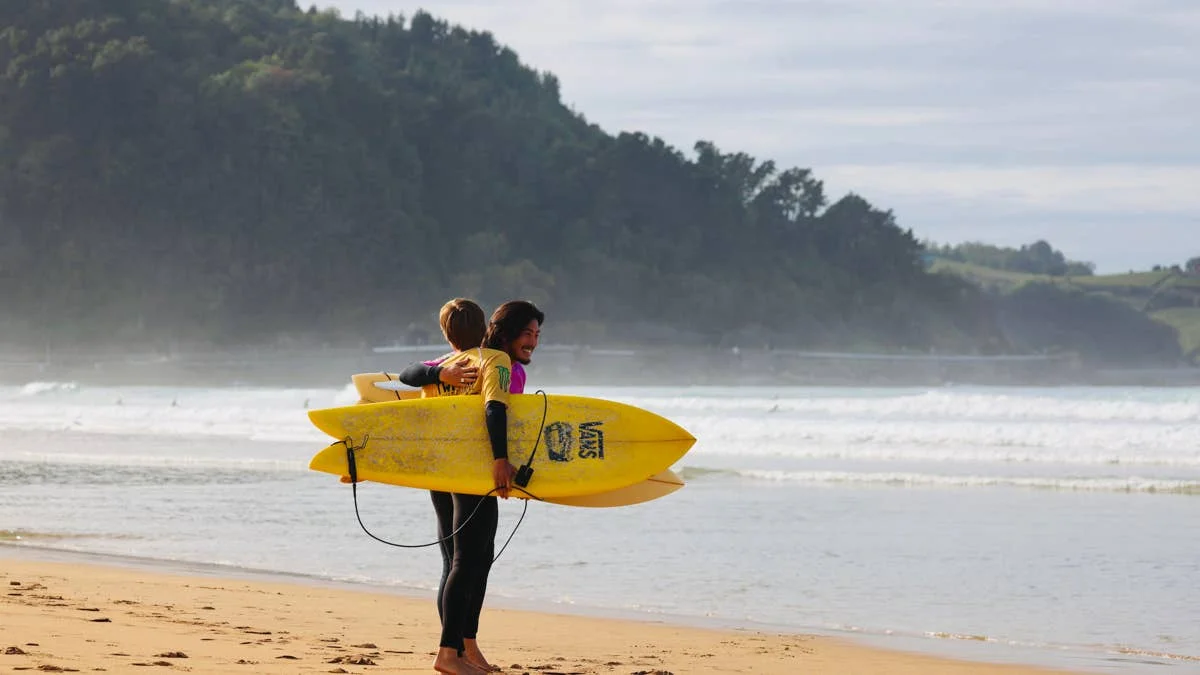
@gorka
A global field, a local host
Riders came from Japan, South Africa, Australia, California, Hawai’i, Portugal, France, Tahiti and the Basque Country. The roster included Aritz Aranburu, Kepa Acero, William Aliotti, Ainara Aymat, Eli Beukes, Miguel Blanco, Nahia Calder, Lee-Ann Curren, Pat Curren, Tom Curren, Gatien Delahaye, Ian Fontaine, Brendon Gibbens, Ian Gottron, Alex Gray, Kepa Housset, Iñigo Idigoras, Zoe Jackin, Maud Le-Car, Clay Marzo, Ander Mendiguren, Greyson Messier, Kaito Ohashi, Axel Oregi, Rudy Palmbloom, Sam Piter, Clement Roseyro, Garazi Sanchez, Sara Taylor, Chippa Wilson and Lili Young. That spread gives the event an international cast, but its local identity remains anchored by the Basque setting and the people hosting the week.
Aranburu was both host and standout in the water, bringing local knowledge to the week’s sessions. His dual role helps connect the visiting field to the place: familiarity with the coast can inform where and when the group surfs, while the host’s presence also makes the event feel rooted rather than merely staged there. The series’ next episode heads to Mundaka for what the organizers describe as a quietly strong day of surf. Eskerrik asko — thank you.
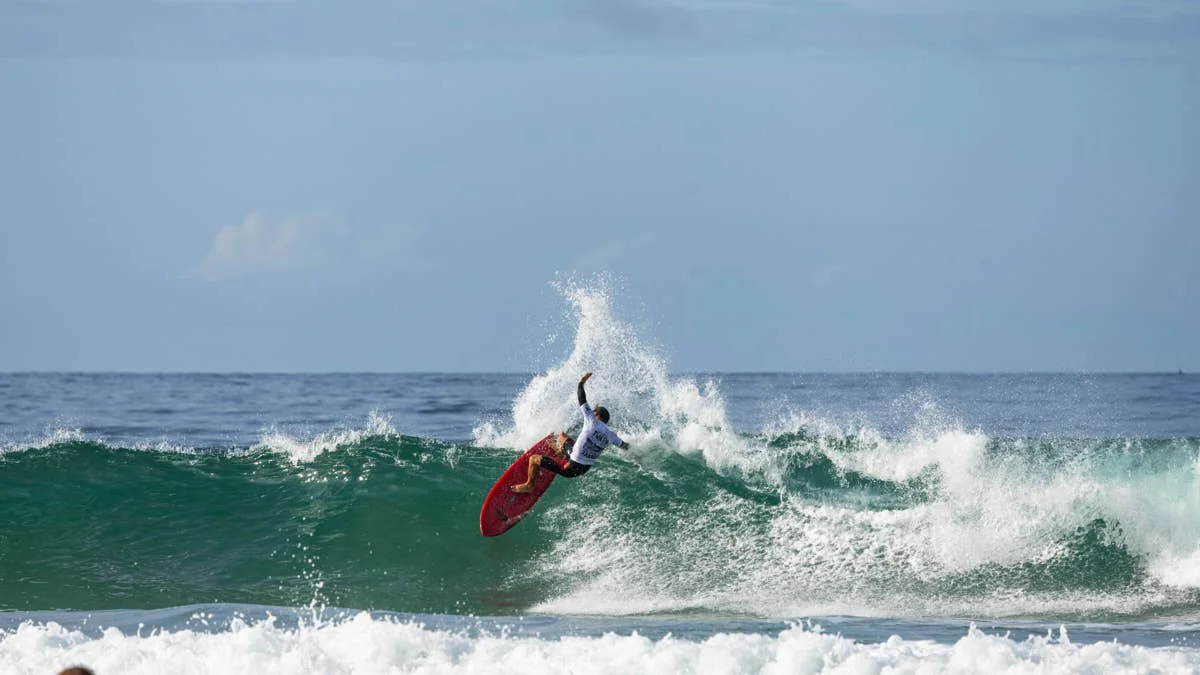
@gorka
What the format leaves behind
The Invitational’s appeal rests on a deliberate balance: a competitive framework gives the week stakes, while shared meals, music and local stops keep the event from being defined by results alone. That balance is more significant than it looks. Surf competitions often depend on conditions and scoring conventions that can make the event hard to follow for casual viewers; a clear equipment theme and a film recap offer a more legible way into the action.
There are limits to that approach. Judging through a video recap gives the event room to recognize creativity across multiple sessions, but it also means viewers rely on the final edit to understand why a performance won. The source offers no details about how the judges resolve close calls, so the format’s appeal ultimately depends on trust in the people assessing the surfing. And yet, its premise is coherent: make the board choice part of the story, let the week breathe, and bring the audience along through film.
For now, the next stop is Mundaka, and the series will show how the gathering’s format meets another day of surf. A promising forecast and a deep roster set expectations, but the event’s more durable pitch is already apparent: a contest can be a reason to bring people together, not just a mechanism for separating winners from the field. The waves, the boards, the Basque welcome.
Related: Why Are Some of the World’s Best Freesurfers in Zarautz This Week?


