Surf tourism can bring visitors and spending to places where local communities see little of either. Waves and Love, a platform launched by Thomas Vesper in September, tries to change that equation by pairing surf trips with volunteer work at nearby community organizations and directing part of travel spending to local NGOs. The premise is straightforward: people already travel to these places for the waves, so the trip might also support work that matters to residents. Whether that support becomes meaningful depends on how the platform handles the practical details, from choosing partner organizations to matching travelers with useful tasks.
Travelers can choose a mission that fits their interests, from animal welfare to teaching children to surf. The platform then builds a customized itinerary and connects them with an organization, giving surfers a way to contribute during time they might otherwise spend off the water. Waves and Love explains how the model works. The arrangement also changes the role of planning: volunteering isn’t an optional activity travelers have to find after arriving, but one part of the trip the platform sets up in advance. That could make participation easier, though a well-matched itinerary still needs to serve the organization’s priorities rather than simply fit a visitor’s holiday schedule.

Courtesy Waves and Love
Building connections around surf spots
Vesper’s idea grew out of three interests: surfing, travel and humanitarian work. After years of surf trips, he earned a master’s degree in international development and moved into the NGO sector. “I sat down and asked myself what I really loved doing. I loved surfing, traveling, and the humanitarian and NGO sector. Why not try to combine all three?” he said. That mix gave him a personal route into the idea, but it also put him close to two different ways of seeing a destination: as a visitor drawn by its coastline, and as someone familiar with the demands faced by community organizations.
Trips through Nicaragua and Costa Rica showed him how close many community groups were to well-known breaks. Those organizations, he said, often need more visibility, funding and hands-on help. Vesper saw an opportunity to connect them with travelers already drawn to the area. The underlying gap is one that can appear in many tourist destinations: visitors may spend time and money nearby without knowing much about local services or the groups working in the community. A platform can make those connections easier to find, but its value rests on whether the exchange helps meet needs identified by the organizations themselves.
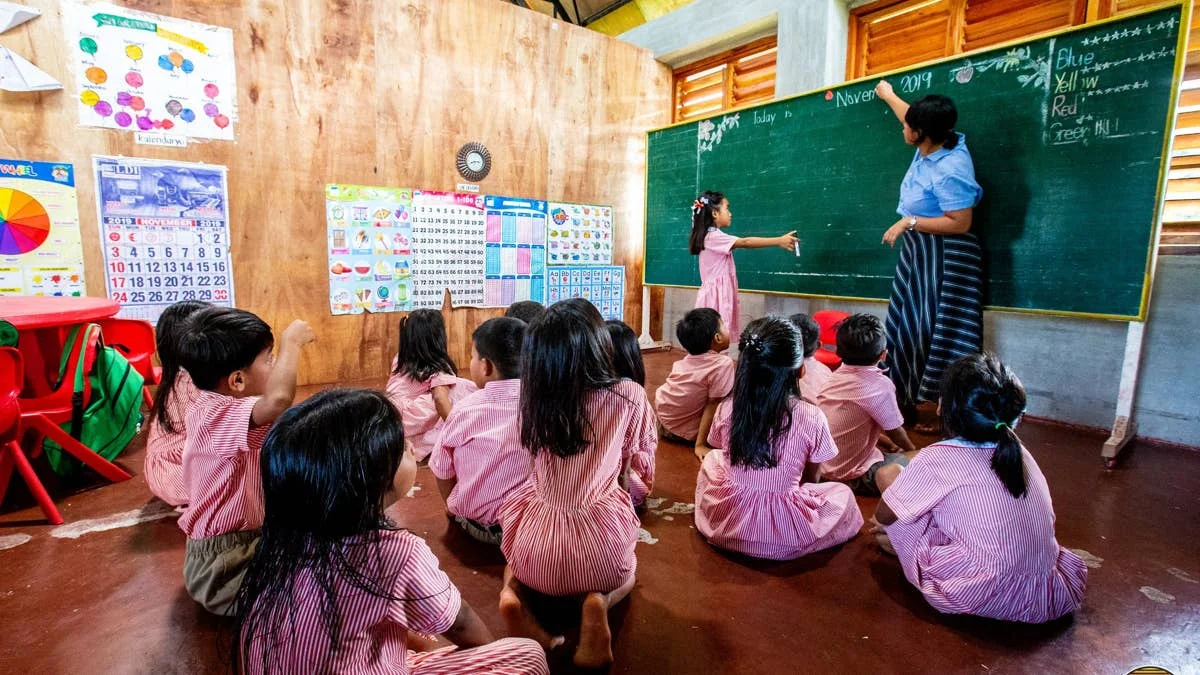
The platform has established NGO partnerships in Peru, the Philippines and Senegal, and is looking to expand to Brazil and Mozambique. Its current approach begins with a video call, followed by an in-person visit from Vesper to meet the organization and understand how it operates. That sequence gives the platform a way to learn about a group before building an offer around it. Expansion will test whether the same attention can be maintained as the number of destinations grows. A list of locations is easy to publish; a reliable local relationship takes time to build.
Courtesy Waves and Love
That face-to-face step reflects Vesper’s own experience volunteering in Peru. “Having worked with an NGO, I understand the importance of that practical experience. Building a human connection, meeting people, and developing trust are essential,” he said. He wants partnerships grounded in those relationships rather than formed through video calls alone. The distinction matters: remote conversations can introduce people and clarify an organization’s work, but they can’t fully show how a team operates or what kind of help is appropriate. In volunteer travel, good intentions don’t automatically translate into useful work.
A different model for surf travel
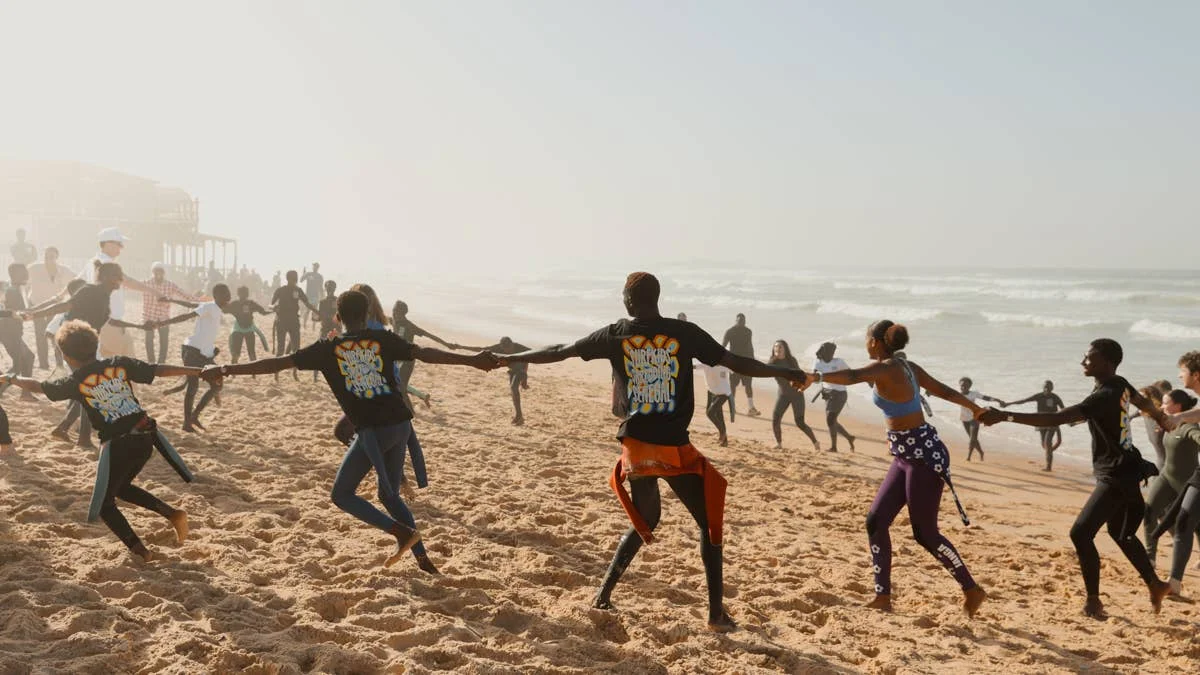
Vesper’s pitch addresses a familiar tension: international surf tourism can funnel money to foreign-owned businesses while local residents face crowded lineups and receive little benefit. Waves and Love aims to give visitors a more direct way to engage with the people who live near the breaks and support work already underway in those communities. This is more significant than it looks: a trip’s economic footprint isn’t determined only by how many visitors arrive, but also by where their spending goes and whether local groups have a role in shaping the experience.
“I want to avoid a situation where more and more countries become Bali 2.0. Surf tourism is becoming increasingly significant, and the surf industry is expanding rapidly,” Vesper said. He argues that local communities are too often excluded and the ocean neglected as the industry grows. The comparison points to a concern about destinations becoming popular faster than their communities can influence the terms of tourism. Waves and Love’s approach offers a small-scale response: connect visitors with local organizations and direct some travel activity toward existing community work. It doesn’t, by itself, resolve the broader pressures that come with tourism, but it gives travelers a more deliberate way to participate.
Courtesy Waves and Love
For Vesper, the model depends on making those connections part of the trip itself. If the platform can sustain trusted NGO relationships as it enters more destinations, surf travel could leave local organizations with added support—and travelers with a closer understanding of the places they visit. Here's the thing: the platform’s credibility will come from the quality of those relationships, not the appeal of volunteering as a travel feature. If you’re working in this space, the test is whether local partners see lasting value and retain a say in what visitors do. And yet, the basic proposition has a clear strength: it asks travelers to consider the community alongside the break.
What the model will need to prove
The next stage is less about adding destinations than showing that the approach can work across them without becoming a template imposed on very different organizations. Each NGO has its own priorities, and useful volunteer work depends on matching people’s time and skills to those priorities. That takes coordination, honest expectations and relationships that continue beyond a single visitor’s stay. The source describes Vesper’s early steps toward that model, including in-person visits; it doesn’t yet establish how the partnerships perform over time.
For travelers, the offer is appealing because it links a familiar leisure trip to a concrete local activity. For organizations, the question is whether the added visitors, funding and attention justify the time required to host them. (And this is the part most people overlook.) A volunteer can need guidance as well as provide help, so the organization’s capacity to supervise visitors matters too. Getting that balance right will shape whether the platform becomes a useful channel for community groups or simply another way to package a destination.
Trust first. Then growth. Waves and Love’s plans for Brazil and Mozambique will put its method to a wider test, while its existing partnerships provide a starting point for learning. The idea is promising, but the hard work lies in making sure that the people who live near the waves have a real voice in the exchange.


