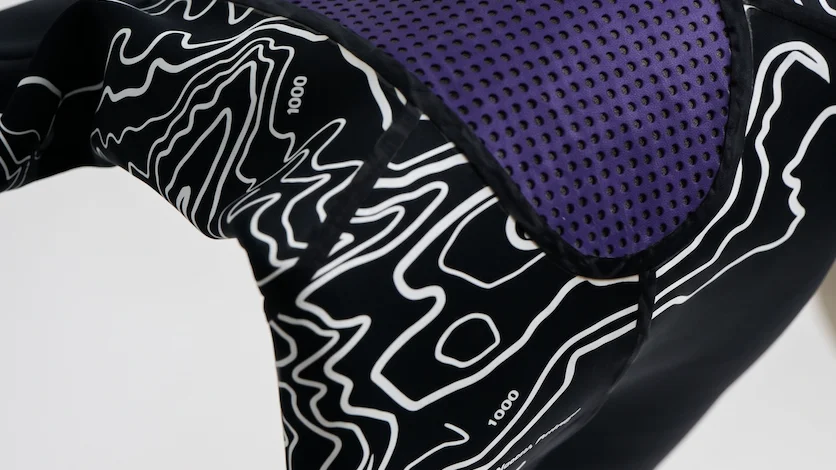
Born Slippy is asking surfers to pay €1,295 for a wetsuit—and limiting its Aptus 1.0 run to 1,000 individually numbered suits. The British brand’s wager is that custom fit, specialist materials and a new thermal lining can earn a place in a market where established names compete at far lower prices.
Founder Charles Gadsdon says the price reflects the combination of materials, craftsmanship, individual fit and technical construction. The men’s and women’s suits come in 5/4, 4/3 and 3/2 configurations. Once the thousandth suit ships, Aptus 1.0 production ends.
The production cap could add an element of scarcity, but Gadsdon frames the decision as a challenge to an industry built around volume. His guiding idea is “Fewer. Better.” Whether customers see that as a meaningful alternative or a luxury premium will depend on how the suits perform over time.
Born Slippy
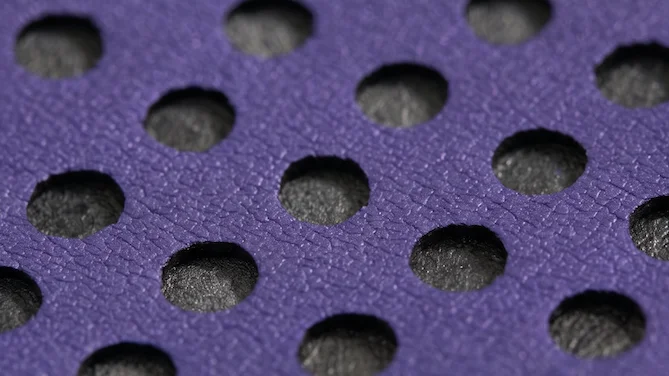
The brand’s strongest performance claim centers on warmth. Aptus 1.0 uses what Gadsdon calls Micro-chamber thermal insulation: hundreds of shallow pockets in the suit’s lining. A small amount of water enters the suit and settles in those pockets, where body heat warms it close to the skin.
Andrew “Cotty” Cotton, Born Slippy’s founding athlete and partner, has tested the suits and offered technical feedback. He says the first model felt “like having a radiator against your chest.” More recently, tests in Devon and early-season Nazaré have impressed him. Cotton says the lining feels lighter and warmer than standard fleece, while cautioning that performance, comfort and durability will determine the product’s success.
A founder from outside surfing
Gadsdon came to wetsuits after two decades in the music business, working across music, brands and culture with companies including Apple, Google, Nike, Coca-Cola and Samsung. His early research began with sustainability, but a conversation with a young athlete at the 2019 World Junior ISA Games in Huntington changed his priorities.
The competitor told him he wanted the best equipment, not a sustainability claim. Gadsdon took that as a reason to pursue performance and sustainability together, rather than treat them as opposing goals. The resulting product strategy prioritizes a smaller range built to a higher specification.
Cotton sees value in Gadsdon’s outsider perspective. “He’s thinking outside the box,” he said, while pointing to the suits’ warmth as the most immediate difference he has experienced.
Custom fit faces a performance test
Made-to-measure wetsuits already have a foothold in surfing. Japan’s Axxe sells handcrafted custom suits for roughly $750 to $1,000, while UK company Snugg has long made custom-fit wetsuits, particularly for triathletes. California-based 7TILL8, another surf wetsuit maker, closed in March after eight years in business.
Those examples suggest there’s an audience for custom rubber, much as surfers value a board shaped to their preferences. But a tailored fit alone won’t establish a market at €1,295. Buyers will need evidence that the suit stays warm, comfortable and durable through repeated use.
Wetsuit brands have long promoted thermal linings, including Rip Curl’s E-Dry Thermal Lining and Quiksilver’s PrimaLoft® bio stretch. Some claims reflect meaningful construction choices; others can be difficult to separate from marketing. Born Slippy’s micro-chamber design will need to prove its value in the water and over the life of the suit.
Gadsdon says the company isn’t trying to match O’Neill, Rip Curl or Billabong on production volume. His stated ambition is “the best wetsuit on the planet, not the most wetsuits on the planet.” The clearest measure of that ambition will be whether surfers who buy the first thousand suits keep reaching for them season after season.


