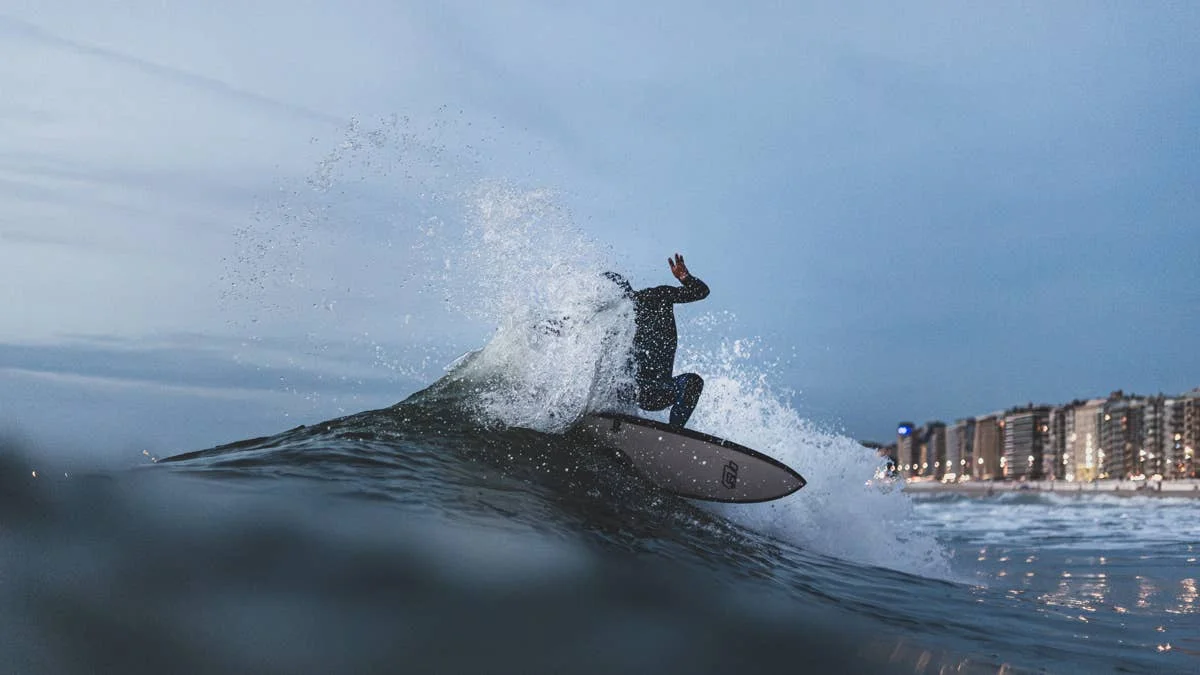
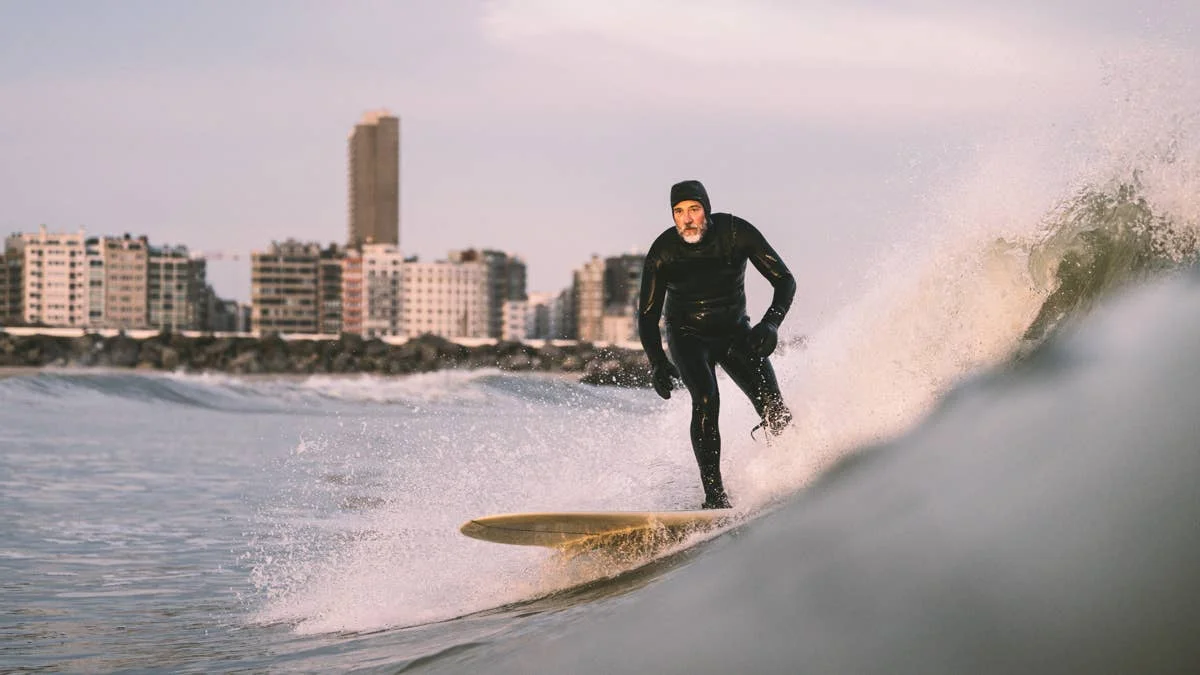
Belgium’s surf culture runs on a narrow window: catch the brief calm after a storm, or miss the session. Along just 65 kilometres of North Sea coast, surfers contend with fickle wind swell, shifting conditions and winter water temperatures that average 39 to 46 degrees Fahrenheit. The reward isn’t reliable perfection. It’s a community skilled at finding a rideable face in waves many surfers would pass up.
That approach is captured in a rule Keith Marcantuoni learned at home in Blankenberge: “If you’ve seen a glassy wave on the beach, you’re too late.” The best conditions can follow a burst of heavy wind, when the sea settles for a few hours. “Because when the wind blows through, it’s then a glass off for a few hours,” he said. “So if you miss it right as it’s doing that, you’ve pretty much missed the session.”
A short coast with a demanding rhythm
Belgium’s everyday surf is mostly wind swell. Groundswells sometimes bend around England, but conditions remain uncertain, and the usable stretch of coastline is short. Wind can arrive from different directions, the forecast is often marginal, and cold air makes even a quick change on the beach part of the effort.
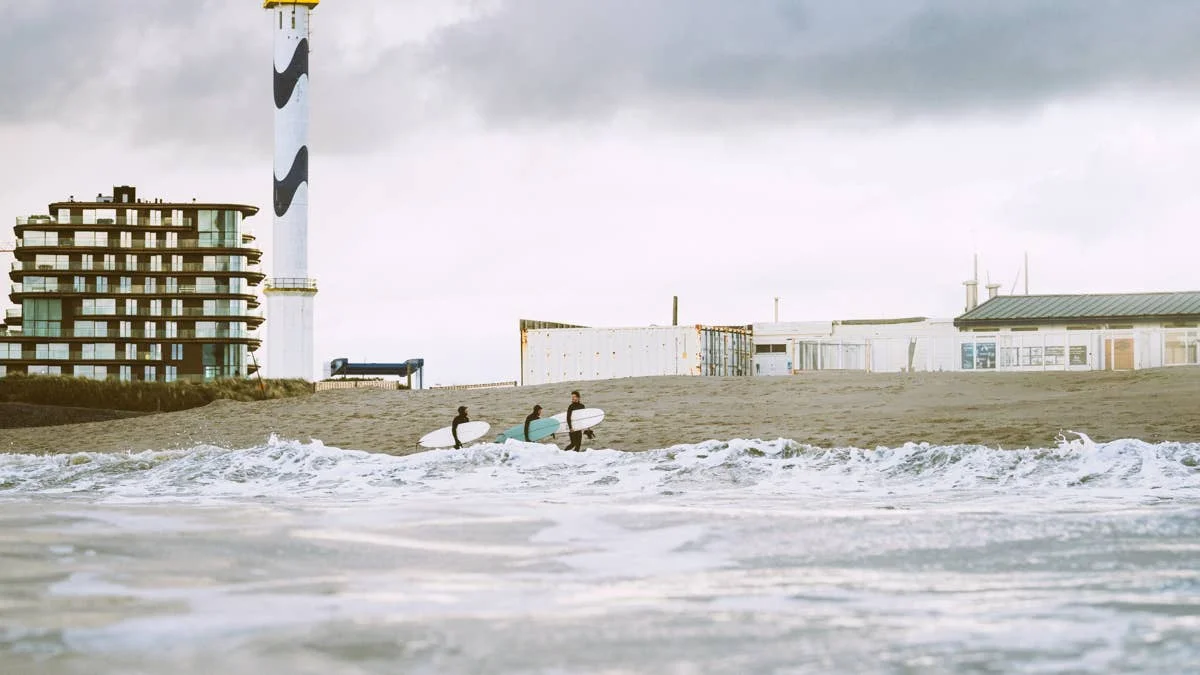
For surfers living inland, getting in the water can mean a two-hour train ride from Antwerp, followed by changing on the shoreline and waiting for a small opening in the weather. The session might last an hour before it’s time to change again and make the trip back. That commitment is part of what Marcantuoni admires in the local scene. “Belgian surfers deserve a lot of respect because, in my opinion, they’re some of the most hardcore surfers in the world,” he said.
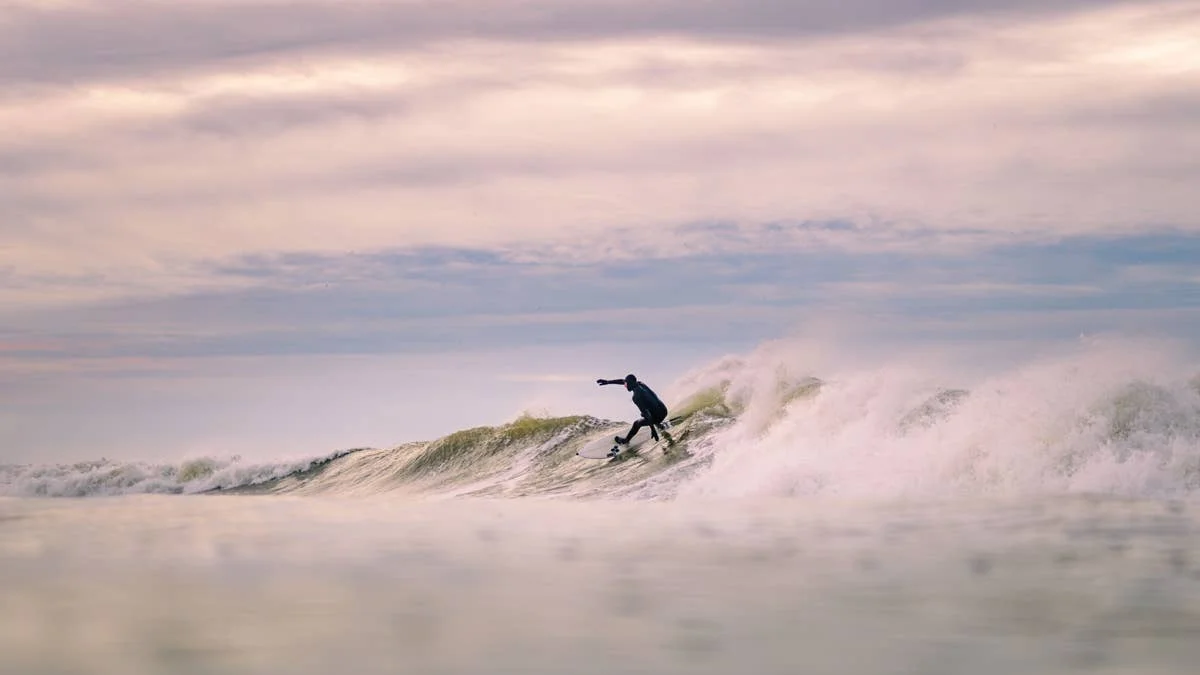
Matthias Vanoverbeke, right out front. Photo: Maarten Van De Velde.
Related: Unlikely October Surf Spots That You’ve (Probably) Never Seen Before
Marcantuoni’s connection to the coast began long before he started travelling to surf. His family has kept a traditional beach cabin beside the Belgian pier for generations, and the Offshore Surf Club was next door. Its headquarters occupied a World War II bunker, where, he recalled, there was no electricity, water leaked in and mould covered the interior.
Big swells and spring tides sometimes flooded the bunker, sending club members outside. For a child spending summers on the beach, the club offered an early view of surf culture shaped by proximity, improvisation and a willingness to show up when conditions turned rough.
Learning to surf what’s there
Marcantuoni first paddled into the North Sea at about eight, after his parents gave him and his brother a board. “I just went into the North Sea, and immediately got hooked,” he said. He surfed through the summer holidays, learning by getting in the water again and again.
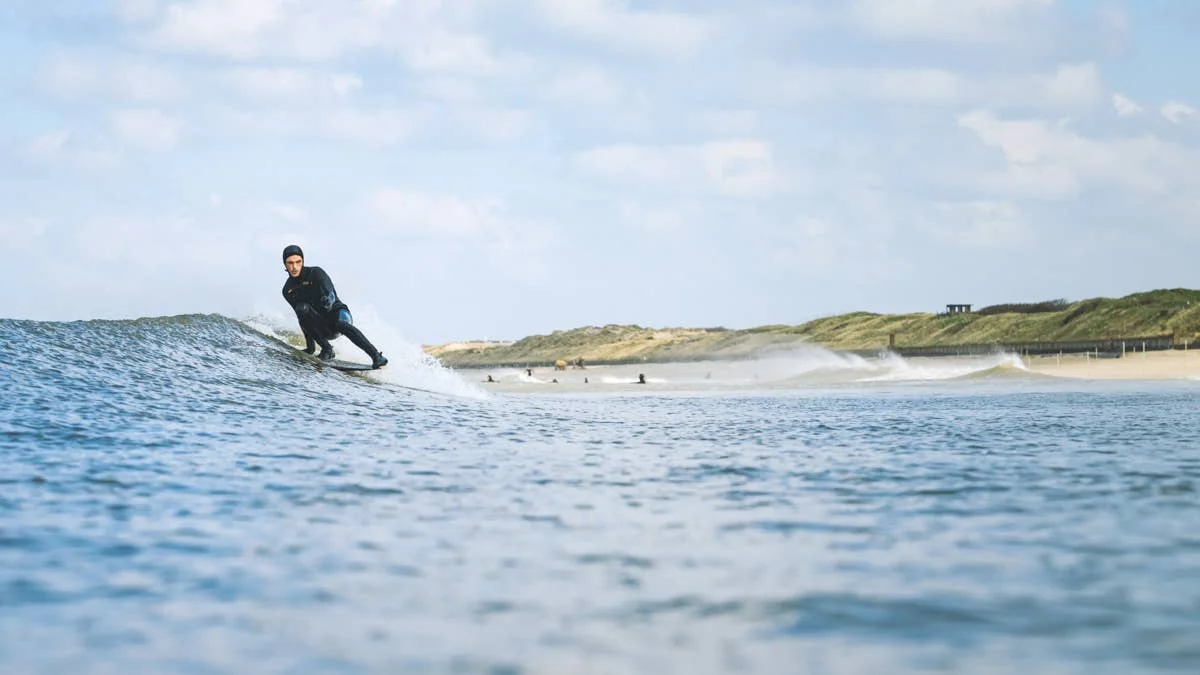
Sascha Borrey, making the most of it when it’s a foot and offshore. Photo: Maarten Van De Welde.
Within a year or two, O’Neill took an interest and offered him sponsorship. His parents ran Breeze Board Shop, which began by selling surf clothing. As their sons’ interest grew, the business expanded into surfboards and became one of Belgium’s major surf shops.
That early start led to coaching trips in South Africa, Mexico, France, Spain, Ireland and Iceland. Marcantuoni competed at home and abroad, becoming Benelux champion at 18. Yet the local coast remained central to his instincts. “I could literally hear the waves when I was in my parents’ garden,” he said. “We just grabbed the bike, put the surfboard underneath our arms and went to the beach.”
The conditions that shaped him demand flexibility. Strong west or northwest winds—sometimes exceeding 100 kilometres per hour—can push surfers into weak, messy waves and turbulent white water. Marcantuoni calls them “mush burgers.” Reading those waves takes patience: the clean section may be small, and finding it matters more than waiting for an ideal setup.
A different measure of progress
That local education has shaped Marcantuoni’s view of what makes a good surfer. “It’s not to do with how good someone looks on a wave or whether they’re ‘performing’ to these super high standards,” he said. For him, the defining quality is the effort people make to get into the water, and the ability to adapt once they’re there.
Now a surf coach working with people from Belgium and the Netherlands, he sees practical value in learning on inconsistent, low-energy waves. “Every wave has a clean face,” he said. “You just have to find it.” Surfers raised in Belgium, in his view, learn to spot that opportunity even when the wave looks unpromising.
The scene has also relied on its own gathering places. The monthly Swell magazine gave local surfers a platform, while sponsored contests and travelling events brought people together. O’Neill Belgium organised a series that sent about 50 campervans to Jersey for a week of surfing and parties. Other trips took surfers by sailboat to the Wadden Islands off the Netherlands.
Those larger events became less common as sponsorship money dried up. Marcantuoni now sees a more dispersed community: coastal surfers orbit local shops, while inland surfers travel when the forecast offers a chance. The network may be less visible, but the shared commitment remains.
Finding value in imperfect surf
Marcantuoni measures a session by the pleasure people take from it, whatever their ability. “I can literally see the same stoke and happiness in somebody that is just going down the line and making their first wave and somebody that’s doing a crazy air,” he said. In that view, a weak wave can still be useful; the challenge is learning how to use it.
Belgium won’t offer the dependable surf associated with Indonesia or the established routines of larger surf nations. Its conditions ask for quick decisions, cold-water preparation and modest expectations about what the forecast will deliver. But those limits have produced a distinct kind of expertise: the ability to read unruly water and make a session count before the window closes.
For Belgian surfers, the forecast is only part of the calculation. When the wind eases and a clean face appears, the people who know the coast are already watching for it.
Related: Inside Romania’s Unexpected Surf Revolution on the Black Sea


