
Three rookies, three kinds of impact
Three rookies have built especially persuasive cases for the NWSL’s 2026 Rookie of the Year award, and they’ve done it in very different ways. San Diego Wave defender Mimi Van Zanten stands out for her range, while Houston Dash forward Kat Rader and Wave midfielder Lia Godfrey have driven their teams’ attacks. Comparing them means weighing the work that happens in different parts of the field: goals and assists are easy to spot, while a defender’s value can be spread across duels, interceptions, ball progression and the attacks she helps start.
That makes this a contest of roles as much as raw production. Rader’s goals give her a clear headline, and Godfrey’s assists show how often she has helped turn possession into chances. Van Zanten’s case asks voters to look at both sides of the fullback position, where stopping opponents and moving San Diego forward can matter in the same sequence.
Mimi Van Zanten, San Diego Wave defender

Van Zanten’s statistical profile is striking for a fullback: she leads her position in tackles, interceptions and duels won, while contributing on the ball in the final third. Her performance makes a repeat for a defender a credible possibility after Lilly Reale won the award last season. The breadth of the numbers matters here. No single category captures her role; together, they suggest a player who is involved when San Diego has to regain the ball and when it tries to turn defense into forward movement.
- 84 tackles, the most among fullbacks and fifth most in the league
- 44 interceptions, second among fullbacks and ninth overall
- 151 duels won, third among fullbacks and eighth overall
- 25 successful dribbles, third among fullbacks
- 259 accurate passes into the final third, fourth among fullbacks
- Fifth among fullbacks in defensive contributions per 90 minutes
- Seventh among fullbacks in fouls drawn
Those rankings point to activity across a full match, not just one specialty. Tackles and interceptions show defensive involvement, while successful dribbles and accurate passes into the final third indicate that she can help advance possession once San Diego wins it. The figures don’t, by themselves, show the quality of every decision or the difficulty of each situation. They do make a persuasive case that her influence isn’t confined to defending near her own goal.
That combination matters. Van Zanten can defend space, carry the ball forward and help create attacks, giving San Diego a dependable presence across the pitch. For a fullback, the balance is especially valuable: an aggressive contribution in one phase can leave space behind, so the ability to contribute at both ends is part of the job, not an extra flourish.
Kat Rader, Houston Dash forward
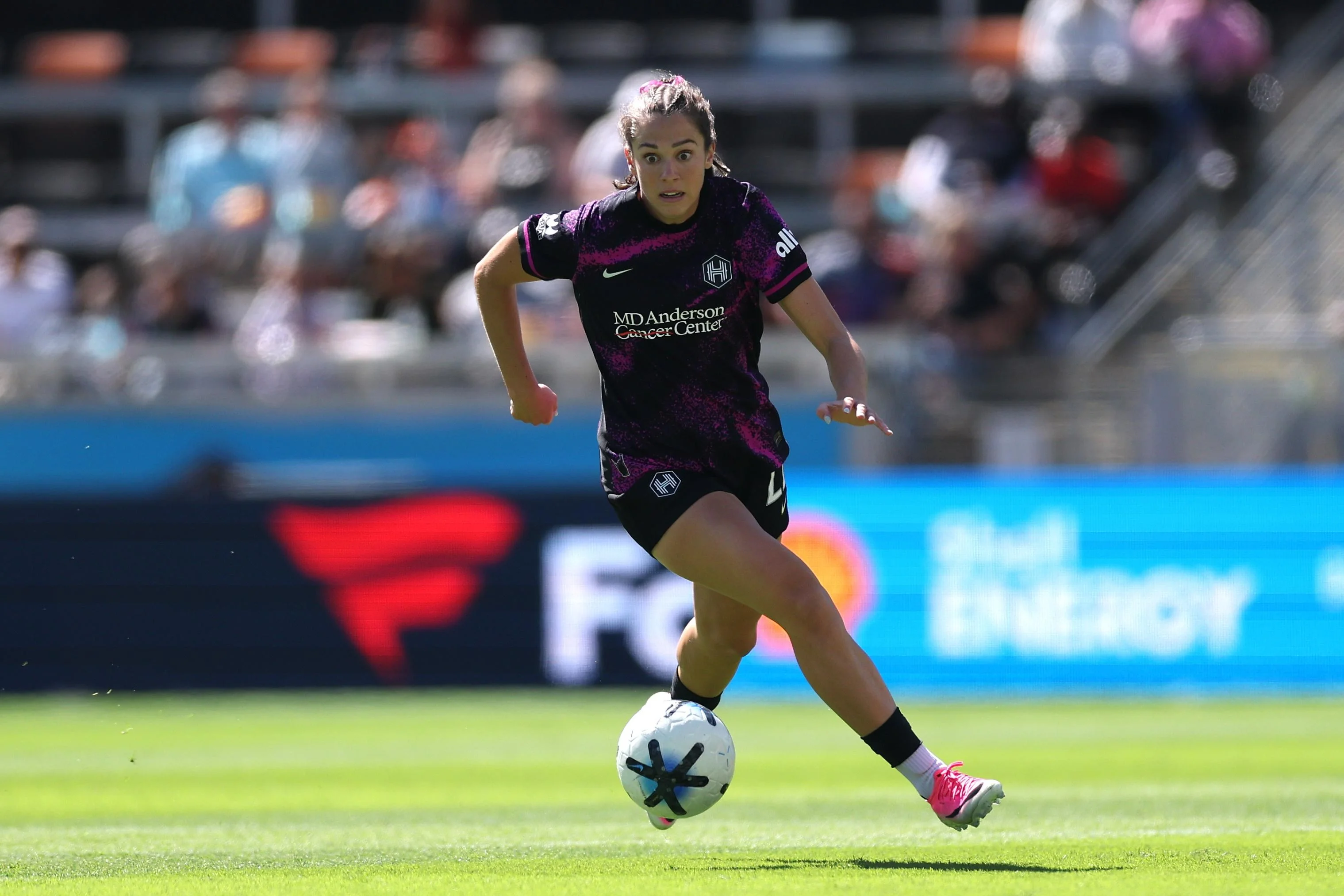
Rader has twice earned NWSL Rookie of the Month honors, in May and August, and her goal total puts a record within reach. With 10 goals, she’s one short of Diana Ordóñez’s rookie mark. She’s also tied for 10th in the league in goals and for 10th in expected assists, at 5.0. That combination gives her a case beyond the simple argument that she’s finishing chances: the expected-assists ranking points to a role in creating opportunities, too.
Still, a record chase is only one part of the award case. Rader’s value comes from her flexibility as well as her finishing. She can operate across the frontline or as an attacking midfielder, giving Houston another option to create chances when opponents focus on her as a scorer. That positional range can make her harder to account for, though the available figures don’t establish how often she changes roles or what effect each change has on a particular match.
Her claim is therefore easy to explain and hard to dismiss: goals carry weight, and she’s close to a rookie mark while remaining connected to the team’s chance creation. If you’re comparing her with players whose best work comes farther from goal, the challenge is deciding how much to value a forward’s visible output against contributions that don’t end in a shot or assist.
Lia Godfrey, San Diego Wave midfielder

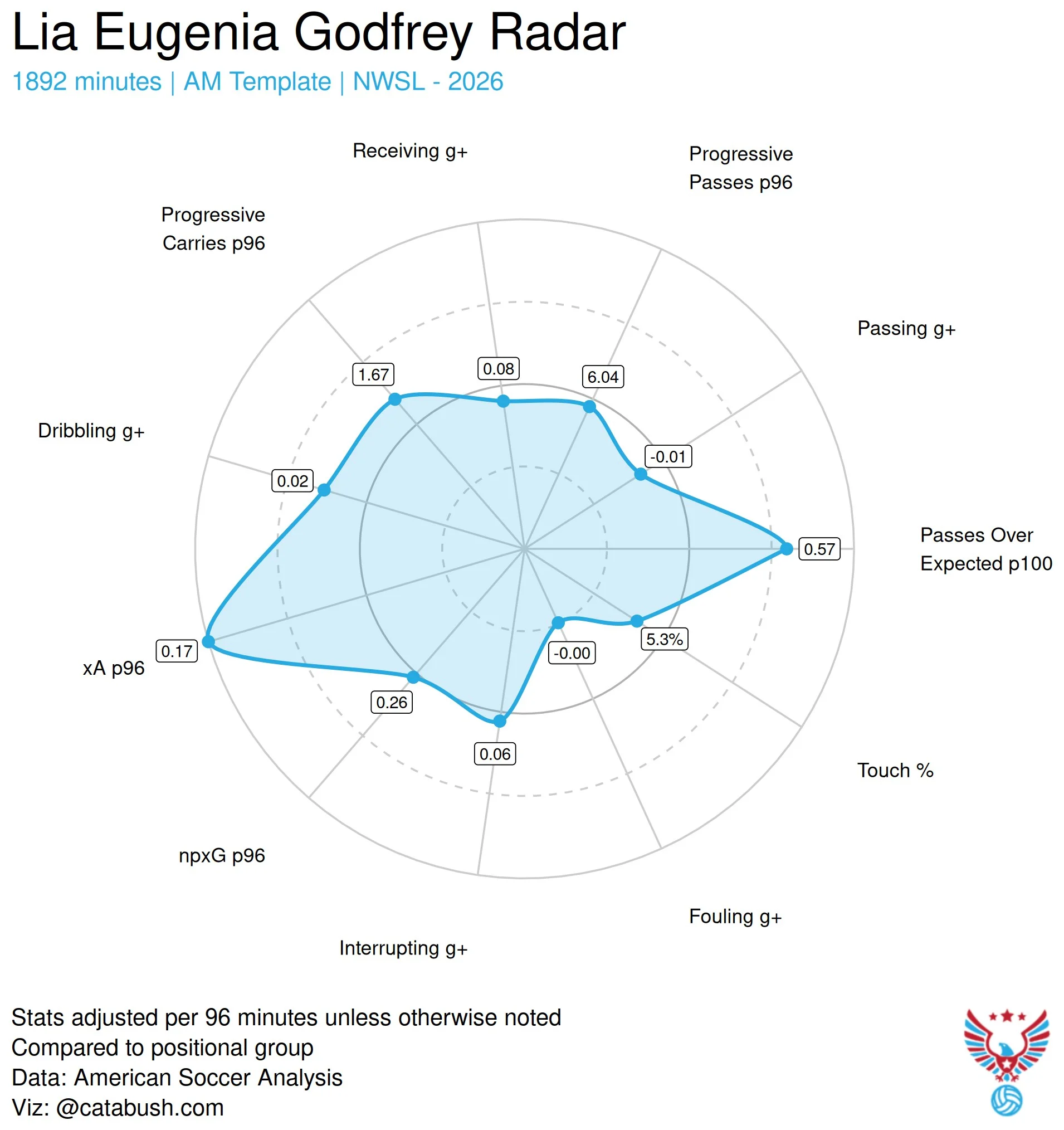
Godfrey has turned a strong first season into a contract extension through 2029. Her production explains why: she leads rookies in assists and total goal contributions, and ranks second among first-year players in both goals and expected goals. The extension offers a clear marker of the club’s confidence in her, while the numbers show a player already contributing in several ways. Neither alone settles an award decision, but together they describe more than a promising start.
- Six goals, second among rookies
- Six assists, tied for sixth in the league and first among rookies
- 12 goal contributions, third among attacking midfielders and first among rookies
- 4.9 expected goals generated, seventh among attacking midfielders and second among rookies
- 27.5 accurate passes per 90 minutes, seventh among attacking midfielders
- 37 chances created, third among attacking midfielders and 18th in the league
- 4.0 expected assists, third among attacking midfielders and second among rookies
The list captures both outcome and involvement. Goals and assists record what happened at the end of attacking moves; expected goals, expected assists and chances created describe parts of the process that can lead to those outcomes. Those measures aren’t interchangeable, and none tells the whole story of a midfielder’s performance. Taken together, though, they support the view that Godfrey has been central to San Diego’s attack rather than simply benefiting from a productive team around her.
Godfrey and Trinity Byars have led San Diego’s attack, with Byars topping the team in goals and Godfrey in assists. Godfrey arrived widely viewed as a pro-ready prospect and has exceeded that early expectation, earning regular U.S. under-23 call-ups. The distinction between their roles is useful: Byars supplies the team’s leading goal total, while Godfrey’s assist lead reflects her work setting up teammates. Her rookie case rests on that playmaking alongside her own scoring.
What the comparison says about rookie value
The three cases show why an award like this can’t be reduced to a single leaderboard. Rader’s goal total is the cleanest headline, Godfrey offers a broad attacking contribution, and Van Zanten’s numbers span defending and progression. These are different kinds of value, and any comparison has to account for position. A forward’s scoring can change a match directly; a fullback’s contribution is often distributed across more phases and is less likely to appear in one familiar total.
That said, statistics have limits. Rankings establish where each player stands within a category, but they don’t fully describe the quality of opposition, the tactical demands of a role or the significance of an individual action. The figures here make each candidacy credible; deciding between them still requires a judgment about what a rookie has added to her team.
Van Zanten has the edge
Godfrey’s playmaking and Rader’s scoring give both a strong claim, but Van Zanten is my pick. Her defensive numbers place her among the league’s best at her position, and her work in possession adds a dimension that makes her impact visible in both halves of the field. This is more significant than it looks: a defender who can win the ball and help move it forward gives her team value in separate phases of play. A useful second season for a defender as the award’s benchmark only sharpens the comparison.
San Diego’s wider group of young contributors, including Godfrey, Melanie Barcenas, Kimmi Ascanio, Dudinha and Byars, has helped shape the team’s season. Still, Van Zanten’s ability to contain top attackers while supporting the attack gives her the clearest case to follow Reale as the league’s next standout rookie defender. That judgment depends on valuing two-way influence over the more immediately visible totals Rader and Godfrey have produced. A close call.
What comes next
As the season reaches its award decision, the case for each player will turn on the same basic question: how should voters compare work that looks different on the field? Rader can point to goals and a rookie record within reach; Godfrey has combined scoring with creation; Van Zanten has produced strong defensive rankings while contributing to San Diego’s forward play. The evidence presented here doesn’t erase those differences, and it shouldn’t.
For readers tracking the next generation of NWSL talent, the useful takeaway is that these rookies are already testing the limits of a simple scorer-first evaluation. Their performances suggest several routes to becoming indispensable: finish attacks, build them, or prevent opponents from controlling them. And yet. The award still has to go to one player, and Van Zanten’s range makes her the strongest choice here.


