Tampa Bay Rays at Cleveland Guardians: ALCS Game 4
First pitch: 6:00 p.m. ET
Series: Cleveland leads 2-1
Probable pitchers: Nick Martinez (15-6, 3.10 ERA, 116 DRA-) for Tampa Bay; Cleveland plans to use its bullpen (36-26, 3.54 ERA, 94 DRA-).
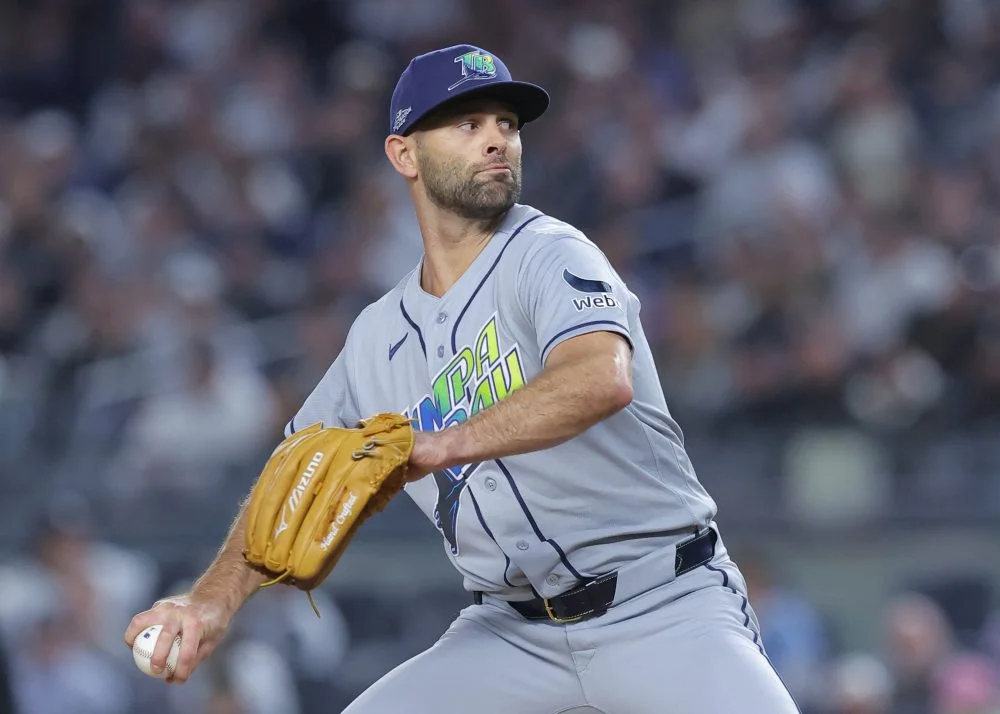
Martinez’s contact-first test
Nick Martinez’s profile looks like a playoff problem waiting to happen: modest velocity, few strikeouts and a lot of balls in play. Yet the Tampa Bay right-hander has built a career on making that contact manageable. Game 4 against Cleveland will test whether his precision and the Rays’ outfield defense can keep the formula working against a postseason lineup. The stakes are plain: Cleveland leads the series 2-1, so Tampa Bay needs a useful start to keep the matchup from tilting further toward the Guardians.
Martinez allowed two runs over 3⅔ innings in his Game 3 ALDS start against the Yankees. That outing offers a limited but relevant glimpse of how Tampa Bay might use him: he can keep a game within reach, though a short start puts added weight on the bullpen behind him. His season numbers invite skepticism. Among qualified starters, he had the lowest strikeout rate by a substantial margin, the fourth-lowest ground-ball rate and the highest contact rate. He throws around 92 mph in a league where fastballs average closer to 96, and relies heavily on that pitch and his changeup. His 3.10 ERA sits alongside a 116 DRA-, a reminder that the underlying measures are less impressed with the results. The gap doesn’t erase his results; it does raise the question of how much room he has for error when hitters make contact so often.
Command, movement and the shape of contact
But Martinez’s success isn’t simply a matter of good fortune. Since returning from Japan, he has thrown more than 700 innings with a 3.53 ERA, often moving between roles without a predictable schedule. That history matters because his value rests on execution across different assignments, rather than on a single overpowering pitch. His edge is location: he works the narrow band near the strike zone better than any other starter, while still putting a relatively high share of pitches in the zone. He can live on the margins without conceding too many walks. The distinction is subtle but useful: a pitcher who can miss bats less often has to make his contact profile and his command carry more of the workload.
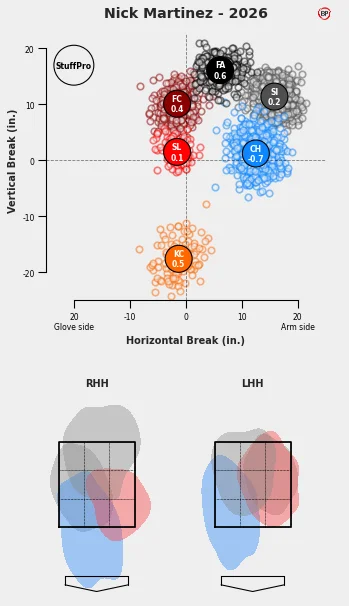
When Martinez does come into the zone, his approach runs across it more than up and down. He uses a cutter that moves in on left-handed hitters and a sinker that runs toward right-handers. Hitters can see the pitches and often make contact, but the movement tends to leave them underneath the ball. That’s a useful distinction for a pitcher whose arsenal isn’t built to overwhelm bats. He’s asking for imperfect contact, not trying to end every plate appearance with a swing and miss. And this is the part most people overlook: contact itself isn’t the whole story. Where and how the ball leaves the bat can determine whether a pitcher’s low strikeout rate becomes a liability or a workable tradeoff.
The results show up in the shape of the fly balls he allows. A previous analysis argued that high flies—those hit at launch angles above 35 degrees—should be distinguished from the lower, more dangerous fly balls that travel at 26 to 35 degrees. Of the 226 fly balls Martinez surrendered this season, two-thirds were in that higher band. Among 155 starters who threw at least 1,500 pitches, only four allowed a lower wOBA on fly-ball contact than Martinez’s .189. Those figures give the contact-management argument some substance: his frequent contact hasn’t translated into especially productive fly-ball contact. Still, a season-long pattern describes what has happened; it can’t guarantee the same results in one game against a lineup with a chance to adjust.
What the matchup asks of Tampa Bay
That pattern is a plausible foundation for success, though the playoffs bring tougher lineups and a different test for every pitcher. Martinez will also have Tampa Bay’s strong outfield defense behind him, as he did earlier in the season. If he keeps steering contact toward harmless high flies, the Rays have a path to making his unusual profile work again. The defense is part of the calculation, not a footnote: when a pitcher invites balls in play, positioning and clean reads can turn a risky approach into an efficient one. If you're working in this space, the question is whether the team can keep the contact where it wants it once hitters see the same pitches more than once.
Cleveland, meanwhile, is set to draw on its bullpen rather than name a conventional starter. Its listed bullpen record and ERA give some context, but those season figures don’t tell us how the club will divide the innings or which relievers will be available. That uncertainty makes the matchup less about a simple starter-versus-starter comparison and more about how each team manages the game as it unfolds. Tampa Bay needs Martinez to limit damage long enough for its own pitching plan to hold together. Cleveland’s approach could also make the length of Martinez’s outing consequential: every extra inning he can cover may affect the work required from the Rays’ relief corps.
Why Game 4 matters
This is more significant than it looks. Martinez’s case is a test of whether command, movement and defense can still suppress damage when strikeouts are scarce and the margin for a misplaced pitch is thin. The numbers here are underwhelming if the expectation is a dominant starter, but they point to a more specific possibility: a pitcher whose contact is often less harmful than its frequency suggests. That’s a narrow path, and the postseason is where narrow paths get tested.
What this means for you as a reader is that the key measure may not be how many hitters Martinez strikes out. Watch whether his pitches keep producing the high flies described in the season data, and whether Tampa Bay’s outfield can turn those balls into routine outs. If that pattern holds, the Rays can make his profile work again. If Cleveland finds a way to turn contact into harder, lower flight, the underlying concern behind his ERA will look more pressing. A demanding assignment.


