The towering waves at Jaws, Nazaré and Mavericks begin far from shore. Powerful storms transfer energy to the ocean, and long-period swells carry it across open water. The seafloor then shapes how that energy arrives: underwater canyons, reefs and channels can focus incoming swell and help turn it into a wave capable of dwarfing a surfer.
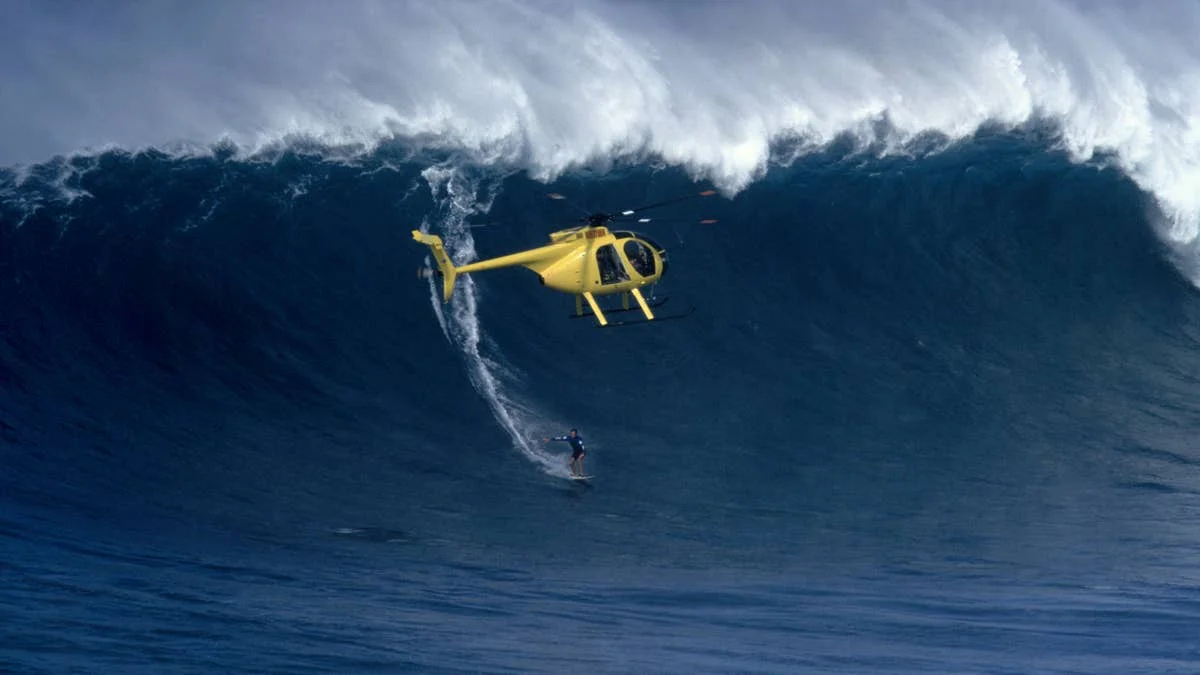
That process helps explain the pull of big-wave footage. In the opening of the 2003 surf film Step Into Liquid, Mike Parsons is towed into a massive wave at Jaws, also known as Pe’ahi. The camera pulls back until Parsons looks tiny beside the wave. The scale is startling, but the conditions behind it follow a chain of forces that begins with wind.
For viewers encountering giant waves through films, the spectacle can prompt a practical question: what has to happen in the ocean for a wave of that size to form? The answer runs from storm winds to the shape of the coastline.
Wind puts energy into the ocean
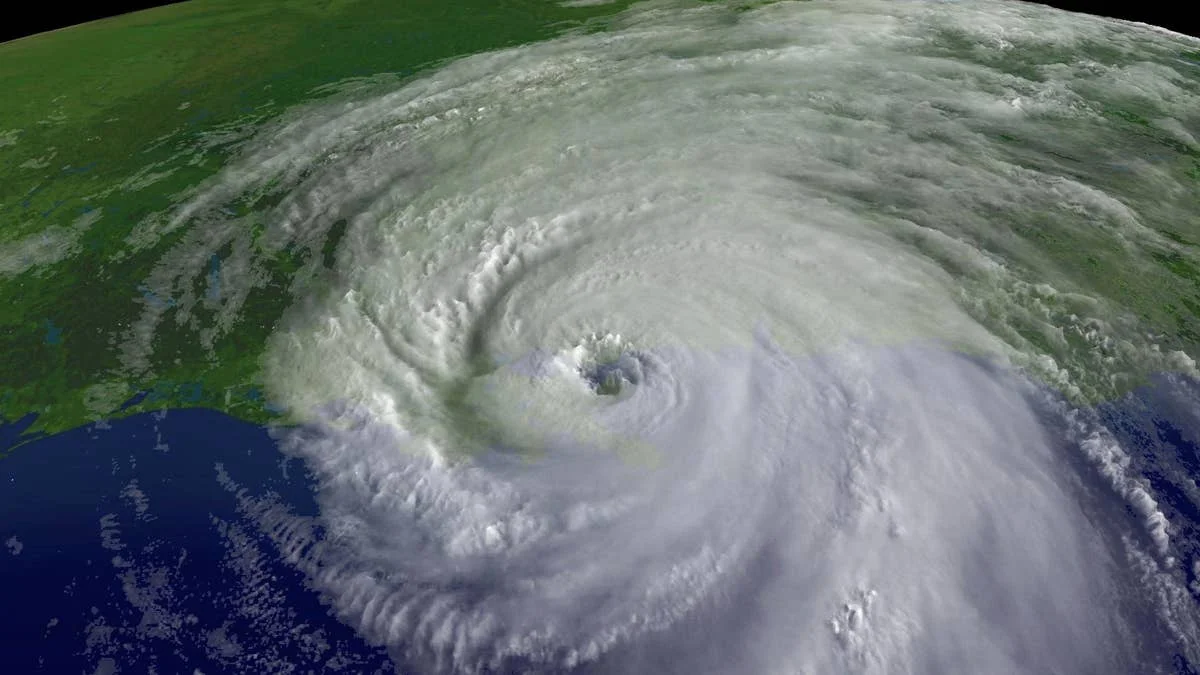
Wind blowing over the sea creates friction at the surface and transfers energy to the water. Small ripples form first. When the wind continues to blow, those ripples grow into waves as the interaction between wind, gravity and air pressure develops.
The amount of energy a storm can put into the ocean depends on several related factors: wind strength, how long it blows and the distance over which it blows. That distance is known as fetch. A strong wind blowing across a broad stretch of water for an extended time can build substantial seas.
Some of the largest swells originate in intense low-pressure systems over the North Atlantic, North Pacific and Southern Ocean. The storms can generate waves that travel away from them in different directions. So the storm creating a swell doesn’t need to be near the coast where that swell eventually breaks.
As waves move away from a storm, they begin to sort themselves by speed and wavelength. Longer-period waves, with more time between successive crests, travel faster through deep water than shorter-period waves. Across long distances, this separation helps organize chaotic storm seas into lines of swell moving toward shore.
A long-period swell can be a clue that its energy came from a distant storm or hurricane. The wave’s travel time and organization reflect the journey it has made across the ocean, even when the weather at the surf break is calm.
Related: Could the World’s Biggest Wave Be Hiding at the Most Remote Island on Earth?
Why swell grows at some breaks
A large swell doesn’t become a giant breaking wave simply because it reaches land. Its period, size and direction all matter, as does the underwater terrain. As swell moves from deep water into shallower water, the seabed influences its speed and shape. The local bathymetry—the depth and contours of the ocean floor—helps determine where the wave stands up, how it breaks and how much energy reaches a particular section of coast.
Without features that divide or redirect incoming energy, a long-period swell can break across a broad stretch of coastline at once. That can produce a close-out rather than a clean, rideable wave. Beach breaks depend on sandbars to shape the incoming swell; the right bar can create a defined peak, while a poor match between the swell and the bottom can leave little room for a wave to open up.
At Jaws, an underwater canyon and deep-water trench help concentrate the incoming swell. The canyon acts like a lens, focusing wave energy toward a particular area. As swell travels rapidly from deep water into shallower water, the sudden change in depth helps force that energy upward, steepening and enlarging the wave as it breaks.
That combination of a powerful swell, the canyon and the nearby shallow water gives Jaws its distinctive ability to produce steep, powerful waves. It’s the seafloor working with the incoming swell that turns a storm’s distant energy into the kind of wave seen in the footage of Parsons.
Canyons, reefs and swell direction
Nazaré offers another example of how underwater geography can reshape a swell. Its canyon affects how large waves travel toward shore, refracting them as they move through changing depths. When refracted swells meet other incoming swell, their energy can combine and create the steep, peaked formations associated with the break.
Direction helps determine what that combination looks like. The source describes the prominent intersecting peaks as more likely when swell arrives from above 310 degrees. With a more westerly direction, Nazaré tends to produce a straighter wave. The same storm-generated energy can therefore make a different spectacle depending on how it approaches the coast.
Mavericks, off Half Moon Bay, relies on a different mix of underwater features: reefs, deep channels and a sloping seabed. Together, they refract and focus incoming swell, helping transfer its energy upward as the wave reaches the break.
A major Mavericks session in 2021 illustrates how storm conditions and local bathymetry combine. The article describes a wave ridden by Twiggy, a three-time big-wave champion, during a day produced by a large Pacific storm. Buoys recorded swell at 20 feet with a 20-second period. When that swell reached the seafloor at Mavericks, the break’s underwater contours helped shape it into an exceptionally large wave.
Those measurements describe the swell before its interaction with the local seafloor. They don’t, by themselves, tell the full story of the breaking wave. At Mavericks, as at Jaws and Nazaré, the result depends on both the energy arriving from offshore and the underwater terrain that redirects it.
The storm is only the beginning
The common thread at these breaks is a sequence: strong winds generate waves inside storms, and those waves carry energy outward as swell. Longer-period waves can travel quickly through deep water and remain organized over long distances. Near shore, the seabed takes over, influencing how that energy is focused and where a wave rises to break.
Jaws, Nazaré and Mavericks each have distinctive underwater features, which is why the same broad ingredients produce different kinds of waves at each location. A forecast of large offshore swell signals potential, but it takes the right interaction between swell direction, period and bathymetry to create a memorable session. For big-wave surfing, the ocean floor isn’t background scenery; it’s a key part of what makes the wave.


