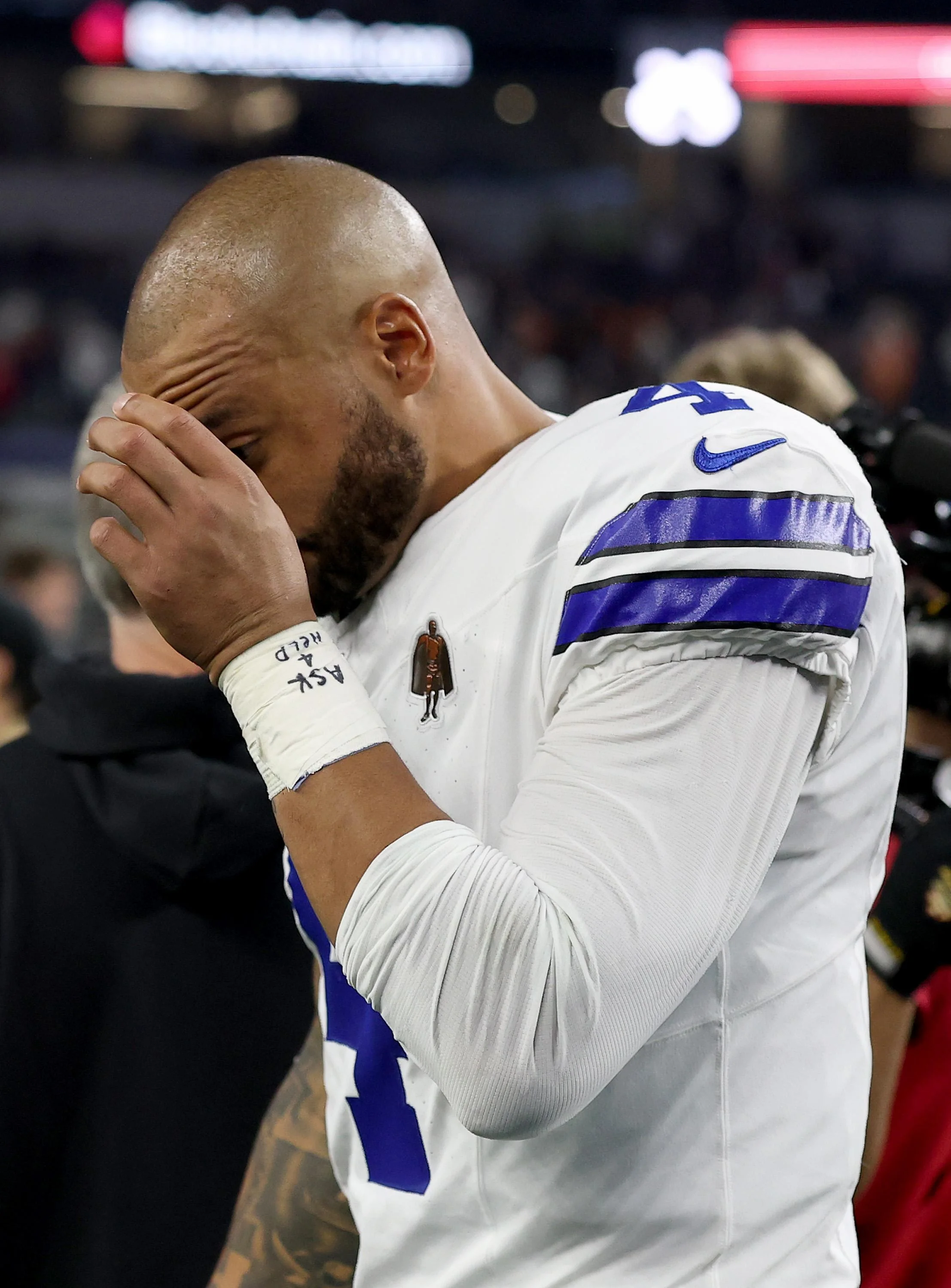
Dallas’ loss to Tampa Bay looks less like one bad night than a snapshot of a franchise with trouble at every level. The Cowboys became only the second team since 1975 to lose at home to an 0-4 opponent, according to Adam Schefter. The Buccaneers also had a backup quarterback making his first NFL start. For a team that has spent years changing coaches, making major trades and paying its stars, the defeat was another sign that the pieces aren’t adding up.
Ownership keeps shaping the roster
Jerry Jones remains the central figure in Dallas’ football decisions, with son Stephen often backing his approach. Trading Micah Parsons was presented by Jerry as a way to improve through subtraction, but the team hasn’t improved. Dallas then sent a first-round pick for defensive tackle Quinnen Williams, hoping to strengthen a run defense that still needs help. Williams has played like a mid-tier starter so far, a modest return for a major investment in draft capital.
The same short-term thinking showed up in the move for Joey Porter Jr. He’s a strong player, but the deal fits a team acting as though one addition can complete a contender. Dallas has more fundamental problems to solve.
That pattern has persisted through changes on the sideline. Mike McCarthy led the Cowboys to three consecutive 12-win seasons, but Jones fired him after the team failed to make a deeper playoff run. Brian Schottenheimer got the job instead. The decision leaves a pointed question: did Dallas replace the coach, or did it address the causes of its stalled progress?
Schottenheimer and Prescott haven’t found a rhythm
Schottenheimer’s record stands at 9-12-1, and his handling of Dak Prescott has added to the team’s instability. The coach acknowledged making too many changes around the quarterback, despite Prescott’s decade of NFL experience. Dallas has also struggled to manage the clock, including late in its loss to Baltimore in Brazil, where the final seconds became a problem.
Prescott’s performance has swung sharply from game to game. He can look like a top-tier quarterback when CeeDee Lamb is finding space and the running game is working. Under pressure, though, Prescott has been more prone to force throws than to reset the offense, turning difficult situations into costly mistakes. His inconsistency is a problem, but it’s also amplified by the team around him.
A defense that can’t keep games manageable
Dallas hired Christian Parker from Philadelphia with hopes of building a defense modeled on the Eagles’ success. Instead, the unit ranks near the bottom of the league: 24th against the pass, 30th against the run, 28th in points allowed and 30th overall.
Those struggles put the offense in frequent catch-up mode. Prescott is asked to throw more, often while facing pressure, and the resulting turnovers make an already difficult task harder. Special teams have added their own failures, allowing blocked field goals in consecutive games.
No single fix is in sight
The Cowboys’ problems don’t point to one obvious adjustment. Coaching, quarterback play, defensive performance and roster decisions are all part of the picture, and each affects the others. That makes the team’s predicament harder to solve than a single disappointing result.
The source of the frustration for Dallas fans is that the same ownership structure driving those decisions is likely to remain in place. The loss to Tampa Bay was historic, but its deeper message is familiar: until the organization’s decision-making improves, changing coaches or adding another star may not be enough to change the Cowboys’ direction.


