A title offers no protection
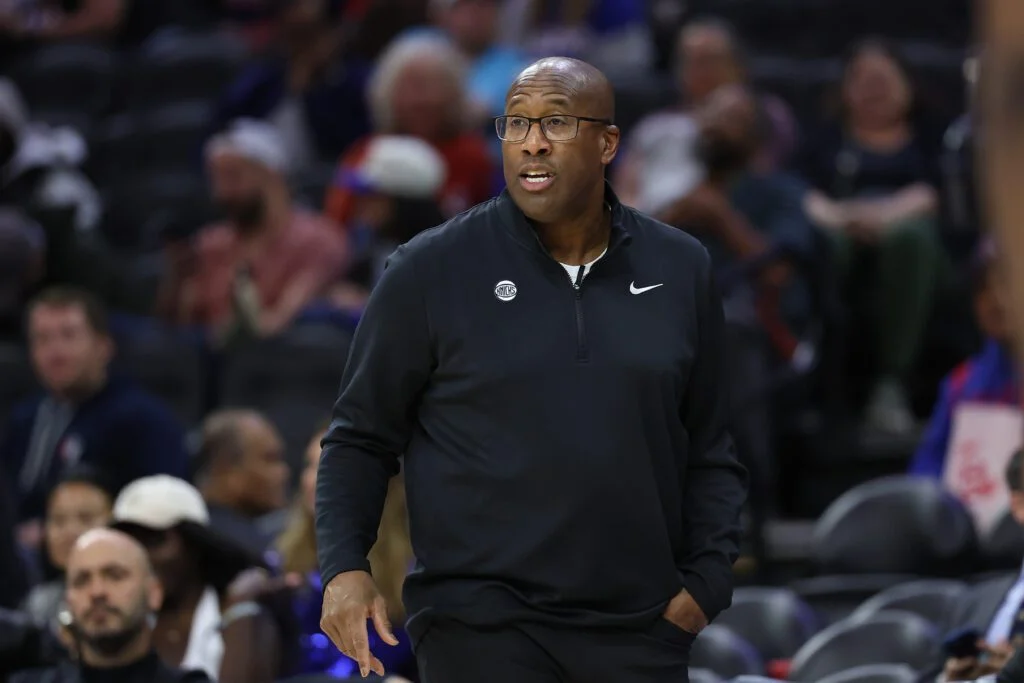
For Mike Brown, the Knicks’ championship defense starts with the standard they set in practice. After a session he felt lacked intensity, the coach made clear that last season’s title won’t secure roles for the reserves and training camp hopefuls competing for minutes or a place on the roster. The message is deliberately plain: past success earns a place in the team’s story, but it doesn’t decide who plays next.
New York is chasing a repeat after ending a 53-year title drought in Brown’s first season. That achievement changes the expectations around the team, but it doesn’t make the task easier. Brown says the Knicks should expect more scrutiny this year and that the work required to stay on top will only get harder, a familiar challenge for any champion: opponents have a fresh reason to measure themselves against you, while your own players have to prove the previous season wasn’t a one-time peak.
“Everybody has short-term memory, and it’s ‘what can you do for me?’ lately,” Brown said. “Nobody can ever take that away from any of us, because we were all a part of it. But if you want to stay on top, it’s going to be hard. It’s going to be even harder.”
Brown’s point isn’t that the title should be forgotten. It’s that the memory of winning can’t substitute for the habits that helped produce it. This is more significant than it looks: a coach’s public standard for practice also tells players how the staff will judge readiness, especially when roles are already unevenly distributed.
Guaranteed roles for the core, competition for everyone else
Brown said the core, including Mikal Bridges and OG Anunoby, has to keep embracing the work. His sharper message was aimed at players outside the group he expects to feature regularly: their chances depend on how they perform each day. For those players, a strong practice is more than preparation; it’s an opportunity to make a case for minutes in a roster where the hierarchy is already taking shape.
Brown singled out Jalen Brunson, Bridges, Anunoby, Karl-Anthony Towns and Josh Hart as players who will continue to play through mistakes. Everyone else, he said, is competing either for a spot on the team or for playing time. That difference is candid, and it reflects the practical reality of a team trying to defend a championship: coaches need continuity from their central players, while the remaining minutes and roster places have to be earned.
“Those five, they’re going to play,” Brown said. “And if they do something wrong, I’m going to get them, and we’re going to figure it out. But they’re still going to play.”
That assurance comes with accountability. Brown is saying the core has room to work through errors because its role is established, not that its players are exempt from correction. For the rest of the group, the same mistake may carry a different cost if it comes alongside a lack of effort or fails to show the staff what a player can contribute.
He told the rest of the group that the championship provides no carryover advantage. “This is a new year, a new team. We’ve got to look forward,” he said, adding that every practice should be treated as a competition. Here's the thing: “competition” only helps if it raises the quality of the work. If players treat it as a contest for attention instead of a chance to sharpen the group, the staff’s message loses its purpose.
The distinction matters as New York works through a largely familiar roster, with Mitchell Robinson among the departures, while camp invites and veterans try to claim opportunities. Bruce Brown and James Wiseman are among the experienced players competing for roles. Familiar names can bring experience, but a résumé alone can’t settle the staff’s questions about fit, readiness or what a player can provide in a particular lineup.
For Brown, low effort in that setting undermines the purpose of camp: players should push one another while battling for minutes and roster places. (And this is the part most people overlook.) The competition is also a test of whether the group can maintain a demanding standard when there’s no championship game on the schedule and no immediate reward beyond another day’s work.
Practice concerns follow a lopsided preseason loss
Brown’s comments came after the Knicks lost 120-97 to the Philadelphia 76ers on Monday. A preseason result carries limited weight, since teams are still working through combinations and evaluating players, but the performance raised issues the coach will want addressed, particularly around physicality, defense and rebounding. The score, by itself, doesn’t establish what the team will look like when the season begins. The areas Brown identified point to the kind of effort and execution he expects to improve.
“We weren’t practicing well,” Brown said. He warned that repeating that level of effort would work against players and urged them to compete harder as the preseason continues. That’s a direct link between what happens in practice and what happens in a game: the coach sees the loss as a reason to examine the preparation behind it, not as a verdict on the team’s ceiling.
The competition for New York’s 14th roster spot is expected to intensify through camp. The Knicks’ next chance to respond comes Thursday, October 8, when they host the Washington Wizards in their first home preseason game. The game offers another setting to assess the group, while practice remains the daily test Brown has emphasized.
What the standard means for the season
Brown’s message gives the reserves a direct measure of what the staff expects: the title is part of the team’s history, while this season’s roles will be decided through the work in front of them. For players on the edge of the rotation, that makes the margin for a persuasive performance narrow. They’ll need to show that their effort can translate into something the team can use, whether that’s reliable defense, rebounding or a steadier contribution across a practice and a game.
If you're working in this space, the familiar lesson is that a championship roster still has internal pressure points. A stable core can make the team’s identity clearer, but it also leaves the players outside that core competing for fewer openings. Brown has made the terms public. Now the Knicks have to show that the intensity he wants in practice can carry into the games that count.
Not a free pass.


