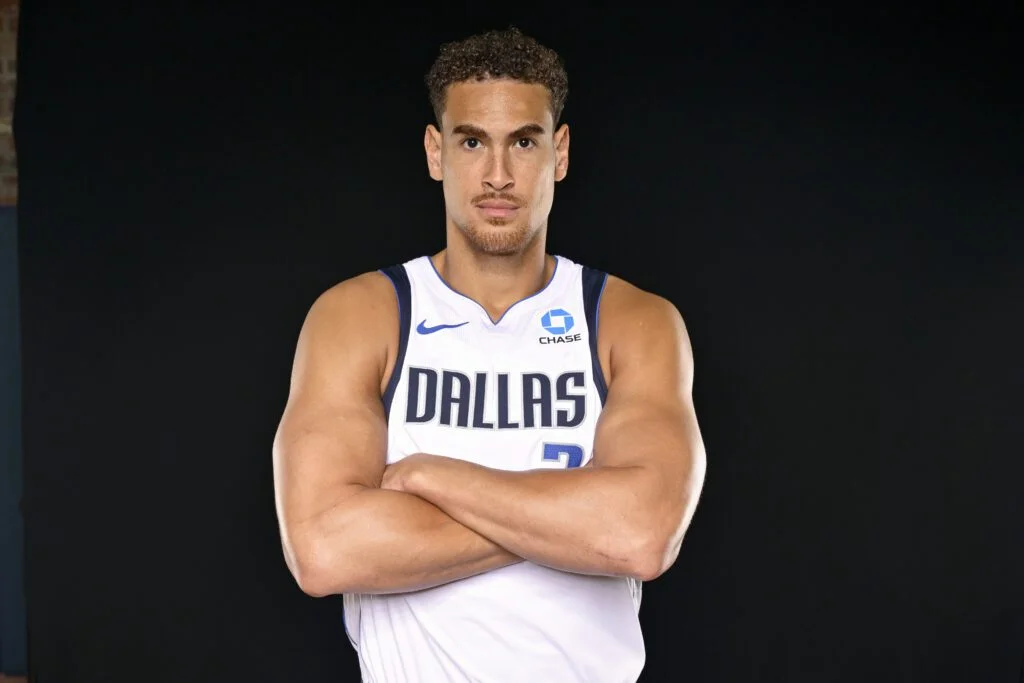
Change as the Mavericks’ defining test
For Dwight Powell, the Dallas Mavericks’ distinction this season comes down to how the group is handling change. The veteran center says the roster is willing to work, communicate about its needs, and face adjustments directly—habits that could help a team still forming its identity. That’s a practical measure of readiness: a roster can have recognizable talent and still need time to learn how its pieces fit together.
“A willingness to work. I think we got a bunch of new faces. We’ve had a lot of change as of late. I think everybody’s embracing it. I think sometimes it can be difficult to manage change, but I don’t think it’s something you can avoid,” Powell said.
“And I think this group has done a great job of facing it head-on, understanding we need to communicate with each other in terms of what we need and where we want to improve.”
Powell shared those thoughts with Fadeaway World during the Mavericks’ media availability in Macao for the NBA China Games 2026. His view carries the perspective of a player who has lived through more than a decade of change in Dallas. He’s describing a work in progress, though: willingness to talk about improvement is a starting point, and the harder test is whether those conversations translate into habits once competition begins.
A decade of Mavericks transitions
Dallas acquired Powell in December 2014 in the deal that sent Rajon Rondo to the Mavericks from the Boston Celtics. What began as a modest roster move became one of the longest tenures in franchise history. For a player who has remained through multiple changes in the team’s direction, that tenure offers a longer view than any single training camp can provide.
Powell played during Dirk Nowitzki’s final seasons, then saw Luka Doncic arrive and built on-court relationships with players including Kristaps Porzingis and Jalen Brunson. He started regularly alongside Doncic and Brunson during Dallas’ run to the 2022 Western Conference Finals. In 2024, he was still with the team when it reached the NBA Finals. The names and roles around him changed, but Powell’s place in the organization endured.
That history doesn’t make him a neutral observer; he’s part of the franchise he’s assessing. But it does give his comments a useful frame. A roster’s adjustment period isn’t just about learning new plays. Players also have to establish how they communicate, divide responsibilities, and respond when expectations or roles shift.
That experience now places Powell among the veterans helping a reshaped roster find its footing. Kyrie Irving brings veteran leadership, while Cooper Flagg is emerging as the franchise’s new centerpiece. For Powell, adapting to new teammates, systems, and expectations has become a familiar part of the job. The familiarity may help, but each roster still has to build its own trust and rhythm.
Continuity as the roster turns over
Powell’s contribution to Dallas now extends beyond his role on the court. As one of the team’s longest-serving players, he offers a link to previous Mavericks teams and can help guide younger players who are still establishing themselves in the league. That kind of presence can make the daily transition easier to navigate, especially when a team is asking players to learn new roles at the same time.
The franchise brought him back ahead of training camp on a one-year, $3.88 million deal for the 2026-27 season, with $1 million guaranteed. The contract retains an experienced player who knows the organization while preserving financial flexibility. It also keeps Powell in a position where his value may include preparation and communication alongside the minutes he earns.
His place on the team has shifted over time, from developmental prospect to regular starter and now veteran presence. The continuity of his commitment has outlasted those changing roles. That’s a meaningful distinction in a league where roster turnover can leave younger players with little institutional memory to draw on.
The Mavericks enter 2026-27 with Flagg, Irving, and several new faces, so building a shared identity will take time. Powell’s read is that the team has already established a useful starting point: players who are open about what they need and prepared to work on where they can improve. If you’re working in this space, that sounds less like a finished team identity than the conditions needed to build one.
What the early message can—and can’t—tell us
Powell’s emphasis on communication is more significant than it looks, but it isn’t proof that the Mavericks have solved the challenges of a changing roster. Similar teams often need time to turn candid discussions into coordinated play, and that process depends on whether players can carry shared expectations onto the court. The useful signal here is the stated willingness to do the work; results will show whether the group can sustain it.
And this is the part most people overlook: adaptability can be a team skill, but it still has to be practiced by individuals. A veteran can offer context and younger players can bring energy, yet neither substitutes for clear roles and consistent execution. The daily work. That’s where Powell’s assessment will eventually be tested.
After seeing Dallas through different eras, Powell’s emphasis is telling. Talent can shape a roster’s potential; the group’s willingness to do the daily work and adapt will help determine what it becomes. Here’s the thing: a promising attitude matters most when it holds up through the less comfortable stretches of a season.


