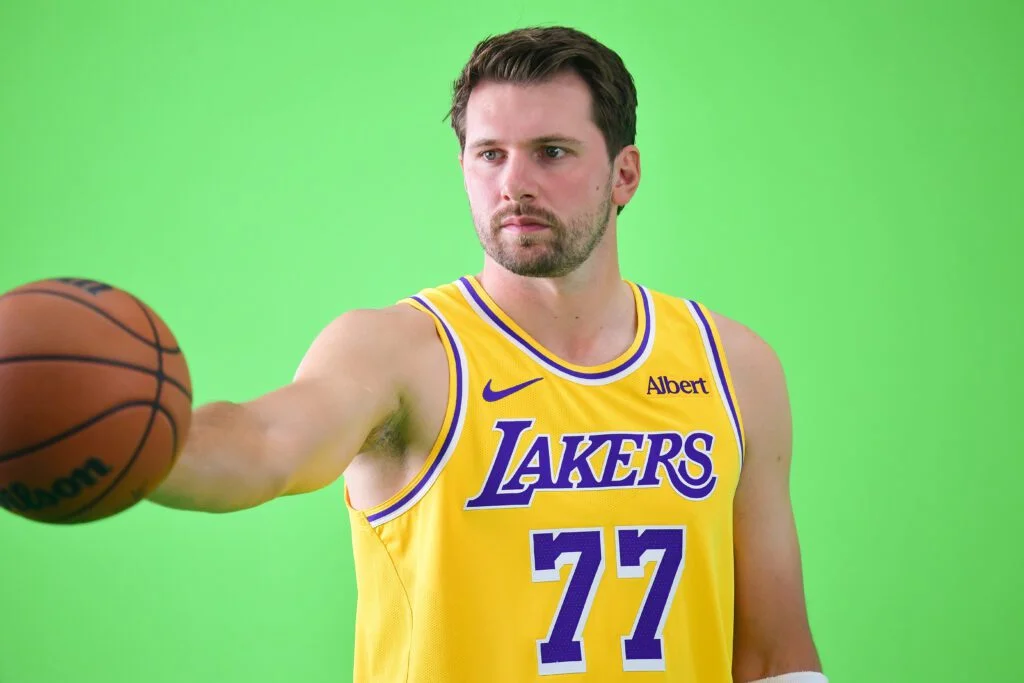
Young's doubts go beyond the jokes
The Lakers have added depth and a needed interior defender, but former guard Nick Young still isn’t sold on their championship prospects. His critique, delivered on Shannon Sharpe’s “Club Shay Shay” podcast, focused on the roster’s number of white players and doubts about its size and defense. The comment is partly provocation, but there’s a basketball question beneath the shorthand: can this group withstand physical teams and protect the paint when the stakes rise? Those are harder questions to settle from a roster list than from watching the team play.
“I don’t know about the Trump Lakers this year. It’s too white,” Young said. He praised Luka Dončić, Austin Reaves and the team’s “Snowtime” and “AR,” but questioned whether new center Walker Kessler can handle opposing big men. Young expects an entertaining offense, including plenty of step-back threes from Reaves, while stopping short of predicting a title run. The split in his assessment is telling: he can see the appeal of the Lakers’ creators and still doubt the defensive structure around them. A team can be fun to watch and difficult to trust in a series.
A rebuilt roster, with questions in the middle
Los Angeles made major changes in the offseason, including an ownership shift involving Bob Iger and Josh Kushner and a roster overhaul after several key departures. Kessler, Quentin Grimes, Sandro Mamukelashvili and Collin Sexton are among the additions that have strengthened the team on paper. That’s a substantial set of moving parts, and paper strength only tells part of the story: players must find useful roles, and the coaching staff has to make the combinations work. A roster with more options can offer flexibility, but it can also take time for responsibilities and rotations to settle.
Young’s comments echo criticism from other former players. Kenyon Martin has argued that a Lakers starting lineup with four white players wouldn’t get out of the first round. Coach JJ Redick has said the two remaining starting spots won’t go to white players. Still, judging the roster primarily by players’ race risks obscuring the basketball questions: how well the pieces fit, who can defend the paint and whether the group can stay healthy. The on-court evaluation has to account for matchups, role and performance, rather than treating a broad demographic label as a scouting report. That’s where Young’s size concerns become more useful than the framing around them.
Dončić and Reaves offer a strong starting point. They played 41 games together last season, averaging a combined 66.8 points, 23.5 rebounds and 14.0 assists per game, with a 118.5 offensive rating. Those figures suggest a pairing capable of creating offense in several ways, but the limited time together matters as much as the production. Injuries restricted the sample, and a productive stretch together doesn’t by itself establish how the pairing will hold up over a full campaign or against playoff adjustments. Dončić enters the new season in better shape than he was a year ago, which could help, though the larger test is whether he and Reaves can stay on the floor together.
Kessler could change the defensive outlook
The more consequential test may be Kessler’s impact. The Lakers have spent recent seasons searching for a dependable center alongside their stars. At 25, Kessler could supply the rim protection and rebounding that the roster has lacked, while giving Dončić and Reaves a credible target inside. That combination matters because a center’s value here would reach both ends: making opponents think twice near the basket and giving the offense another option when perimeter creation draws attention. But those benefits depend on availability and fit, not just the role the team hopes he’ll fill.
He missed most of the 2025–26 season with an injury, so his availability matters. Across his career, Kessler has averaged 2.4 blocks and 0.5 steals per game, numbers that point to the defensive presence Los Angeles needs. They don’t answer every question about his impact, including how he’ll fare against different styles of opposing big men or how consistently he can contribute after missing most of a season. He has the potential to earn All-Defensive recognition, though that depends on returning healthy and sustaining his impact. Young’s skepticism about whether he can handle the center matchup is therefore a real basketball test, even if the verdict will have to wait for the games.
LaRavia and Mamukelashvili also give the Lakers options beyond their core. Treating either as a weakness based on roster demographics overlooks what they might contribute off the bench. Their roles, like Kessler’s, will be judged by fit and performance once the season begins. In a deep roster, those contributions may be less visible than a star’s scoring, but they can still shape how the team holds together when its main players sit. The rotation will show whether the new depth is useful in practice.
What the roster has to prove
Young’s skepticism captures the gap between an appealing offense and a proven contender. Dončić, Reaves and Kessler give Los Angeles a plausible foundation, but the Western Conference is deep, and a revamped roster may need time to show it can hold up through a playoff run. This is more significant than it looks: a team’s ceiling depends not only on its best players, but on whether its defense can keep games manageable when the offense stalls. A high-powered attack can win plenty of nights; postseason success asks for answers when opponents target a weakness repeatedly.
If you’re working in this space, the early signals to watch are straightforward: whether Kessler is available, whether he can anchor the interior, and whether the Dončić-Reaves pairing translates its shared production into consistent team offense. The Lakers’ new pieces will also need to make their minutes count without disrupting the stars’ roles. And yet, a few promising games won’t settle the question of playoff durability. The real evidence will come from sustained performance across changing matchups.
For now, Young’s forecast is best read as a challenge, not a conclusion. He sees an entertaining team and questions whether it has the size and defense to become a champion. The roster has added pieces aimed at answering those doubts, but the season will have to supply the proof. Potential, in other words. The hard part is making it hold up.


