A fresh start, with no immediate burden
Portland’s first question about Ja Morant may be less about his scoring than where he fits in a crowded backcourt. Coach Micah Nori says the team won’t ask Morant to take charge of the group right away, while Damian Lillard is already making the case that the two guards should start together. Those positions aren’t necessarily at odds: Nori is describing the responsibility Morant will carry, while Lillard is talking about where he expects him to play.
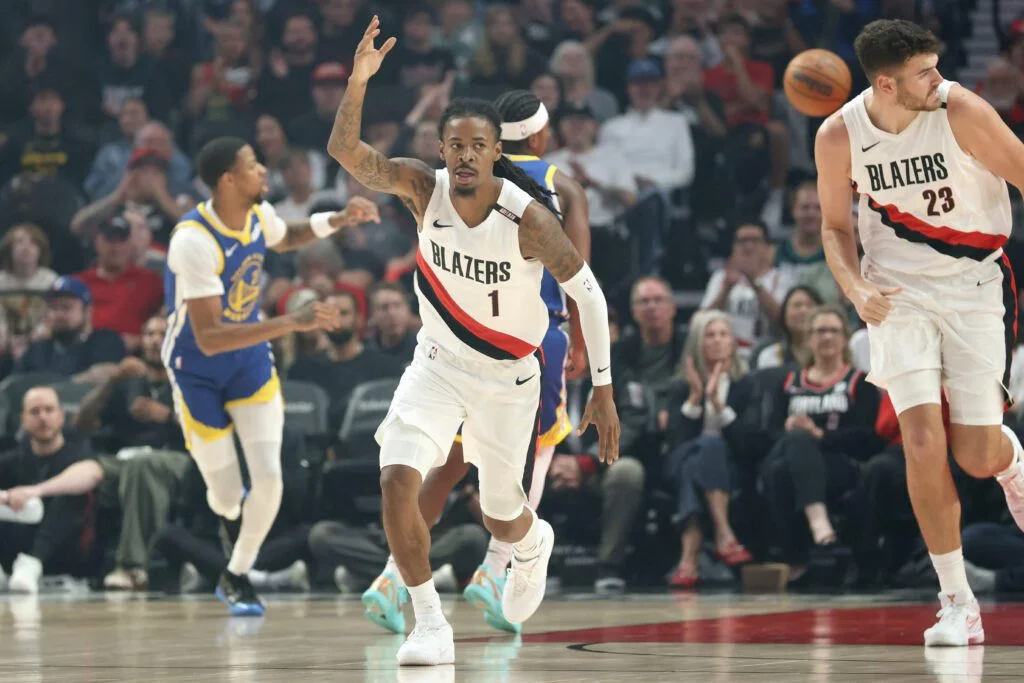
Morant made his preseason debut Wednesday in a 123-118 win over the Golden State Warriors, recording eight points, five assists and two steals in 19 minutes. That’s a limited sample, and preseason minutes can’t settle questions about a full rotation, but it gave Portland an initial chance to see him operate with the group. His stat line shows a contribution across several parts of the game; it doesn’t yet tell us how he’ll share possession or responsibility over a longer stretch.
It was a short first look at his role with the Trail Blazers, who acquired him after his time with the Memphis Grizzlies ended. A new team means new habits to learn: teammates’ preferred spots, the timing of offensive actions and the defensive calls that shape a possession. Those details rarely show up in a box score, yet they often determine whether a high-usage guard can fit beside another creator.
Nori described the transition as a fresh start. Before the game, he said the staff approached Morant without assumptions and encouraged him to be “your best version of yourself.” The coach praised Morant’s effort to connect with teammates, but also made clear that veteran voices will carry the leadership burden. That approach gives Morant room to focus on his play while the group establishes its standards through people who already know the roster.
“He is a leader in his own right, but we’re not expecting him to lead this team,” Nori said, pointing to Jrue Holiday, Lillard and Deni Avdija as experienced players who can help set the tone. For Morant, the immediate priority is to focus on his own game and build chemistry with the roster. That distinction matters: leadership can come through how a player competes and communicates, even when the coaching staff doesn’t make him responsible for directing the whole team.
Portland’s backcourt debate
Nori’s comments fit with the possibility that Morant could come off the bench as Portland sorts through its guard rotation. Pairing him with Lillard raises questions about how the two will share the ball and defend, and Holiday adds another established guard to the mix. The team has also faced questions about a backcourt logjam. The issue isn’t simply how many guards are available; it’s whether their skills and minutes can be arranged so each has a useful role.
Lillard has a different view. After the Warriors game, he pushed back on doubts about playing alongside Morant and said he expects them to form the starting backcourt. He pointed to his years with another undersized guard, former teammate CJ McCollum, as evidence that the pairing can work. It’s a persuasive comparison as far as it goes, because it comes from a player who has lived through the demands of sharing the floor with another perimeter scorer.
“We were able to get a lot done,” Lillard said of that earlier partnership. He recalled that Portland remained a winning team and gave opponents problems, then added that he and Morant are both dynamic guards joining a deep roster. Lillard’s confidence is useful evidence of willingness, but willingness alone doesn’t resolve the tactical questions. Coaches still have to find combinations that make sense against different opponents and game situations.
Lillard and McCollum led Portland to the Western Conference finals in 2018. Morant’s game differs from McCollum’s, so the precedent doesn’t settle the question, but it does give Lillard a credible argument: two offense-first guards can thrive together when the rest of the lineup supports them. Similar pairings typically depend on more than scoring talent. They require clear roles, enough defensive help from teammates and a willingness to adjust when one guard has the ball and the other doesn’t.
This is more significant than it looks. The debate is about how Portland wants its offense to function, not just which names appear in the starting lineup. If you're working in this space, the practical test is whether the guards can create advantages without taking turns reducing one another to spectators. And this is the part most people overlook: a starting label matters less than the closing lineup and the minutes each player actually gets.
The coaching staff still has to decide how best to distribute minutes and responsibilities among Lillard, Morant and Holiday. Morant could make a strong case for a starting spot, but the rotation will depend on how the guards fit in actual game situations. Shaedon Sharpe is also expected to return from injury, adding another variable once he’s available. His return would give Portland another player to account for in its guard and wing minutes, making flexibility as important as any early depth chart.
What the early look can—and can’t—tell us
For now, Portland’s clearest advantage is its depth, and its main challenge is finding a workable balance among several guards who expect to contribute. Depth can help a team absorb absences and matchups, but it can also leave players competing for a finite share of the ball and court time. The staff’s job is to turn that competition into clear assignments rather than letting it become a standing question about who should have the ball.
Morant’s preseason debut offered an initial glimpse; the lineup decisions ahead will show whether the Blazers can turn that depth into a coherent backcourt. One game won’t answer whether Lillard’s comparison to McCollum holds, or whether Morant is most effective starting or leading a second unit. What this means for you as a reader is simple: watch the patterns over time—who initiates, who moves off the ball, and which combinations remain on the floor when the game tightens.
For now, the clearest answer is patience. A promising first appearance and a public endorsement from Lillard give the partnership a plausible starting point, while Nori’s comments signal that Morant won’t be handed the full leadership burden at once. The fit still has to be demonstrated in possessions, rotations and shared defensive work. Plenty remains unresolved.


