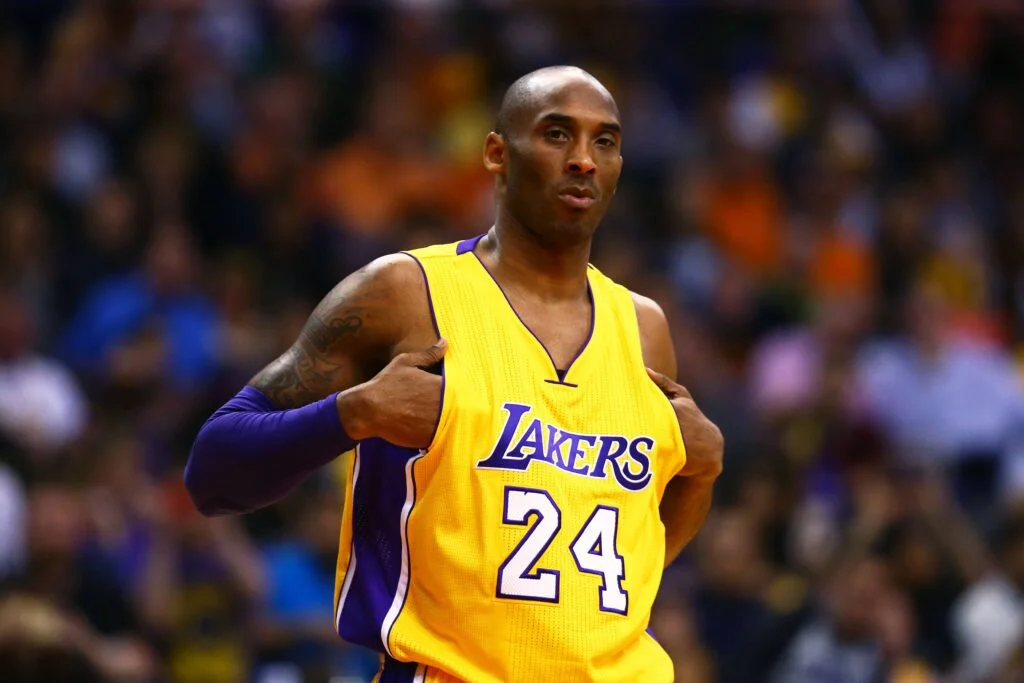
A reprimand aimed at effort
Kobe Bryant’s standards extended beyond the scoreboard. After a heavy Lakers loss in Portland, he reportedly confiscated teammates’ signature Kobe sneakers, turning a routine dressing-room reprimand into a pointed message about effort and the meaning attached to his name. The shoes were more than gear in this telling; they were a visible endorsement that Bryant thought his teammates had to earn.
Nick Young recounted the episode on Club Shay Shay. Bryant told the late Bryant they hadn’t earned the right to wear his Nike shoes, Young said, then collected pairs from around the locker room and threw them away. Young’s account makes the gesture sound deliberately theatrical: a team-wide rebuke delivered through an object players wore in public and associated with Bryant’s career.
“We was in Portland. We was down by like 20 or 15 at the half,” Young recalled. “He came in and said, ‘Y’all don’t deserve to wear these shoes.’ And was going down the locker room, bro, ‘Take them shoes off. Take them shoes off.’ Got them all in the string and just threw them in the trash.”
Young said he kept his pair on. By then, he’d been in the NBA for several years and didn’t want Bryant treating him like a rookie, a small act of defiance inside a larger confrontation. Other players complied, he said. He also couldn’t say whether they ever got those particular shoes back: “I didn’t see the shoes no more. … Not that night.” That uncertainty matters: the story is vivid, but Young’s recollection doesn’t establish what happened to the shoes afterward.
Two accounts point to a Portland loss in 2015
The timing is less certain. Young’s version places the confiscation on game night, while former teammate Lou Williams described the shoes being removed from players’ lockers at practice the following day. Williams played with Bryant only in the 2015-16 season, when Los Angeles faced Portland twice on the road. The accounts share the same basic premise, but they differ on when Bryant’s punishment took place.
The Lakers lost 108-96 on Nov. 28, 2015, then fell 121-103 on Jan. 23, 2016. In the first game, they were behind by 14 at halftime, a margin that roughly fits Young’s memory of a deficit in the 15-to-20-point range. That makes the November game a plausible match, but the accounts don’t establish which loss prompted Bryant’s response. A remembered score can help narrow the possibilities; it can’t settle the story by itself.
Williams recalled Bryant taking the team to task after a blowout, criticizing players one by one and skipping Williams, Metta World Peace and Brandon Bass. At the next practice, equipment manager Carlos Maples began pulling Kobe-branded pairs from lockers, Williams said, explaining that Bryant didn’t want the players wearing them because they’d played “soft.” His account shifts the scene from an impulsive locker-room order to a follow-up action carried out through team equipment staff.
Young framed Bryant’s frustration as a response to effort rather than missed shots. The Lakers could look as if they’d stopped competing, he said, even as the team’s season had little to play for beyond Bryant’s final campaign. Young also noted that Bryant expected effort from everyone, from the end of the bench to Pau Gasol. Here’s the thing: a demand for effort is easier to understand than a demand for wins from a struggling team, though it can still land harshly when the results are already poor.
A difficult season, and a shoe-signing refusal
Los Angeles finished 17-65 in 2015-16. The rebuilding team’s record made the season a tough setting for Bryant’s insistence on intensity, but it didn’t soften his expectations. The contrast is stark: a team near the bottom of the standings, with its leading figure still treating daily competition as a measure of character. This is more significant than it looks, because Bryant’s rebuke tied a disappointing performance to the privilege of carrying his signature line.
He ended his career with 60 points against the Utah Jazz in his final game. That late burst of scoring offers a different image of the same competitive identity Young describes: Bryant continued to demand intensity from himself as well as from teammates. It doesn’t resolve whether his methods were effective, but it helps explain why the shoe story has endured as a compact account of his expectations.
The sneaker episode also fits another story Young has told about Bryant’s attachment to the Nike line. Young once asked him to sign Adidas shoes; Bryant threw them away and said he’d sign only Nikes, according to Young’s account. Taken together, the two anecdotes suggest Bryant treated the shoes as part of his identity, not as interchangeable merchandise. That said, both stories reach readers through Young’s recollections, and the details shouldn’t be mistaken for a complete record of what happened in the locker room.
What the episode says about Bryant’s standards
That edge wasn’t the whole story Young told about his former teammate. He has also described Bryant arranging a party for the Lakers, then leaving soon after. The contrast complicates the portrait: Bryant could create a moment of team camaraderie, yet the sneaker incident shows how quickly he could turn a shared symbol into a test of commitment.
If you’re working in sports, branding, or team culture, the episode offers a familiar tension: a star’s name can motivate teammates, but it can also raise the cost of falling short. And this is the part most people overlook: the shoes weren’t just a product placement in the story. They gave Bryant a blunt way to make his standards tangible, even if the accounts leave the exact timing and aftermath unsettled.
Young’s story remains a sharp snapshot of Bryant’s approach: his name on a player’s feet came with an expectation to compete. Maybe the method was excessive. The message, as Young remembered it, was unmistakable.


